1 ¡Hola! :)
Your Chapter 1 task is to introduce yourself and get to know someone else by asking basic personal questions.
Meet Gabby, as she introduces herself to you and asks you questions to get to know you.
Steps to take to achieve this task:
- Los saludos– use formal and informal greetings to greet someone
- Preséntate– introduce yourself in Spanish and ask questions to get to know others in formal and informal contexts
- ¿Cómo se escribe tu nombre?– use the alphabet to spell your name and pronounce words in Spanish and ask others to spell their names
- ¿Cuándo es tu cumpleaños?– use numbers, dates and months to share more personal information such as your birthday, age and phone number
- Las despedidas– say farewell in a variety of ways when concluding a conversation
- Task 1 Assessment– introduce yourself in Spanish and ask someone else basic personal questions to get to know them
I. Los saludos (Greetings)
¡Hola! 🙂 Greetings in Spanish vary by region, culture and context or setting. Greetings among Latinos often include a hug and kiss on the cheek. Have you ever greeted someone from Latin America or Spain? What was the greeting like? Was it different from how you greet friends, family or someone you met for the first time in your culture?
Watch as Nas Daily Español shares his experience greeting people from Spain and Latin America.
Did you know that in Spain and Latinx countries, informal greetings are generally used for family, friends or someone that is your age or younger, and formal greetings demonstrate a level of respect and are reserved for professional settings or when greeting someone older than you?
A common greeting in Spanish used in both informal and formal settings is ¡Hola! (Hello!).
Actividad A
Use ¡Hola! to greet your classmates as you play Lotería to get to know their background with the Spanish language.
Instructions: You will greet each student following the model below. Ask them one of the questions from the following Lotería sheet, and when they answer, write their name in the corresponding box. Say thank you, and go to the next student. Once you obtain a different name for an entire row, you win! You will say ¡Lotería! 🙂
Modelo-
Student 1- ¡Hola! Me llamo (My name is) ______. <~~ fill in the blank with your name
Student 2- Mucho gusto. 🙂 (Nice to meet you) Soy (I am) _____. <~~ fill in the blank with your name
Then ask your question in English. When the student answers, say ¡Gracias!
*If you are learning Spanish on your own, feel free to answer the questions individually.
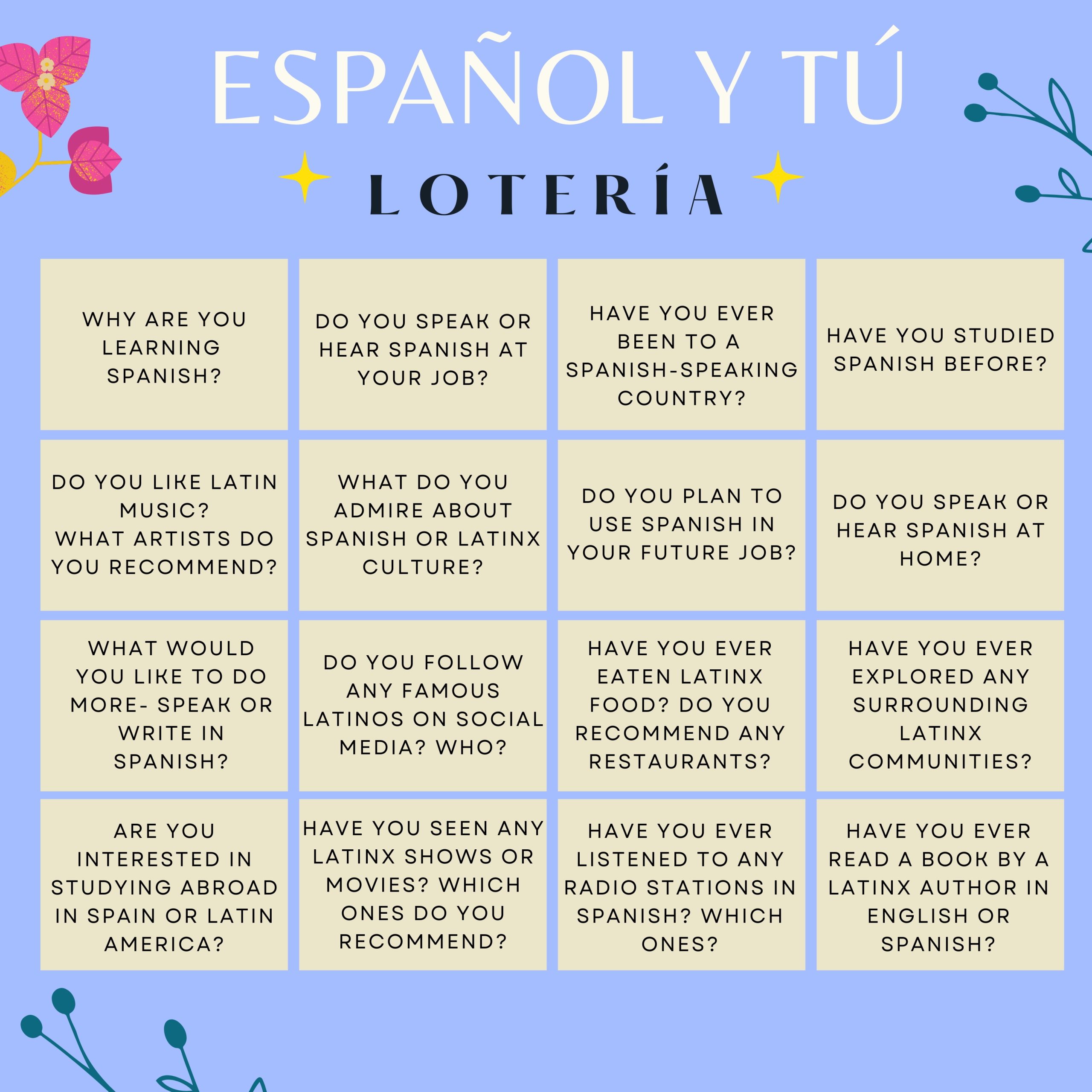
What did you learn about your classmates and their experience with the Spanish language? You will get to know your classmates and the Spanish language more throughout the rest of this book. 🙂
You just greeted your classmates in Spanish with Hola. In your native language, how do you greet your friends and family? Does it differ from how you greet someone in a professional setting?
BaseLang shares some common greetings used in both informal and formal settings in Spanish.
Watch as Inhispaniainvideos uses some of these greetings in her video.
Listen as Gabby pronounces her favorite informal and formal greetings for you.
¡Muy bien! 🙂
Actividad B
Paso 1. Do you remember which greetings are informal or formal in Spanish? Complete the following activity to test your knowledge.
Paso 2. Greet 2-3 people with a new greeting you learned. Which greetings did you use?
Actividad C
An advertising agency in Costa Rica is busy at work. Select the appropriate greeting for each person in the photo based on the contextual cues provided.

Actividad D
Actividad E
As a fun activity, if you’re in a class, get into groups of 4-5 students and head to the white board. You will have a time set for 90 seconds. As a group, write as many greetings in Spanish that you have learned so far. The group that has the most greetings with correct spelling and punctuation wins! 🙂

II. Preséntate (Introduce yourself)
Now that you’ve learned how to greet someone in Spanish, it is time to include more personal information about yourself such as your name, where you’re from and age. Watch as Dani introduces himself to you in the following video.
*Dani is from Brazil. Make note that in Brazil, Portuguese is the national language. However, Dani also speaks Spanish.
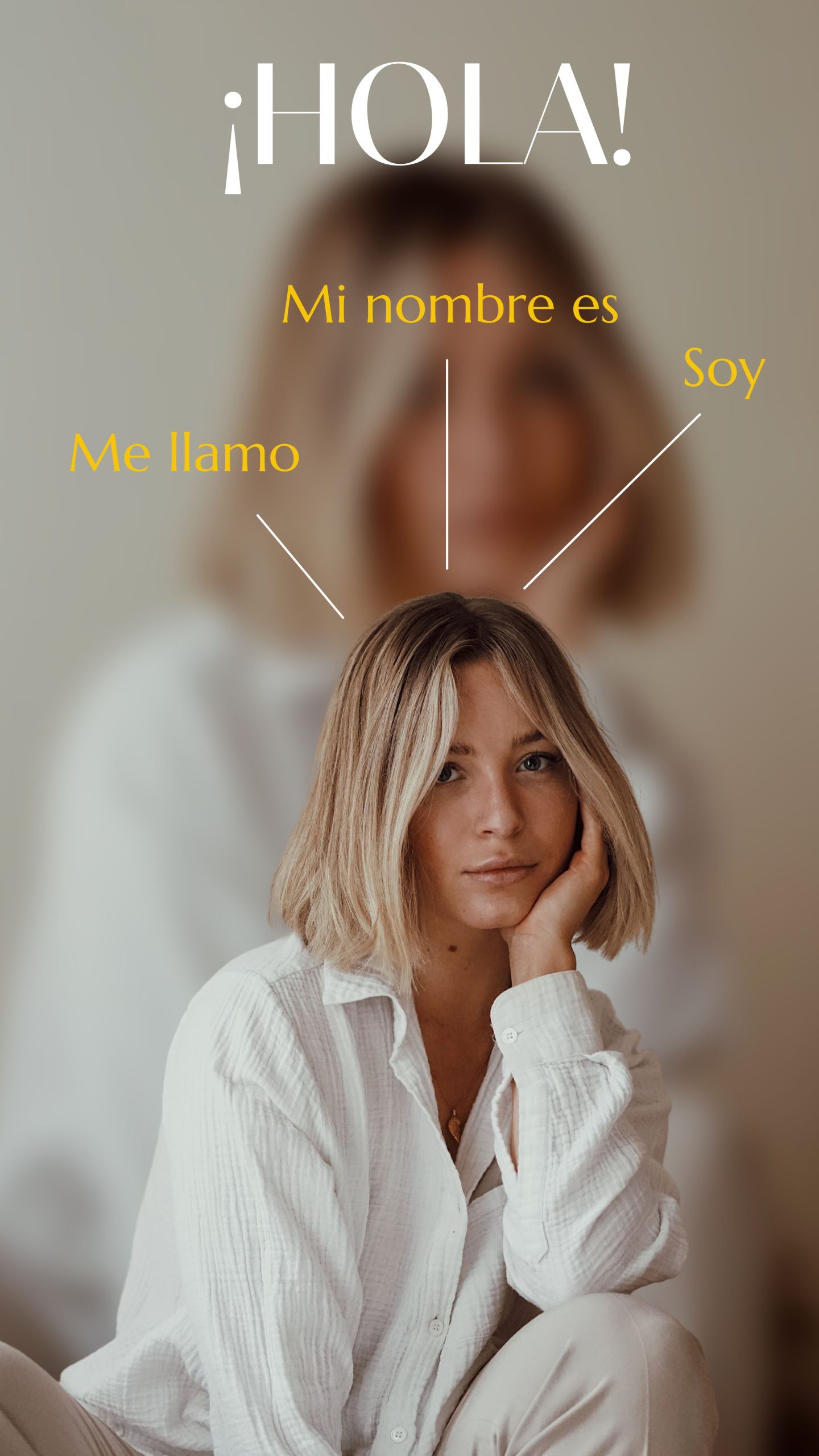
Dani starts his video with a greeting and states his name. Did you know there are 3 ways to say your name in Spanish?
Listen as Letty shares her name with you in each way.
When Letty asks for your name, how would you answer?
Actividad F

- Greet 2-3 people, and say your name. Try to use more than one way to say who you are.
- When you introduce yourself, it is polite to say Mucho gusto (Nice to meet you) right after.
- When someone says Mucho gusto to you, you could respond with El gusto es mío. (The pleasure is mine.)
Modelo-
Student A- Buenos días. Mi nombre es Michael. Mucho gusto. 🙂
Student B- ¡Hola! Soy Annie. El gusto es mío.
When Dani introduced himself, he shared where he was from, where he lives now and his age.
Letty shares this same information as well. Take a listen.

How would you answer Letty’s questions about yourself?
Listen as Gabby from your Chapter 1 Introduction helps you introduce yourself in Spanish and answer Letty’s questions.
Actividad G
One of Gabby’s friends who lives in Bogotá introduces himself to you on Zoom. Select whether each statement is true or false based on the recording.

Actividad H
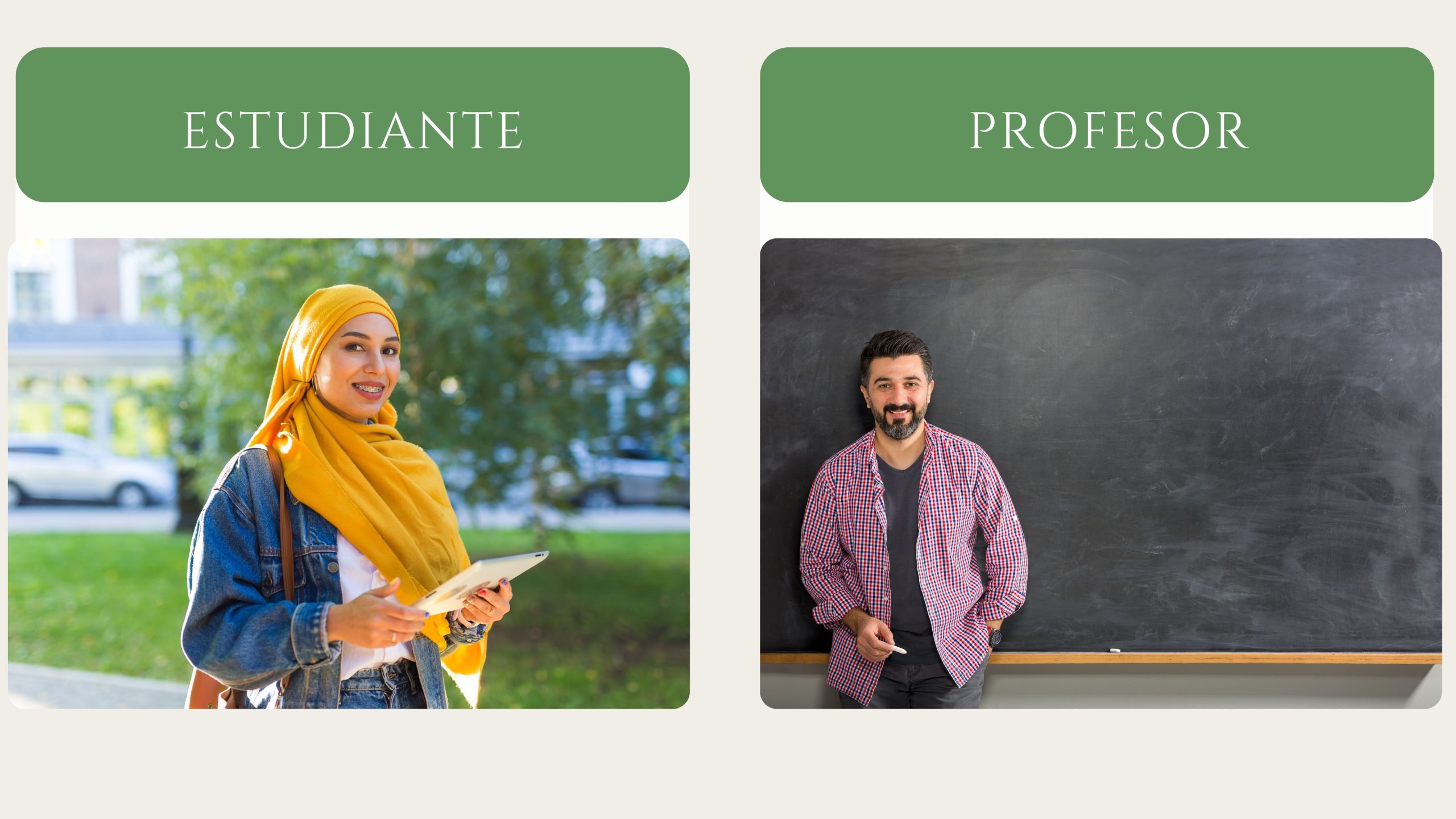
Now that you are familiar with informal and formal ways to get to know someone, select whether you would ask the following questions to a student your age or a professor.
The final question in the last activity was about age. Earlier, Dani shared how old he was with you. If you would like to express your age or someone else’s, you will first need to know your numbers in Spanish.
MyDailySpanish pronounces numbers 1-100 for you in Spanish. Take a listen.
You could scroll to the number you need for your age with the progress bar.
For a visual of numbers 1-100 in Spanish, see the following slide. Play the audio to hear how they are pronounced.
Knowing your numbers in Spanish could be very helpful if you are asked for your age or would like to express how old someone else is. Watch as Jumpspeak shows you how to ask for someone’s age and say how old you are in Spanish.
You were introduced to the verb tener (to have) in the video by Jumpspeak, which is used to express age.
Actividad I
Based on Jumpspeak’s video and the verb tener slide with age, select the best answer to the following questions.
Actividad J
Paso 1. Dani’s friends also speak Spanish. They are hanging out in Vicente Pires, Brazil. Listen as one of his friends, Lucas, shares the ages of their friend group.
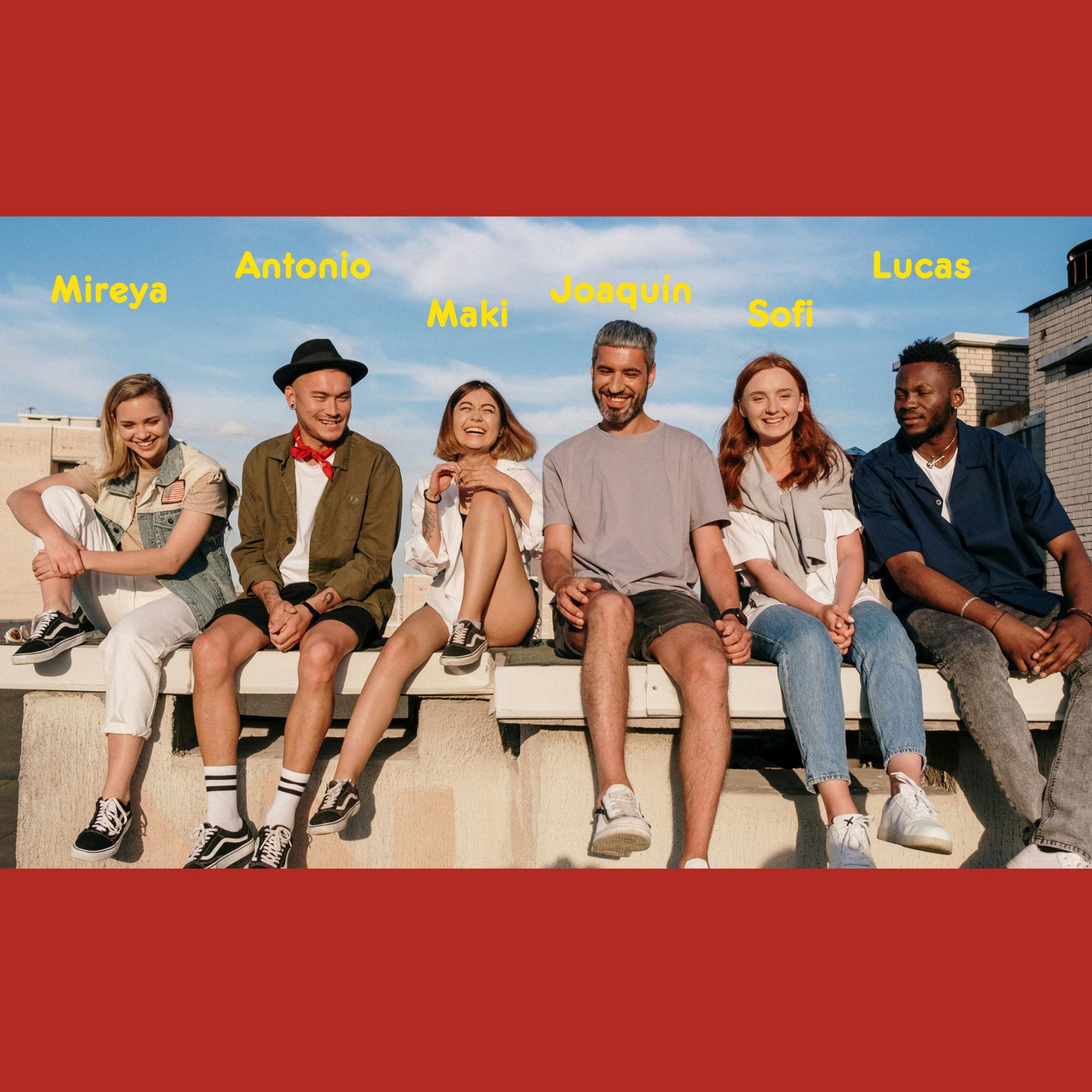
Test your listening comprehension skills by providing the correct age for each of Dani’s friends.
Paso 2. Ask at least 3-4 students their age in Spanish and provide yours when asked. Follow the model below.
Modelo-
Estudiante 1- Hola. ¿Cuál es tu edad?
Estudiante 2- Tengo 23 años. ¿Y tú? ¿Cuántos años tienes?
Estudiante 1- Tengo 18 años.
Estudiante 2- Gracias.
¡Bien hecho! 🙂
Actividad K
TikToker, Joaquin Kruz, lists the ages of several famous singers. Choose 2-3 singers you like, and say their ages in Spanish in groups of 2-3. The video was posted in 2023; therefore, only say the ages as displayed in the video.
Modelo- Me gusta Olivia Rodrigo. En el video, tiene 20 años. <~~ (In the video, she is 20 years old.)
Famous singers shown in the video:
Shakira, Billie Eilish, Harry Styles, Stephen Sánchez, Bad Bunny, Maluma, Karol G, Adele, Ariana Grande, Rihanna, Kim Nam-Juum, Madonna, Selena Gómez, Taylor Swift
Actividad L
Get to know your classmates. Speak to at least 2-3 different students. Start with a greeting and say gracias when you conclude your brief conversation. Then switch roles.
*If the person is older than you, be sure to use greetings and questions appropriate for that person.
*Also, be sure to not mix informal and formal questions when addressing someone. Choose beforehand whether the context requires you to pose all of your questions in the informal or formal.
Modelo-
Informal: ¡Hola! Me llamo Julie. ¿Y tú? ¿Cómo te llamas? ¿De dónde eres? ¿Dónde vives? ¿Cuántos años tienes? Gracias.
Formal: Buenos días. Mi nombre es Julie. ¿Y usted? ¿Cuál es su nombre? ¿De dónde es? ¿Dónde vive? ¿Cuántos años tiene? Gracias.

III. ¿Cómo se escribe tu nombre? (How do you spell your name?)
As children, learning the alphabet in school was one of the first lessons taught. It helped children pronounce and spell out words in their native language. Similarly, when learning a new language such as Spanish, it is important to know what letters sound like and how to use those letters to spell words.
Did you know that the letters of the alphabet have distinct pronunciations depending on the country where Spanish is spoken? Watch the following videos to hear how the alphabet is pronounced in Latin America and Spain. Do you hear a different pronunciation for certain letters?
Feel free to pause the videos when necessary to practice pronouncing the Spanish alphabet.
The following video provides the Latin American pronunciation of the alphabet, courtesy of Jumpspeak.
The following video provides the Spanish pronunciation of the alphabet, courtesy of EO Español Online.
Actividad M
Practice pronouncing the Spanish alphabet in groups of 3-4 by taking turns pronouncing each letter in Spanish until you reach all of them. If you are studying online, you could pronounce the letters on your own.
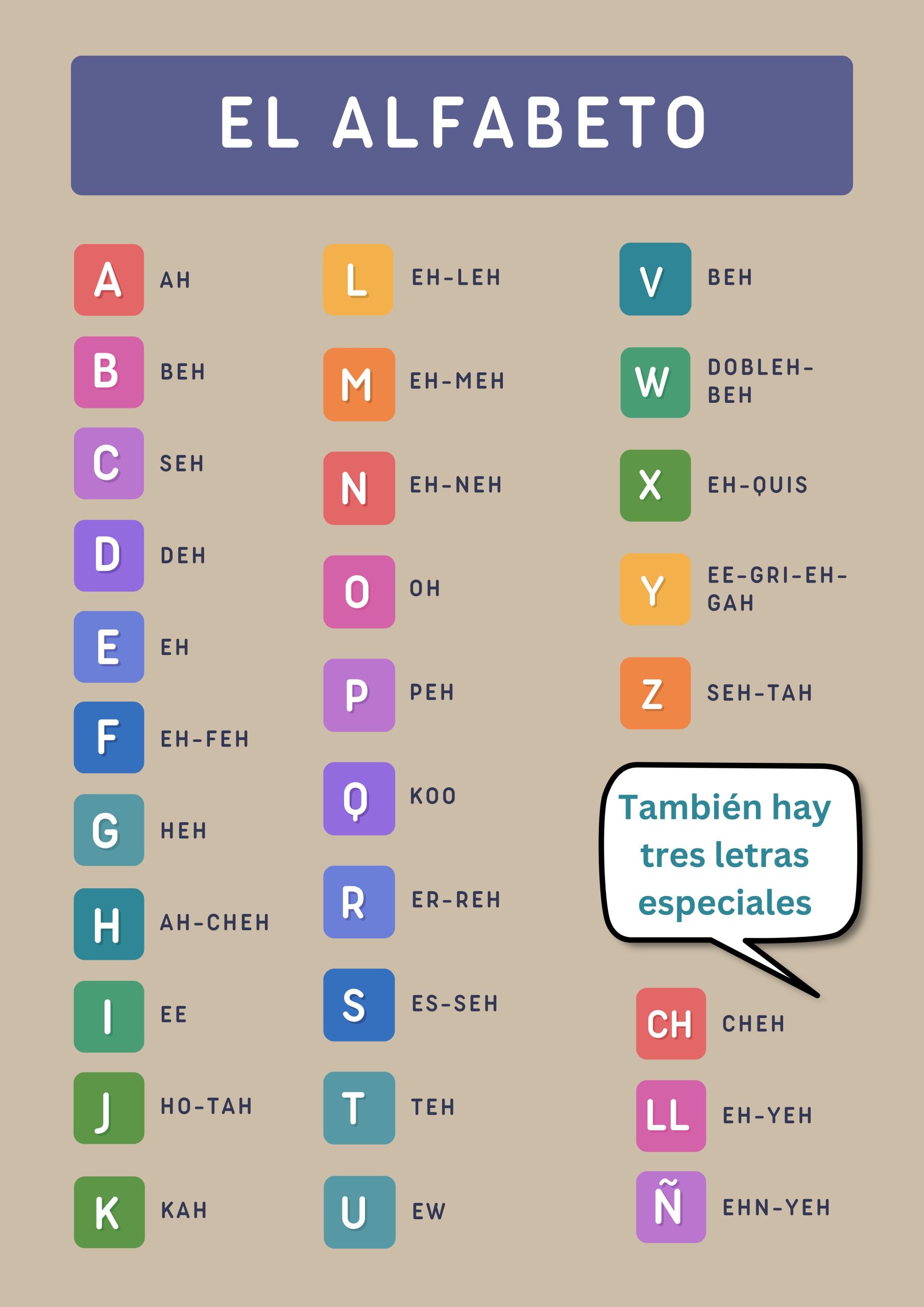
Modelo- Hola. Voy a comenzar y luego ustedes (you all). (I am going to start and then you all.)
Estudiante 1- Ah
Estudiante 2- Beh
Estudiante 3- Seh
Etc.
Actividad N
Paso 1. Listen as Lola Aguilar lists 4 Lottery winners this week on her podcast. Who are they?
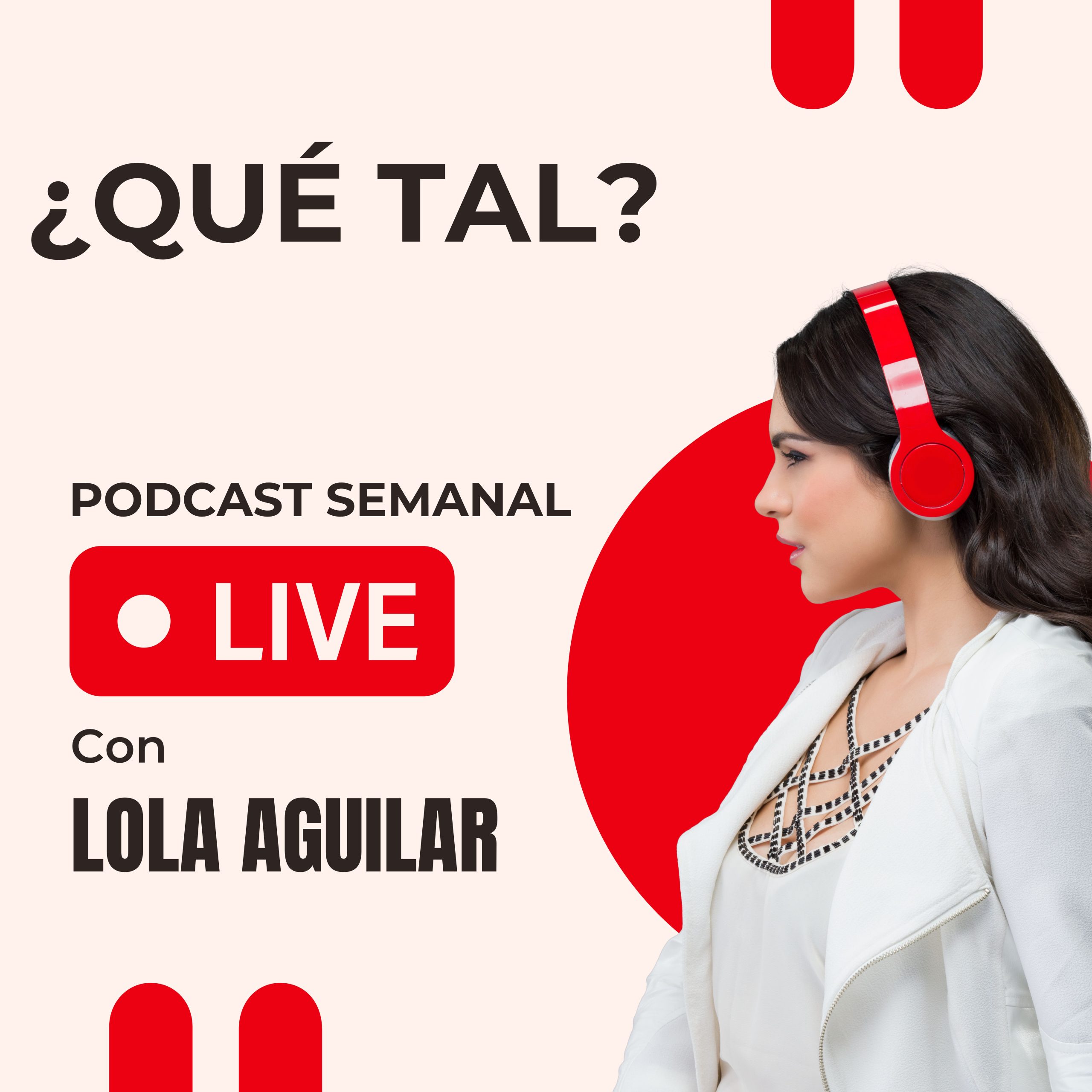
Paso 2. Spell the names of the winners outlaid with another person in chronological order.
Modelo- Persona #1 es Rebecca. Su nombre se escribe R-E-B-E-C-C-A.
- Persona #2 es ______. Se escribe…
- Persona #3 es ______. Se escribe…
- Persona #4 es ______. Se escribe…
You may be in a situation where you need to provide your personal information by spelling out your name or contact details. Gabby from your Chapter 1 Introduction pronounces some prompts that will help you do that.
Actividad O
In groups of two, one person will greet you, ask for your name, last name and e-mail and how to spell each. The other will provide the answers. Then switch roles.
You decide if your setting is a formal or informal one. Remember to say gracias when you are through with your questions.
Intercultural reflection 1
In this chapter, you learned about differences when pronouncing the Spanish alphabet. For example, in Castilian Spanish, from Spain, the letters C and Z before e or i in Spain are pronounced like “TH”, which is called el ceceo.
Can you hear it in the following video by Primer Impacto of Rosalía, the award-winning Spanish singer?
Press CC for captions in the language you prefer.
Are there words or letters in the region where you live that are pronounced differently from other areas in your city, state or country? What are they? What are the differences in sound?
Explore more
Rosalía is a famous singer from Spain. She is known for her beautiful and powerful voice and challenging gender norms and stereotypes associated with Spanish women. During the Franco dictatorship (1939-1975), women’s rights were suppressed and almost completely taken away in Spain, and as a result, women were viewed as submissive and powerless to men.
In the following video, Rosalía sings her version of a very popular song in Spain, “Me quedo contigo,” made famous by a male singing group from the 1970’s and 80’s, Los Chunguitos.
In the video, Rosalía demonstrates her strong voice and unique interpretation of the song, which earned her a standing ovation at the respected Premios Goya, held in Spain each year.
For the lyrics and translation of this song, please visit:
Pay close attention to Rosalia’s pronunciation of the letters C and Z in the song. See if you notice el ceceo.
Listen for the following words in her song: riqueza, grandeza, brazos, feliz, cielo
(The translation of these words is in the link to the song above.)
- Search Los Chunguitos for the original version of “Me quedo contigo” on YouTube. Which version do you like the best- Rosalía’s or Los Chunguitos’?
- Is there a musical artist in your culture that challenges gender norms? Who is it? How has this artist challenged gender stereotypes and norms? What impact has this artist had on you and your community?
- Is there a musical artist that you admire that has a particular accent or pronounces words differently than you? Who is it? What do you admire about their music? Do you feel that variations in accents and speaking is something positive or negative in diverse cultures? Explain why.
- Before listening Rosalía speak and sing, have you ever heard of the Spanish ceceo? Are there artists you admire that have the ceceo when they speak Spanish? Who are they?
- To learn more about Rosalía, read the following article in The Nation, where the topics of how Rosalía modernizes Spanish flamenco and promotes female agency are discussed.
IV. ¿Cuándo es tu cumpleaños?
Earlier in this chapter, you were introduced to numbers in Spanish to express your age or ask others about theirs. Knowing your numbers is also important to share more personal information such as your telephone number, birthday or to provide the date when asked.
To review your numbers, see the following slide.
Listen as a study abroad director, Juan, asks for personal information involving numbers that he needs for his intake form.
For a transcript of Juan’s message, click here.
To answer Juan’s questions, Gabby shares prompts to provide the date, your birthday and telephone number in Spanish.
Actividad P
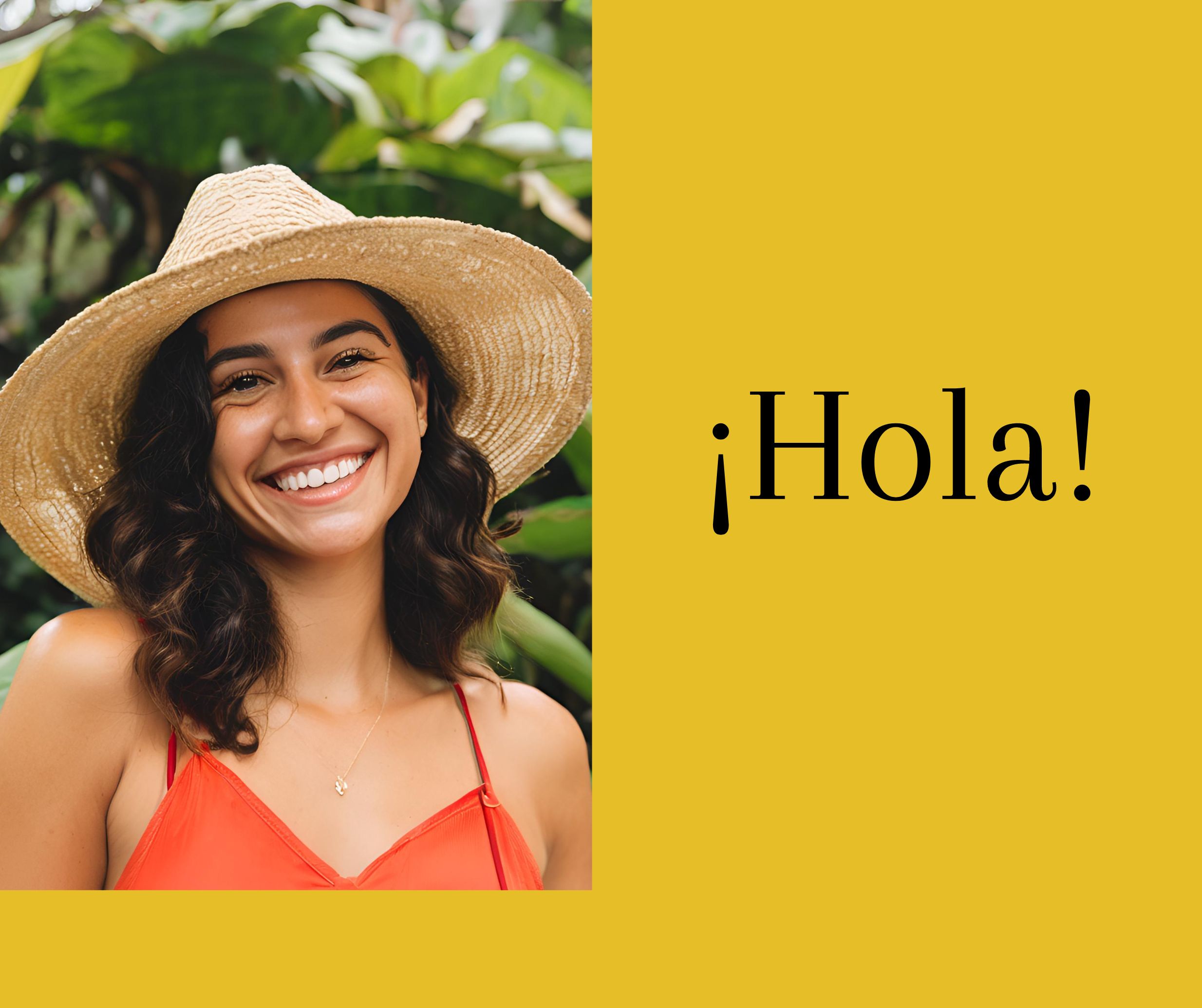
Paso 1. Listen as Ximena, a student in Juan’s study abroad program, answers the questions he posed from his video.
Paso 2. Select the information Ximena provided her study abroad director.
Actividad Q
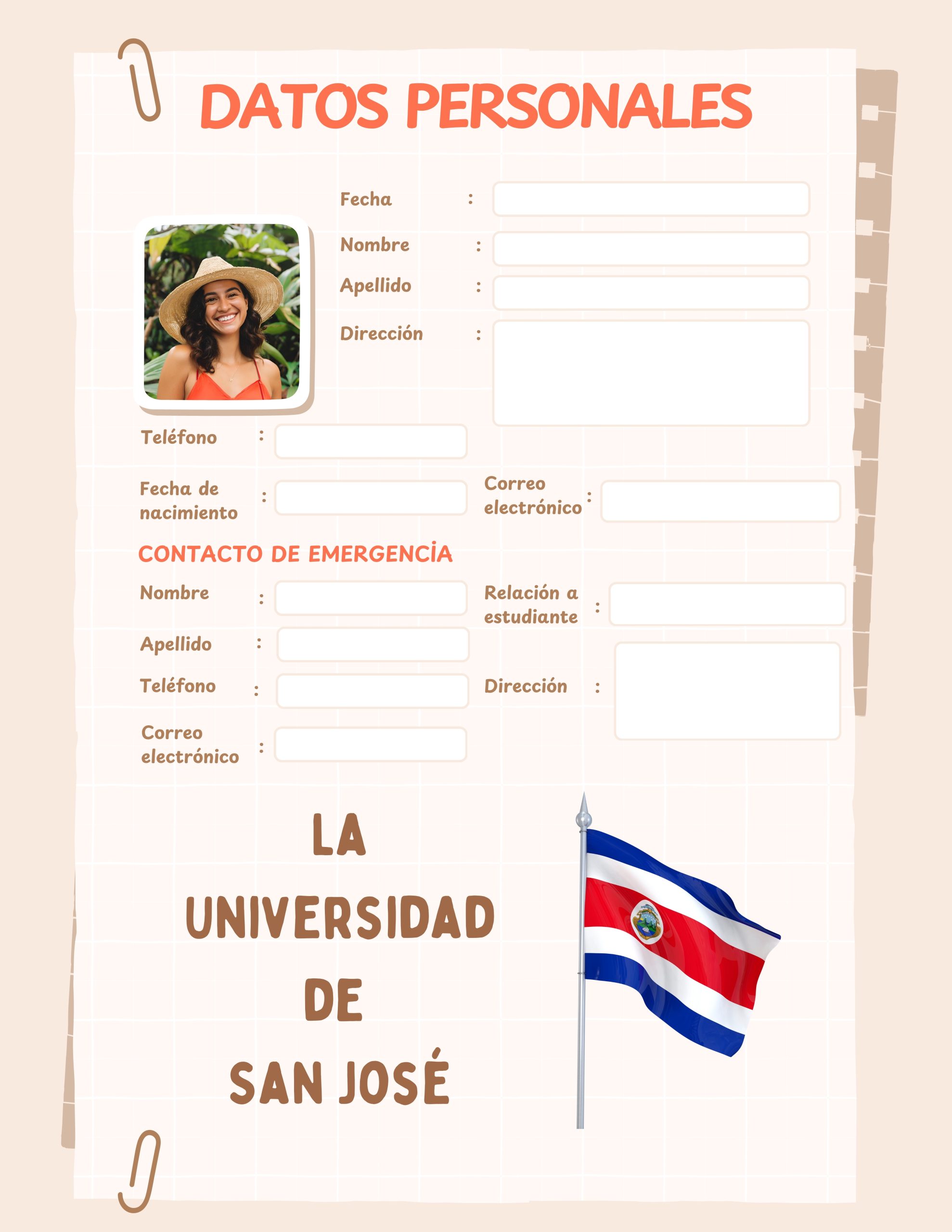
Ximena is sharing her academic intake form with you so you are prepared and ready to provide your personal information, if you ever decide to study abroad in a Spanish-speaking country as well.
Find a partner and ask the following questions to obtain your classmate’s personal data to complete part of the academic intake form. If your partner or you are not comfortable sharing phone numbers or addresses, feel free to use the College’s address and number. Then switch roles.
College of DuPage address: 425 Fawell Blvd, Glen Ellyn, IL 60137
College of DuPage phone number: (630) 942-2800
See the following examples to help you answer each question.
To start say: Necesito tus datos personales para el formulario académico de la universidad. ¿Está bien?
Preguntas:
- ¿Cuál es la fecha de hoy? To answer: Hoy es el 2 de enero.
- ¿Cómo te llamas? To answer: Me llamo Michael.
- ¿Cuál es tu apellido? To answer: Mi apellido es Baker. Se escribe B-A-K-E-R.
- ¿Cuál es tu dirección? To answer: Mi dirección es 39 Calle Butterfield en Glen Ellyn, Illinois. El código postal es 60137.
- ¿Cuál es tu número de teléfono? To answer: Mi número de teléfono es 123-456-7890.
- ¿Cuál es tu fecha de nacimiento? To answer: Mi fecha de nacimiento es el 4 de noviembre.
- ¿Cuál es tu correo electrónico? To answer: Mi correo electrónico es baker22@gmail.com.
While studying abroad in Costa Rica, someone told Ximena about a new trend on TikTok called Asoka, which has influences from India. Have you heard of Asoka?
Intercultural reflection 2
India and Mexico are two countries very far from one other on a world map, separated by different religions, cultural practices and language. However, Indian culture has become very popular in Mexico recently through music, dance and art. This could be attributed to the famous Asoka trend that has spread worldwide through TikTok.
Doris Jocelyn is a content creator from Veracruz, Mexico. She is famous for having the most likes on her TikTok video for paying homage to the Asoka trend, but adapting it to her Mexican heritage and culture. As of January 2025, Doris Jocelyn’s Asoka video has over 360 million views.
*Be sure to press the sound on the bottom left of the video.
@dorisjocelyn 🇲🇽MÉXICO, HAZ LO TUYO! Y que todo el mundo te vea ✨❤️🔥 #TRENDMEXA #transiciones #princesaazteca
Watch as social media influencer, Fernanda Cortes, known for creating videos that celebrate Latinx culture, details more information about Doris Jocelyn and her most watched TikTok video in Latin America.
*Be sure to press the sound on the bottom left of the video.
@fernandacortesx She did such an amazing job!! ❤️🇲🇽 #mexico #mexican #veracruz #mexicana #mexicano #asoka #trendmexa
Explore more
- Did you enjoy Doris Jocelyn’s Asoka trend video? Did you recognize any of the Mexican cultural references Doris included in her video? (national flag, colors, history, pastimes)
- Are you familiar with the Asoka trend? Do you admire how Doris Jocelyn honored her Mexican heritage in her video with this popular TikTok trend?
- If you made your own video celebrating your culture through the Asoka trend, what aspects of your heritage would you include and why?
- Music unifies people from different countries and cultures. What else could unify and connect cultures from across the world?
- Doris incorporated the Mexican flag in her Asoka video, which is displayed proudly in her country on Mexican Independence Day. Mexicans celebrate their independence on September 16. How would you say the date now that you know your numbers and months in Spanish?
Modelo- El Día de la Independencia de México es el _____ de ______. (include numeral and month)
6. Did you know that in Spain and Latin America, the dates in numeral format include the day first and then the month?
Example- Mexican Independence Day would be written as 16/9 versus 9/16.
7. When is your birthday? First, answer the question, and then write it out on your own in numeral format as if you were in Mexico.
Modelo- Mi cumpleaños es el 22 de noviembre. 22/11
8. To learn more about Doris Jocelyn’s famous Asoka TikTok video, watch her YouTube video detailing the experience.
*Be sure to press CC for captions in the language you prefer.
V. Las despedidas (Ways to say goodbye)
You’ve learned how to introduce yourself in this chapter and ask others about themselves when you first meet them. You are now ready to conclude your brief conversation with a farewell. Do you know any ways to say goodbye in Spanish?
Listen as StoryLearningSpanish shares common ways to say farewell in Spanish. Which is your favorite?
Gabby concludes this chapter by sharing ways to say goodbye in Spanish. She also shares days of the week with you, in case you would like to say- See you on Monday or See you on Friday.
Actividad R
Paso 1. Select the most appropriate greeting for the following contexts.

Paso 2. How would you respond in the following situations?
Actividad S

Paso 1. List a way to say goodbye in the following scenarios.
Paso 2. How would you say goodbye to the following people?
Your instructor
Your friend
Your classmate
Paso 3.
Say goodbye to 2-3 different classmates in Spanish with the new vocabulary you learned today after class.
VI. Chapter 1 Final Assessment
In Chapter 1, you learned how to introduce yourself, spell your name, say where you’re from, provide your e-mail, age, birthday, and other personal data, and ask others about themselves.
¡Bravo! 🙂 You learned how to start and end a basic conversation in Spanish! 🙂
As a review for your Chapter 1 Final Assessment, answer Dani’s questions in the following video you saw earlier in this chapter.
For your Chapter 1 Final Assessment, you will have a conversation with Gabby because she would like to get to know you.
Listen to Gabby’s questions, and answer them by completing the following prompts and recording your answers.