5 ¿Cuál es tu comida favorita?
Your Chapter 5 task is to describe your daily eating habits and favorite foods and ask others about theirs.
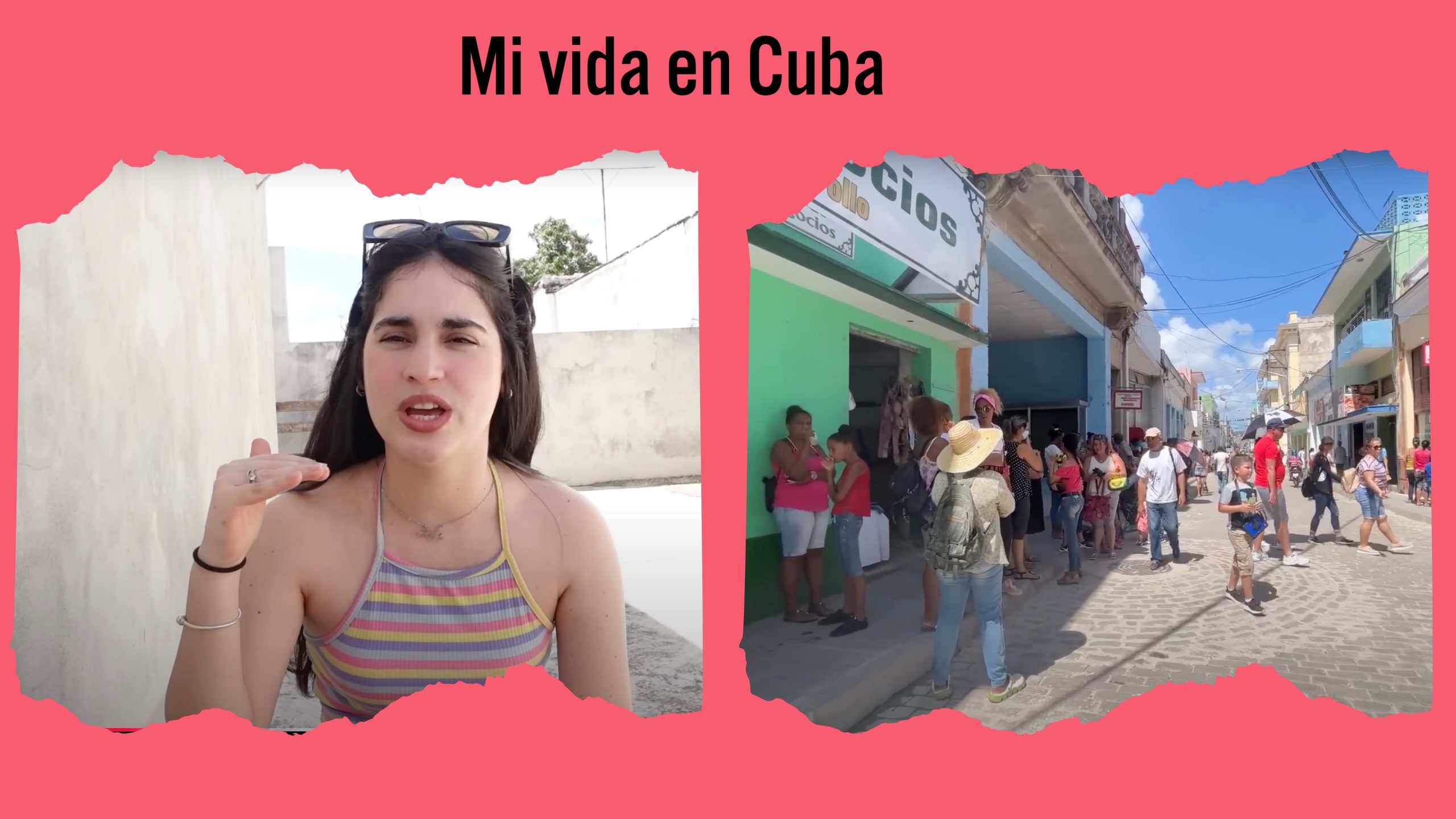
Meet Anita. She is going to describe her daily eating habits and favorite foods in Cuba and ask you about yours.
Steps to take to achieve this task:
- ¿Qué desayunas?- describe your daily eating habits and favorite foods or restaurants and ask others about theirs
- ¿Me das un café, por favor? – order food or coffee in Spanish
- ¿Qué nunca comes?– express what you never eat with negation and ask others what they never order
- ¿Qué comidas prefieres?- use stem-changing verbs to converse about daily eating habits and preferences
- ¿Lo pides mucho? – avoid repeating foods and drinks in conversation with the use of direct object pronouns
- ¿Qué estás comiendo?- describe what you are eating at this moment and what foods taste like with the verb estar
- Task 5 Assessment– describe your daily eating habits and ask others about theirs; compare foods you eat, never eat or prefer
I. ¿Qué desayunas?
Your task in Chapter 5 is to discuss your daily eating habits and favorite foods and ask others about theirs. Are they similar to yours or different? How so?
Have you ever tried Spanish or Latinx food? What are the best Spanish or Latinx dishes that you’ve had? Is there a Spanish or Latinx restaurant you recommend?
Actividad A
In groups of 3-4, see if you could name all of the following Latinx foods in each photo and which country they come from.
Modelo- La comida en foto 1 es el pozole y es de México.
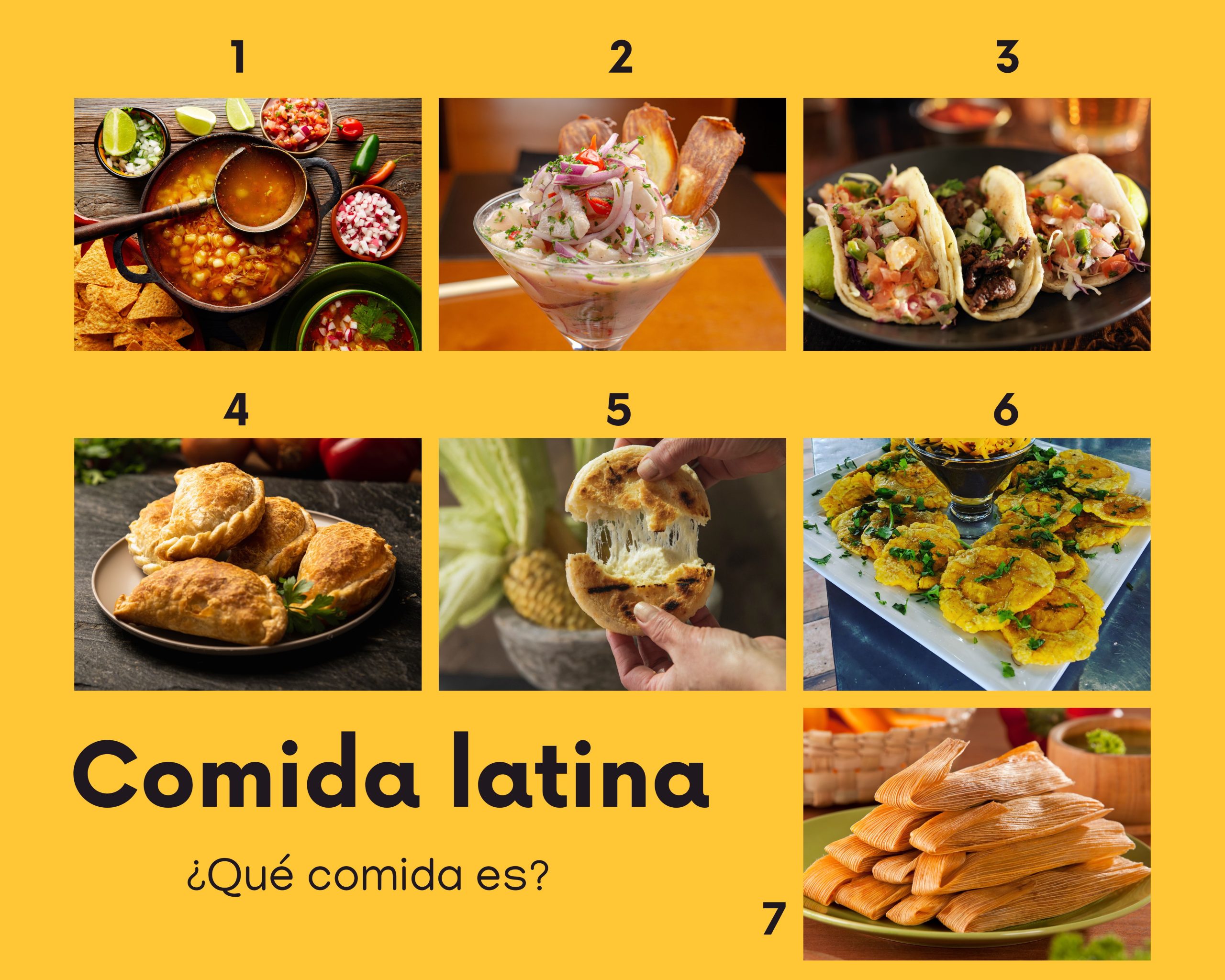
For the answers, click on the following link.
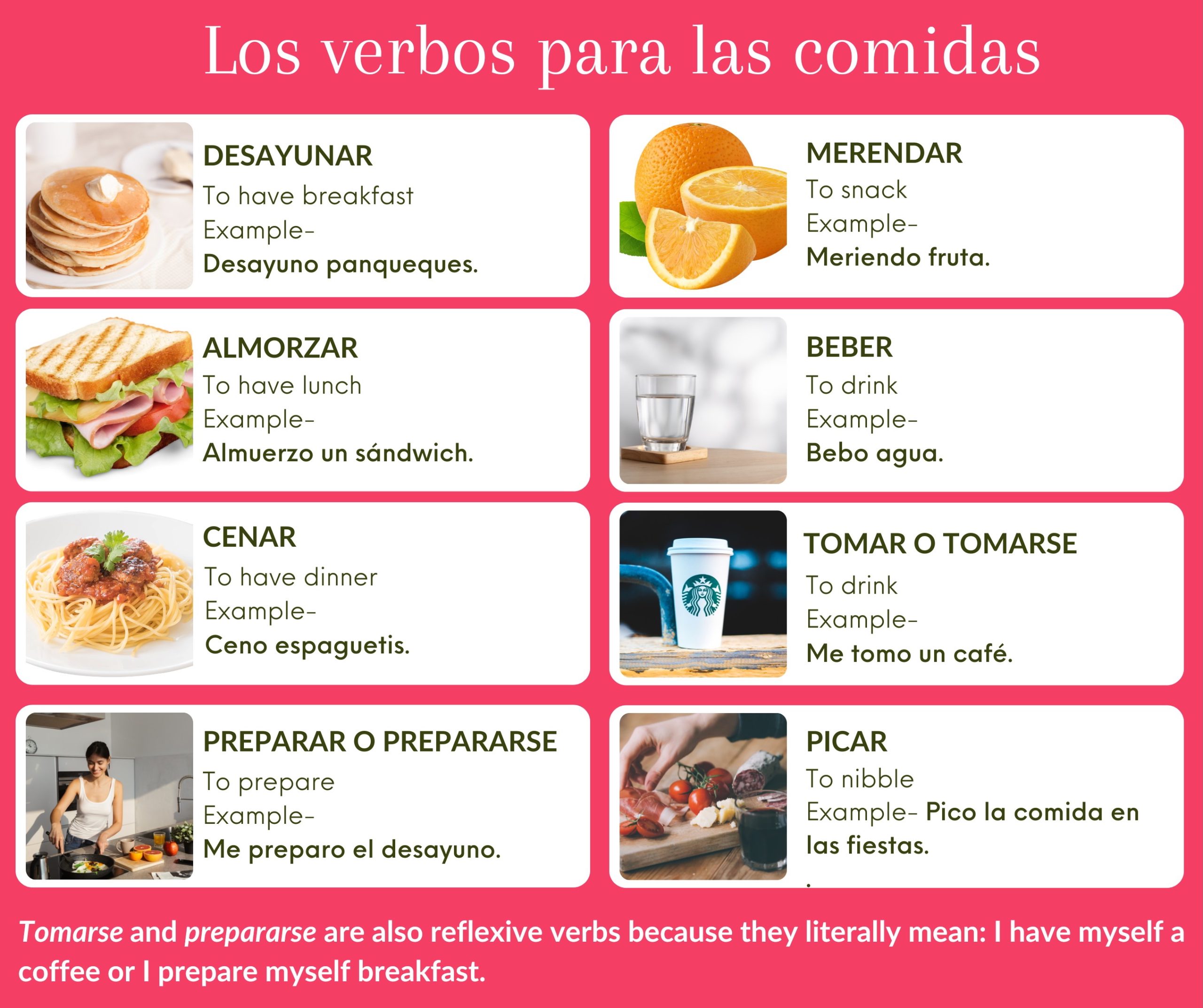
Did you know that in Spanish there are particular verbs associated with eating certain meals? In English, you would say: I eat a sandwich for lunch, or I eat spaghetti for dinner. However, in Spanish, you would use the actual verb almorzar to describe what you eat for lunch and cenar to describe what you eat for dinner. See the following example.
Example- Almuerzo un sándwich al mediodía y ceno espaguetis por la noche.
Explore the different verbs used for meals (las comidas) in Spanish in the following slide. Play the audio to hear how they are pronounced.
Anita, who you met in the Chapter 5 Introduction, is from tropical Cuba. Her friend, Alejandra, is from another tropical country, Costa Rica. Alejandra uses the verbs you just learned to describe her daily meals.
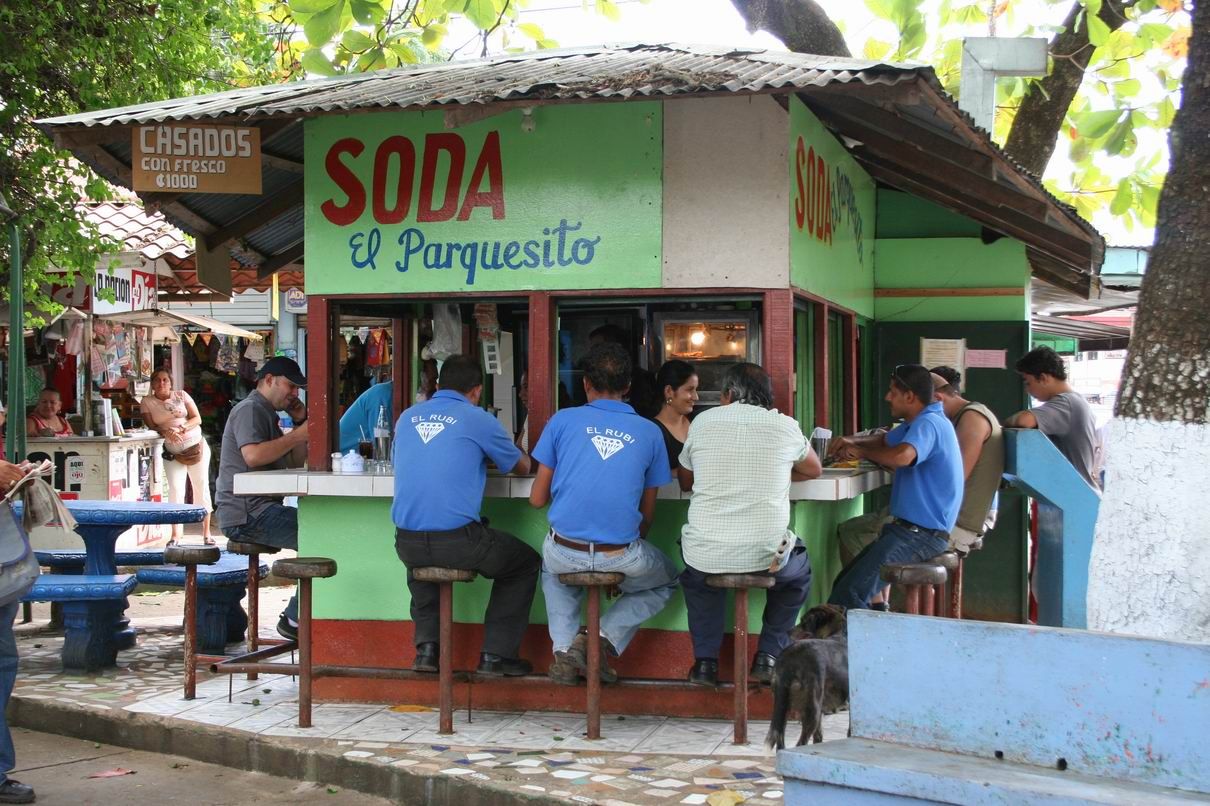
Before you listen to Alejandra’s description of her eating habits, it is important to know that In Costa Rica, a soda is a local restaurant where you can eat a typical casado, which includes rice, beans, salad or plantains, and a meat dish with drink at an affordable price (around $4.00-$5.00). The word casado technically means married. The foods in the casado are married together to bring you a hearty meal. 🙂
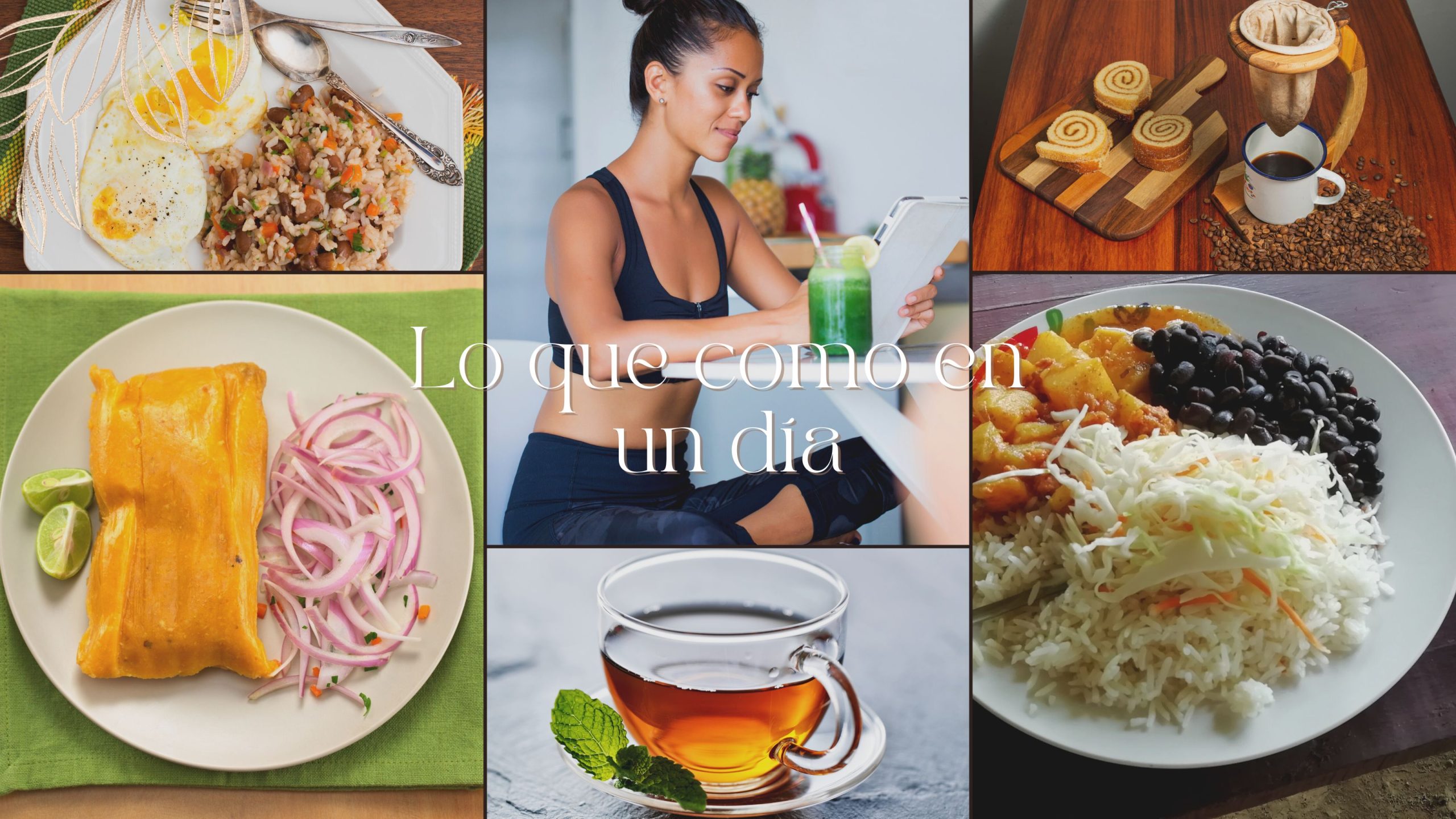
Additionally, you should be aware that gallo pinto is a popular dish in Central America, made up of rice, beans, vegetables and spices. Costa Rican tamales are similar to Mexican tamales, but in Central America, they are made with banana leaves and have different fillings such as potatoes, rice, different meats and vegetables.
In the United States, dinner is the biggest meal of the day. However, in Spain and Latin America, lunch is the main meal of the day. Unlike in the U.S., where lunch is eaten within a 30-minute break or less, in Spain and Latin America, lunch usually takes anywhere from 2-3 hours to eat and enjoy.
Why do you think there is such a difference between lunch and dinner times between the U.S. and Spanish-speaking countries? What are the benefits and disadvantages of eating a 30-minute or a 2-3 hour lunch? Share your opinion.
With this background information, you are ready to listen to Alejandra’s eating habits in Costa Rica.
Actividad B
Do you remember what Alejandra eats for breakfast, lunch, dinner and snack? Check your memory and listening comprehension skills by completing the following activity.
You’ve discussed different foods from Latin America, and you learned about traditional foods eaten in Costa Rica. What foods form part of the U.S. diet? If someone were to ask you about your daily eating habits, would you be able to mention the foods you eat in Spanish?
The following slides include typical foods eaten in the United States for different meals and snacks that could help you express what you eat in a typical day.
Listen as Alejandra pronounces these foods for you in Spanish.
Slide 1- Los desayunos
Slide 2- El almuerzo y la cena
Slide 3- Los postres y meriendas
*If there is a food that you normally eat that it is not located in the previous slides, feel free to look it up at www.wordreference.com.
Actividad C
Paso 1. Based on the slides you just reviewed, place the foods typically eaten for breakfast, lunch, dinner and snack in their appropriate categories.
Paso 2. Pick 3 foods you normally eat for each meal from the slides you just reviewed and list them.
Modelo- El desayuno: los panqueques, el café y los huevos
El desayuno:
El almuerzo:
La cena:
La merienda:
¡Muy bien! 🙂
Actividad D
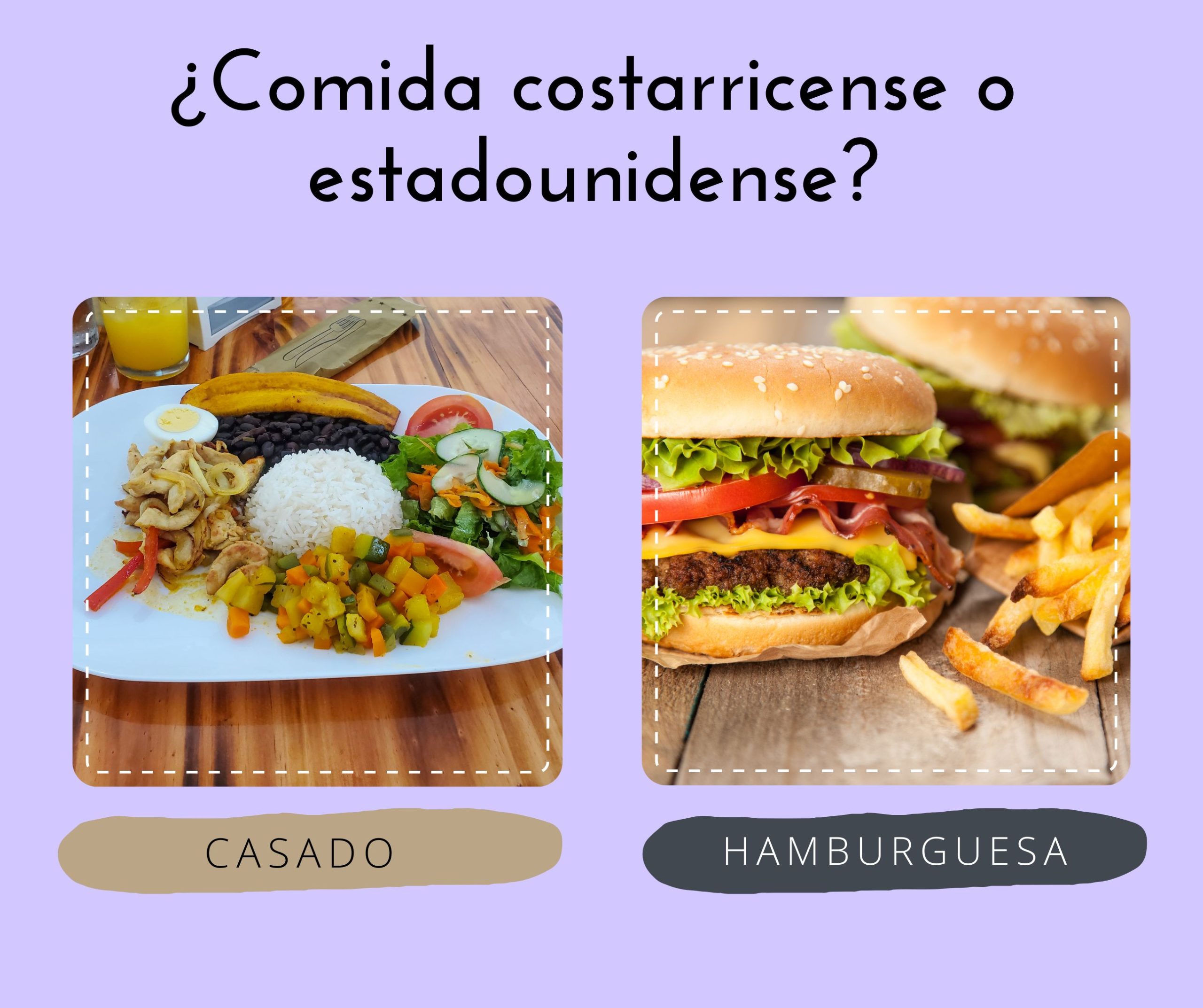
Paso 1. Alejandra shared her traditional meals in Costa Rica. Can you compare and contrast them to traditional meals eaten in the U.S. in the following activity?
Paso 2. What similarities or differences did you notice between Alejandra’s diet and typical meals eaten in the U.S.? Do you prefer Costa Rican meals or ones from the States?
Paso 3. What could you learn from the Costa Rican diet? What could Alejandra learn about the foods typically eaten in the U.S.? Do you believe that the same foods are readily accessible and affordable in the U.S. as they are in Costa Rica? Do you believe that the standard foods consumed in the U.S. are readily available and affordable in Costa Rica? Do you feel one diet is better for you than the other?
Would you be surprised to know that fast food costs double the amount of organic and healthy food in Costa Rica? Yet, in the U.S., organic food costs more than fast food. What do you attribute this vast difference in cost between both countries to?
Es una conversación interesante. 🙂
Like her friend, Alejandra, Anita would like to share a typical lunch she has in Cuba. Is your typical lunch similar or different?
You could select captions in Spanish or English by pressing CC.
Would you like to try Anita’s traditional lunch?
Anita would like to know what you typically eat. Before answering her question, it is important to know how to describe foods you eat with definite and indefinite articles or no article at all.
You learned about definite articles back in Chapter 2. To refresh your memory about the definite articles in Spanish and when to use them, see the following video by Burbujadelespañol. She also introduces you to indefinite articles, which you will learn more about in this chapter when describing foods you generally eat.
Watch as Teacher Catalina introduces you to indefinite articles in Spanish as well.
Actividad E
To specify when a definite article, indefinite article or no article is needed when describing foods or your daily eating habits, review the following guidelines.
See if you could select whether to use a definite, indefinite or no article at all in the following examples relating to food.

Actividad F
Actividad G
Anita currently lives in Galicia, Spain. Anita’s friend, Matías, lives close to her. Listen as Matías discusses foods he eats in Spain. Fill in the blank with the correct definite or indefinite article or no article at all, based on the rules of articles and what you hear Matías say.

Options: No article, Definite article (el, la, los, las) or Indefinite article (un, una, unos, unas)
1. ___ comida en España es muy buena.
2. Típicamente, desayuno ___ pan con ___ tomates. También, me gusta ___ café por la mañana.
3. Almuerzo ___ pollo, ____verduras y ___ sopa. Me tomo ____ botella de agua o ___ refresco.
4. Ceno ___ huevo con ___ patatas y ___ copa de vino.
5. Si tengo hambre, meriendo ___ churro. ¡Me encantan ____ churros de chocolate!
Click for the Answer Key.
¡Muy bien! 🙂
Actividad H
Matías asked what you eat during the day. Anita also has questions about your eating habits. Answer her questions below. Be sure to use the correct article or omit it when necessary.
Record your answers. Be sure to greet Anita, introduce yourself and say thank you and goodbye at the end of your recording. See the model to guide you.
Modelo- Hola, Anita. Mi nombre es Rakesh. Típicamente, desayuno café con dosa, una comida de la India. Almuerzo un sándwich con papitas y bebo agua. Meriendo fruta o chocolate por la tarde. Normalmente, ceno arroz con verduras y garbanzos porque soy vegetariano. Gracias. Hasta luego.
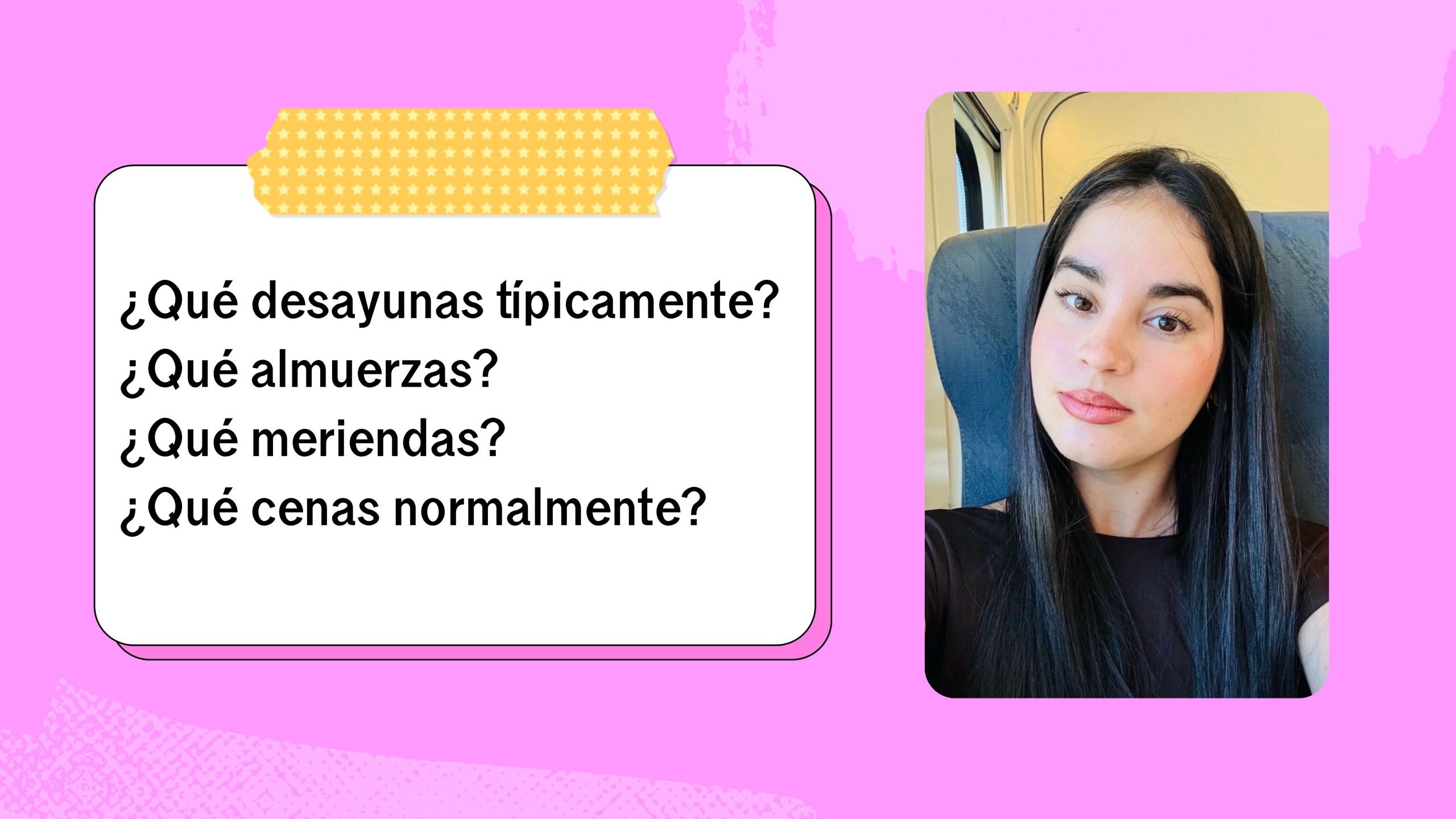
Latin food is very vibrant. Tropical fruits and vegetables have bright colors and are excellent for your health. In Costa Rica and Cuba, for example, it is common to have drinks that are made of fresh fruit. They could be called jugo de + fruit in Spanish or agua de + fruit in Spanish. Examples- jugo de papaya o agua de piña.
If asked, could you describe a fruit, vegetable or drink in Spanish by its color? Do you know your colors in Spanish? Listen as they are pronounced for you.
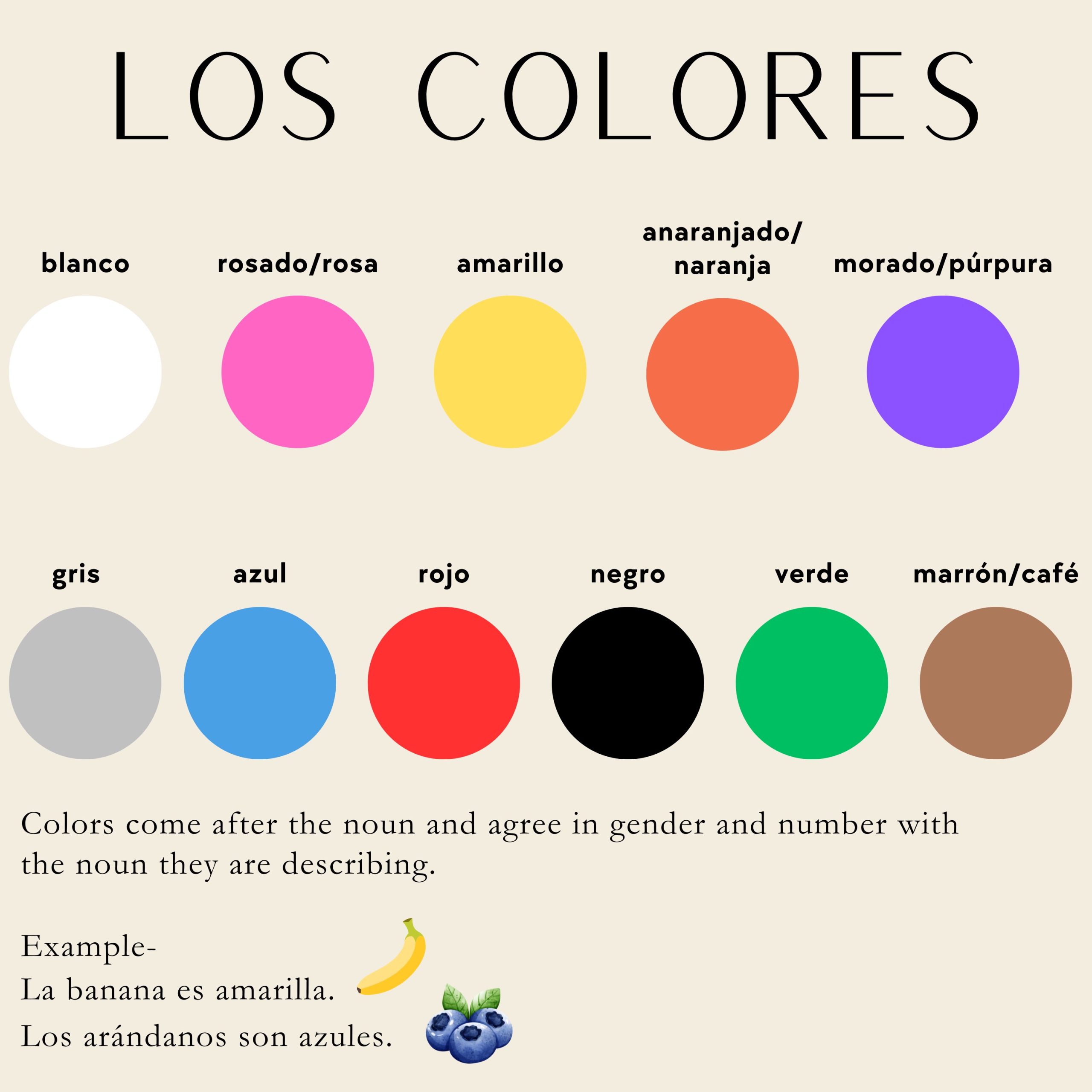
Review the following slides to learn about fruits, vegetables and drinks in Spanish. Can you describe the color of some of them?
Play the audio for the pronunciation of each food or drink.
Slide 1- Las frutas
Slide 2- Las verduras
Slide 3- Las bebidas
Francisco from StoryLearning Spanish breaks down the most popular drinks for you in Spanish. What do you think they are? 🙂
Actividad I
Paso 1. Based on the colors and information you learned about vegetables, fruits and drinks, select the correct answer for each description.
Paso 2. Mesón Sabika is an award-winning restaurant in Naperville, Illinois that serves tapas and other foods from Spain. Look at their colorful tapas! 🙂
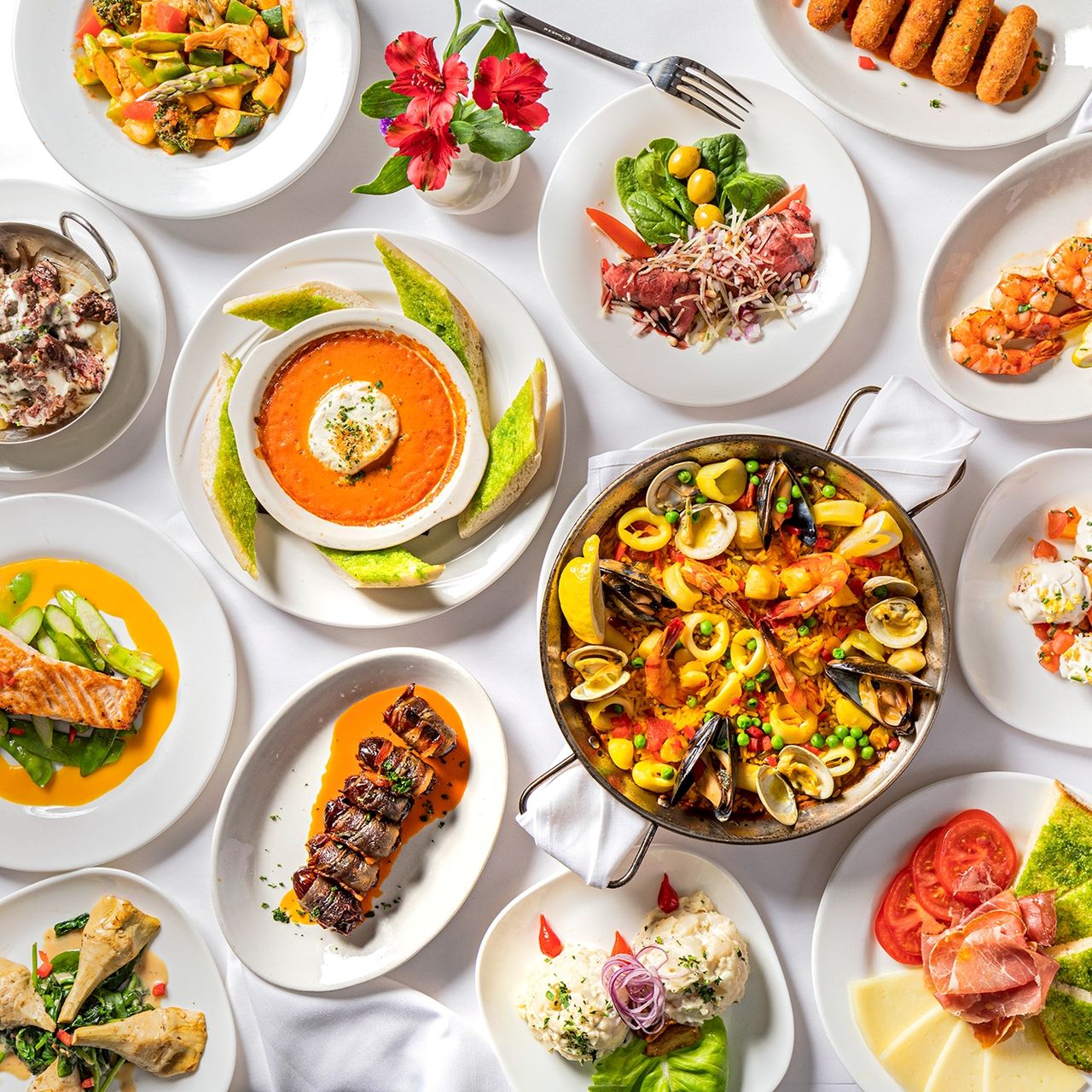
With a partner, review their menu and choose one cold tapa and one hot tapa to describe in Spanish. Using your vocabulary on foods and colors, see if your partner could guess which tapas you are describing.
Modelo-
Estudiante 1- Esta tapa fría es blanca y tiene papas y mucho ajo.
Estudiante 2- ¿Son las patatas con alioli?
Estudiante 1- ¡Correcto!
Another example:
Estudiante 1- Esta tapa caliente es marrón y tiene bistec y cebolla.
Estudiante 2- ¿Es el pincho de solomillo?
Estudiante 1- ¡Muy bien!
Paso 3. Review the menu together, and select your two favorite cold tapas y hot tapas. Do you have any in common?
Modelo- De las tapas frías, me gusta la tortilla española y las aceitunas aliñadas. De las tapas calientes, me gustan las gambas a la plancha y las patatas bravas.
If you live near the area, would you visit Mesón Sabika?
¡Muy bien! 🙂
Intercultural Reflection 1
In Spanish, there is a term called la inseguridad alimentaria, which means food insecurity. La inseguridad alimentaria is when people do not have access to an adequate quantity of food or quality food that meets one’s basic needs. To learn more about food insecurity in English, click on this article by Feeding America. To learn more about la inseguridad alimentaria in Spanish, read the following article by National Geographic.
Social media influencer, Anita Mateu, invites you to explore the issue of la inseguridad alimentaria as she takes you through a day in her life in Cuba. Have you ever been to Cuba? Do you have friends or family from there or that currently live in Cuba? Do you know any traditional Cuban dishes? Did you know that food is scarce in Cuba?
Press CC for captions in the language you prefer as you watch Anita’s YouTube video about food insecurity in Cuba and in her home.
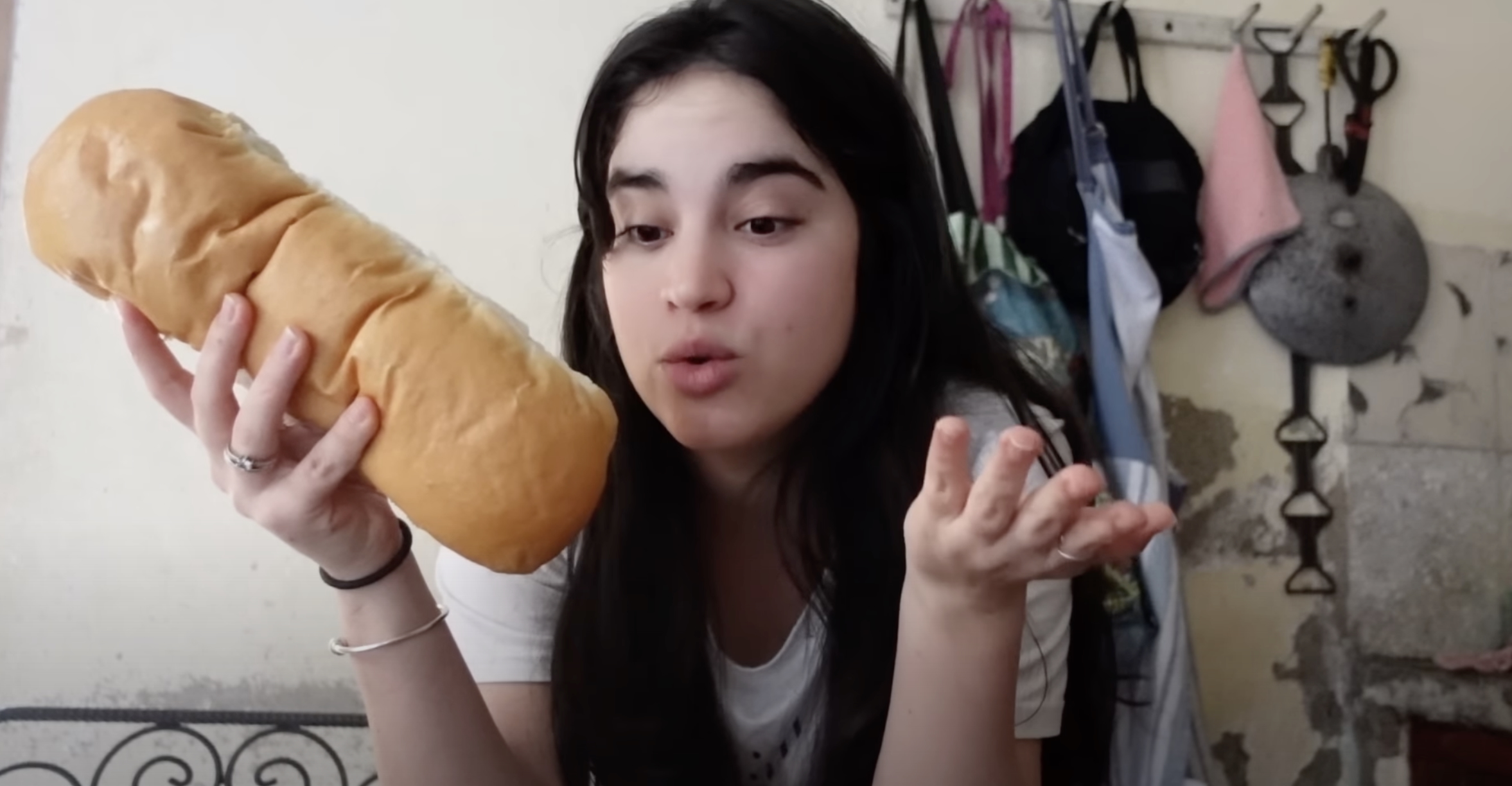
To watch the video, click here.
Explore more
Paso 1. What are your initial reactions to Anita’s video about the food situation in Cuba? Were you aware of how difficult it was to obtain food there? Have you experienced food insecurity in your life or community? If not, do videos like Anita’s open your eyes and heart to the issues of la inseguridad alimentaria? Do you feel more compassion and empathy for those that do not have access to food for their livelihood?
Paso 2. Name 5-7 foods you observed in Anita’s video in Spanish. Name a food that is new for you. Which food do you like and why?
Modelo- En el video, hay (name 5-7 foods). Una comida nueva para mí es ______. En el video, me gusta ______ porque ______.
Paso 3. Anita now lives in Spain, and she is able to send her family money to help them financially. This is common for many Latinos that work in the U.S. They help their families by sending them money for food and basic life needs.
Do you know someone that works in the States and sends money home to their families? How would you feel if you had to leave USA to find work and send money to support your family? By putting yourself in the shoes of someone like Anita, who has to work abroad to support her family, do you better understand the struggles Cubans or other Latinos face?
Paso 4. If you would like to support food pantries in the Chicagoland area to help combat food insecurity, you could donate to the following organizations. If you are experiencing food scarcity, you could also visit these locations for help in the Chicagoland area. Click on each to see what the requirements are to receive assistance.
Loaves & Fishes Community Service
To learn more about food insecurity in the Latinx community in Chicago, watch the following video by WTTW.
It’s time to reflect. Now that you have learned about the daily eating habits of Alejandra in Costa Rica, Anita in Cuba, and others from Mexico and Spain earlier in this chapter, it is time to prepare for your conversation with your virtual conversation exchange partner.
What country is your virtual conversation partner from? What questions would you like to ask your conversation partner about their daily eating habits? What would you like to learn?
Actividad J
Paso 1. For your upcoming virtual conversation exchange, choose 6 questions from the following Lotería sheet that you would like to ask your partner to learn more about their daily eating habits and food preferences in their prospective countries.
Paso 2. As practice for your upcoming virtual exchange conversation, ask your classmates’ about their daily eating habits. Once you receive answers from any 3 boxes in a row, say ¡Lotería!
What did you learn about your classmates’ eating habits and favorite foods or drinks?
II. ¿Me das un café, por favor?
Have you ever tried to order coffee in Spanish or in a Spanish-speaking country?
Watch the following video by charlemos.in.spanish as she parodies what you may encounter when doing so. 🙂
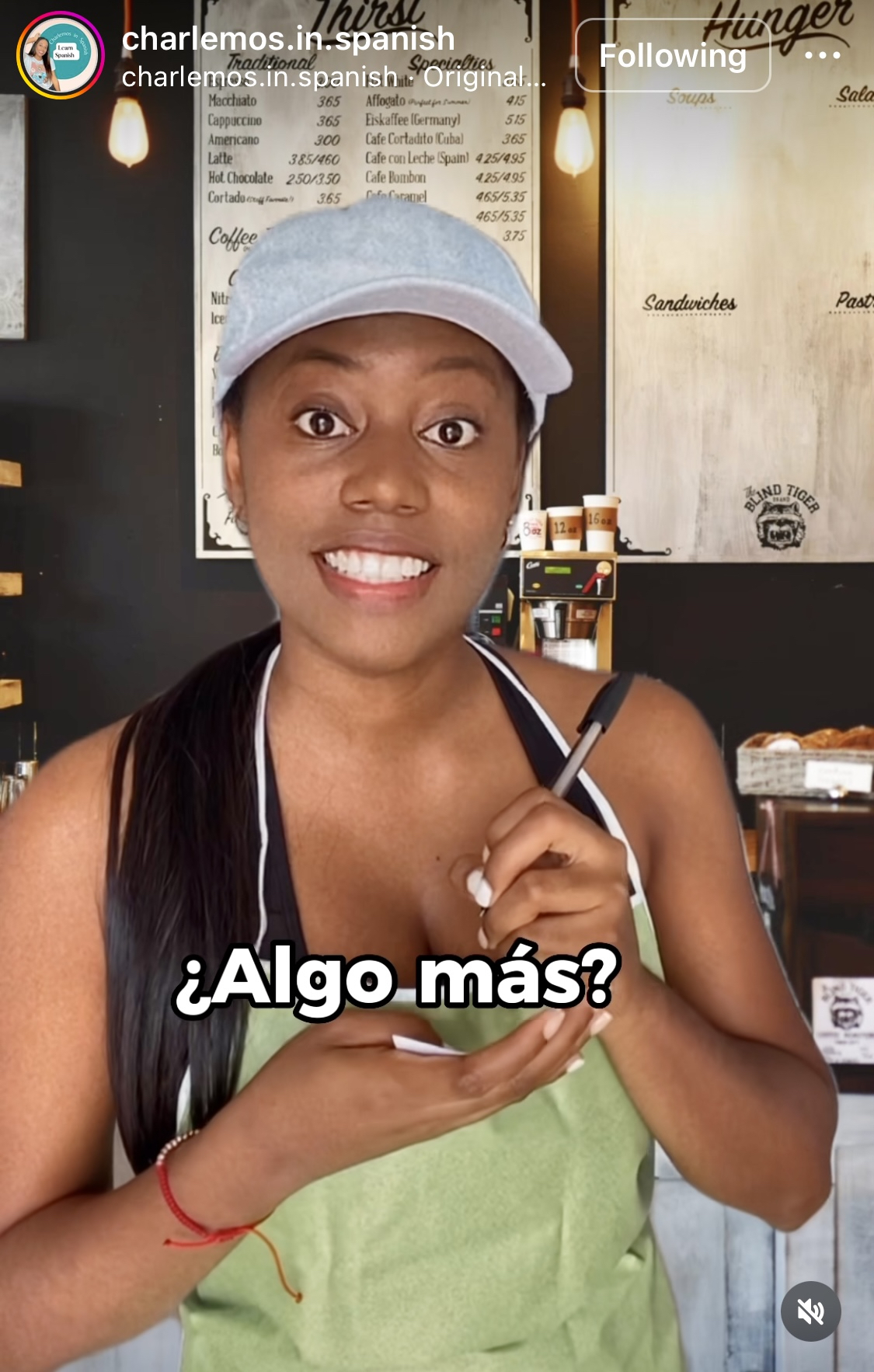
Click on the following link to watch the video.
*Make sure to turn on the sound at the bottom right when you click on the link.
To better prepare you to order coffee or food in a Spanish-speaking restaurant, the following video by habloespanol_ingleby introduces you to appropriate ways to ask for food or drinks in Spanish. Be sure to press the sound on the bottom left of the video.
@habloespanol_ingleby Sound Natural And Confident When Ordering Food in Spanish! 🥗🍕🍣 Ordering food in Spanish is one of the most useful ways to practice your speaking skills. By learning some basic vocabulary and phrases, you will be able to place orders with confidence Vocabulary: 📍 Me gustaría (Verbo “Gustar”): I would like 📍 Quisiera (Verbo “Querer”): I would like 📍 Me pone (Verbo “Poner”): Can I have? #learnspanishwithme #habloespanolingleby #languagelearning #spanishteacher #education #orderfoodinspanish
The following slides provide both formal and informal ways of ordering food in Spanish and questions you would hear a waiter or waitress ask at a restaurant. Press the audio to hear how these expressions are pronounced.
Slide 2- Common expressions to order food
Slide 3- Common expressions you will hear when ordering food
Actividad K

To learn more vocabulary related to ordering foods, please visit the following article by Pimsleur.
Actividad L
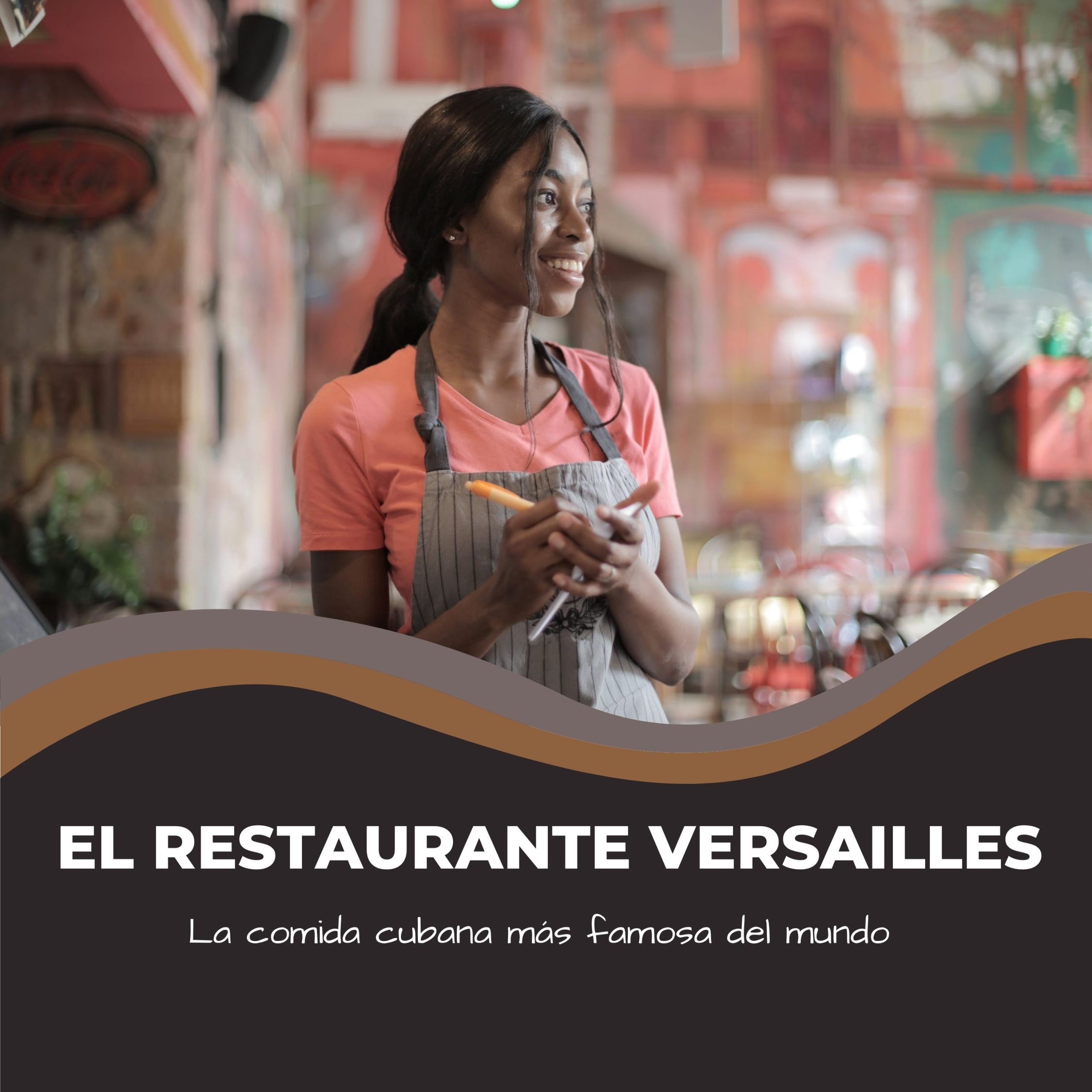
Earlier you saw Anita take her family to a restaurant in her town in Cuba. She was able to do that with the money she earned in Spain. Have you ever been to a Cuban restaurant? If so, what did you order? If not, El Restaurante Versailles has the most famous food in Cuba you could explore.
Paso 1. Review the following menu from El Restaurante Versailles. Select an appetizer (aperitivo), a soup or salad (sopa o ensalada), a main meal (entrada), a drink (bebida) and a dessert (postre).
If you struggle with any part of the menu in Spanish, you could switch to the English version to learn what a certain dish or drink is by clicking at the top and selecting EN.
https://es.versaillesrestaurant.com/menu
Paso 2. Sylvia is your waitress and will be taking your order. Record your full order by responding to each of Sylvia’s questions with the food and drink you would like.
Remember to use the expressions you learned to order food in Spanish. Click here for a review of the expressions.
For example- Quisiera una ensalada. Tráigame una piña colada, por favor. Me gustaría el pastel de chocolate. Gracias.
¡Excelente! 🙂
Actividad M
Paso 1. Find a partner. You will be completing a role-play. You will choose to either order coffee at a café or food at a restaurant. If you choose the café, someone will be the barista, and the other person will order. If you choose to order food at a restaurant, someone will be the waiter or waitress, and the other person will be the diner.
*You choose if the conversation will be formal or informal.
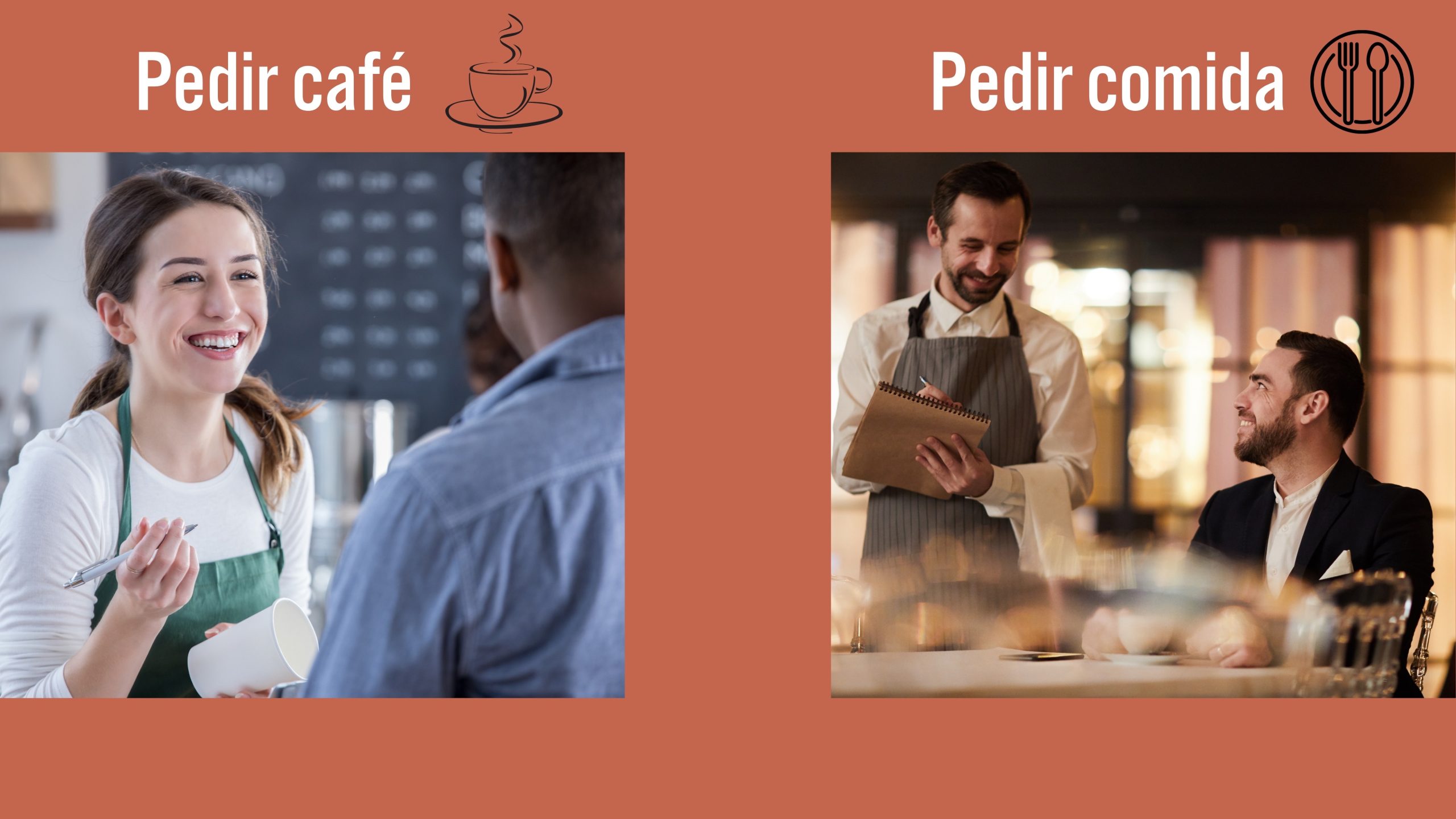
Paso 2. Complete the role-play. Use the following model as an example. Note that this example is in a formal setting.
*If there is a food or drink that you would like to order, and the vocabulary word is not located in the slides or activities you’ve learned, feel free to look up that food at www.wordreference.com.
Mesero– Buenas tardes. ¿Cómo le puedo servir? ¿Está listo para ordenar?
Cliente– Hola. Sí, estoy listo. Quisiera el bistec con el puré de papas (mashed potatoes) y las zanahorias. (Here you are using the definite article since you are specifying the foods you want from the menu.)
Mesero– ¿Y para tomar? ¿Qué le puedo traer?
Cliente– Tráigame una copa de su mejor vino tinto, por favor.
Mesero– Muy bien. ¿Desea un postre?
Cliente– No por ahora. (Not now) Gracias.
Mesero– Me parece bien. Ahora vengo con su copa de vino.
III. ¿Qué nunca comes?
Anita discussed the food scarcity in Cuba in her earlier video. She mentioned that she never has olive oil to cook with or gluten-free pasta to eat because it is not available to consumers in Cuba.
To express something you never eat or order, you will need to know about negation or la negación in Spanish.
The following video by SpanishMadeEasySugarAstronaut introduces you to so common words used in negation.
Sugar mentions how double negatives are normal in Spanish. Did you know this?
Watch as Burbujadelespañol uses double negatives in context during her walk. Press sound on the bottom left of the video. For a transcript of Burbuja’s sentences, click here.
@burbujadelespanol ¡La doble negación en español! 💬 ¿Sabías que en español usamos la doble negación para expresar que algo no ocurre? 🤔 En este reel, te mostramos situaciones cotidianas donde usamos frases como “Ne veo nada” o “No hice nada”. ¡No te pierdas cómo funciona esta curiosidad de nuestro idioma! 🧠✨ 👉 ¿Ya las conocías? ¡Dime en los comentarios que otras expresiones conoces! 😄👇
For a summary of Sugar’s video on negation and other example of negative words used in Spanish, review the following slide.
Actividad N
Select whether the following statements are cierto or falso for you.

- Nunca como comida mexicana. C/F
- No bebo café jamás. C/F
- No hay nada en mi refrigerador. C/F
- No tengo ninguna fruta exótica en mi cocina. C/F
- Nadie en mi familia cocina comida latina. C/F
- No desayuno gallo pinto ni papaya en mi casa. C/F
- Tampoco bebo jugo verde. C/F
Actividad O
Paso 1. Read about Anita’s eating habits in Cuba. You will notice that she uses negation in her statements. Select all of the negative words in her paragraph.
Paso 2. Learn more about your classmates. Choose 4-5 different students and ask each of them one of the following questions about their supermarket and eating habits.
1. ¿Qué nunca compras en el supermercado? ¿Por qué no?
2. ¿Qué ni cocinas ni comes jamás? ¿Por qué no?
3. Anita no compra nada muy caro (expensive) en los supermercados. ¿Y tú? ¿Tampoco compras comida cara o sí? ¿Dónde compras tu comida?
4. ¿Alguien en tu familia cocina comida mejor que la mamá de Anita? ¿Quién es?
5. ¿Qué fruta o verdura jamás comes?
IV. ¿Qué comidas prefieres?
You’ve shared foods you never eat or buy with negative expressions. What foods do you prefer or tend to eat? To answer this question, you will need to know how to use stem-changing verbs. In Spanish, they are called verbos con cambio de raíz.
See the following slide for a visual of popular stem-changing verbs related to foods preferences or eating habits.
Play the audio to hear how these stem-changing verbs are pronounced.
Listen as Ernesto speaks about his job at a restaurant. Notice how he uses the stem-changing verbs you just learned.
For a transcript of Ernesto’s video, click here. Scroll to Ernesto.
Actividad P
Paso 1. Select all of the stem-changing verbs you heard in Ernesto’s video.
Paso 2. Answer Ernesto’s questions he asked you at the end of this video by recording your answers.
Modelo-
1. Start with a greeting, say your name and mucho gusto.
2. Answer Ernesto’s 3 questions:
¿Qué pides cuando vas a un restaurante? You would answer: Cuando voy a un restaurante, pido ______.
¿Sueles comer mucho? You would answer: Sí, suelo comer mucho. OR No suelo comer mucho.
¿Prefieres la comida picante? You would answer: Sí, prefiero la comida picante. OR No prefiero la comida picante.
3. Say thank you and goodbye.
BaseLang would like to discuss stem-changing verbs with you. Pause the video at any point, and take notes if you can.
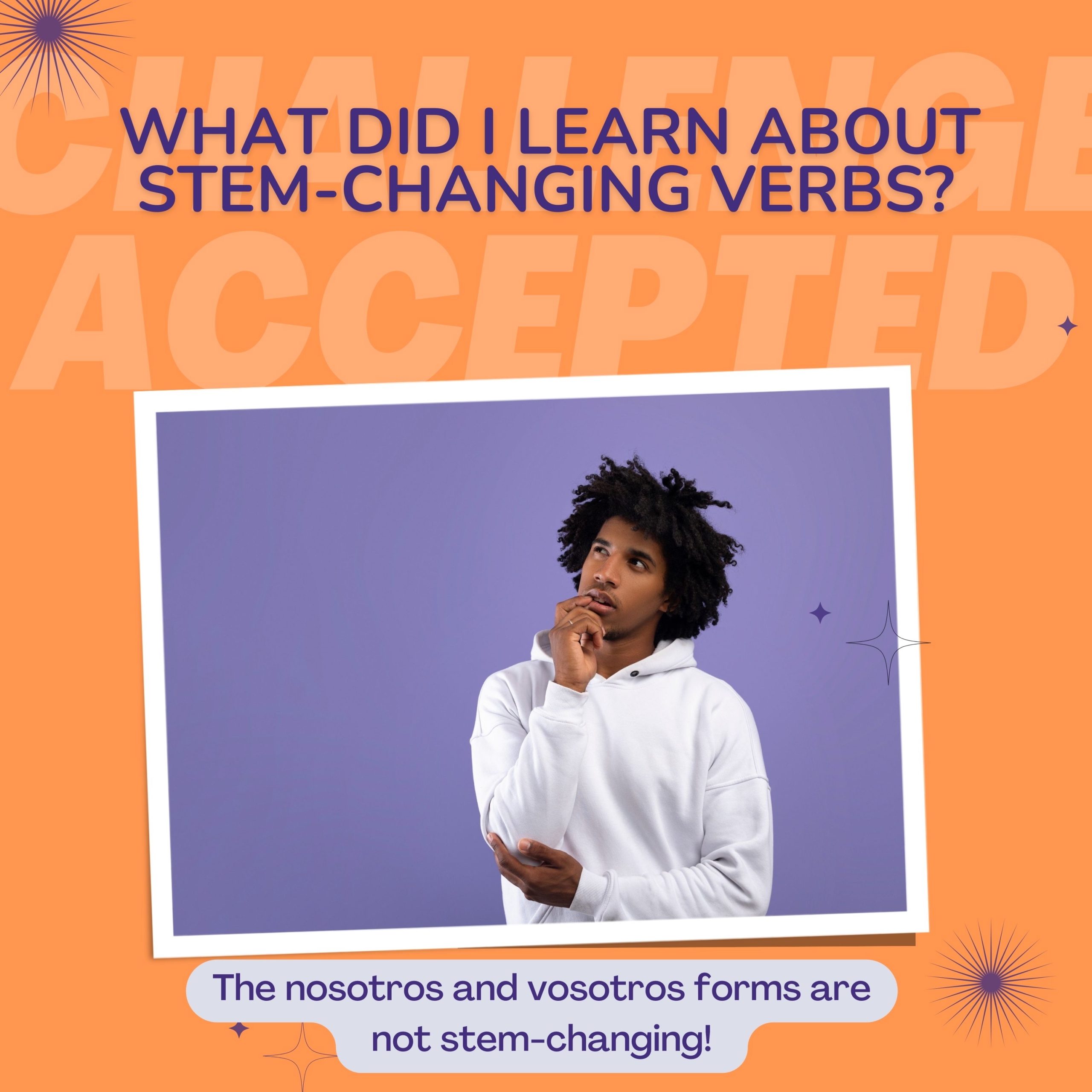
Based on the video, stem-changing verbs do not follow the change in spelling in the nosotros and vosotros forms.
See the following examples:
Mi amiga almuerza en casa, pero mi familia y yo almorzamos en nuestros trabajos.
Mis padres suelen desayunar temprano, pero vosotros soléis desayunar tarde.
Mi mejor amigo prefiere tomar café caliente, pero mis amigas y yo preferimos beber café frío.
Ernesto piensa que la comida mexicana es buenísima, pero mi familia y yo pensamos que la comida argentina es mejor.
Ellos quieren comer comida latina en la clase, pero vosotras no queréis la comida en la clase.
Mi padre sirve la comida en casa. Mis hermanos y yo servimos la comida cuando nuestro padre no está.
Nuestro perro prueba nuestra cena cada noche, pero vosotres no probáis su comida jamás.
Mis hermanos piden comida con mucha carne, pero mis padres y yo pedimos comida vegetariana.
Actividad Q
Paso 1. Have you ever played This or That? :). In Spanish, it is called ¿Esto o aquello?
Ask another student what food option they prefer with the stem-changing verb, preferir, and then switch roles.
Modelo: ¿Prefieres Coke o Pepsi? Posible answer- Prefiero Coke.
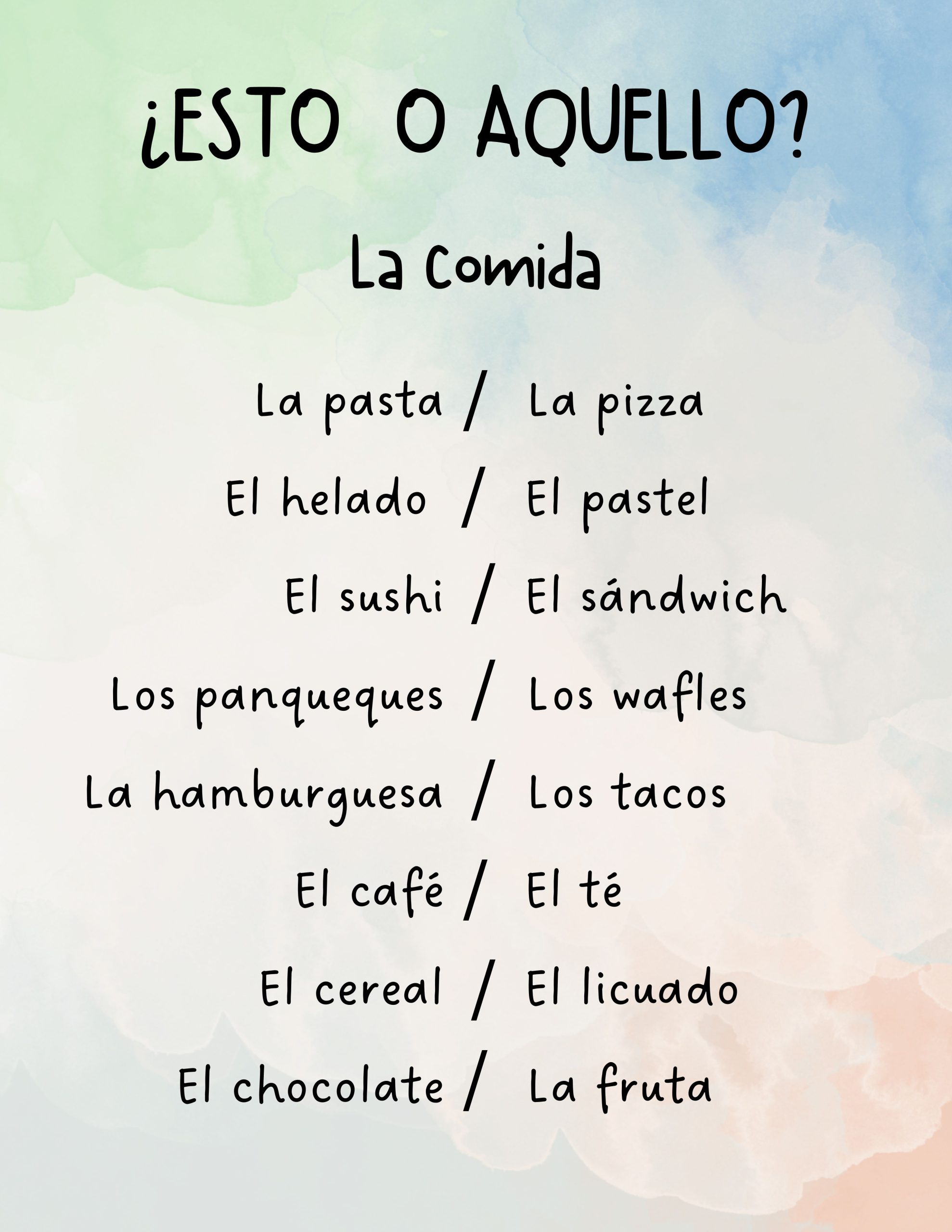
Paso 2. Ask the following questions to see what your conversation partner’s family and friends prefer to eat or drink. When they answer your questions, you will hear a mix of stem-changing verbs and verbs without a stem-change in the nosotros form.
- ¿Tu familia prefiere tomar refrescos o agua? – Mi familia prefiere tomar…
- ¿Tus amigos y tú suelen cenar en casa o en restaurantes? – Solemos cenar en….
- ¿Tus amigos y tú almuerzan en la cafetería o en otro lugar? – Almorzamos en…
- ¿Tus amigos piden comida por DoorDash o Uber Eats? – Mis amigos piden comida por…
- ¿Tu familia prefiere desayunar panqueques o huevos? – Mi familia prefiere desayunar…
¡Bien hecho! 🙂
Actividad R
You now know how to use stem-changing verbs to discuss food preferences and eating habits. What questions would you like to ask your virtual conversation partner about their favorite foods and restaurants?
You could use any of the following stem-changing verbs for your questions:
preferir, pedir, soler, almorzar, querer, servir, probar, and pensar.
Modelo: ¿Qué sueles desayunar? ¿Prefieres almorzar en casa o en el trabajo? ¿Qué comida pides en tu restaurante favorito?
With a partner, work together to create 5 questions you would like to ask your Spanish-speaking conversation partner about their food and restaurant preferences with stem-changing verbs.
Intercultural Reflection 2
Have you ever tried authentic Mexican tortillas? ¿Prefieres las tortillas de maíz o de harina? Do you prefer corn (tortillas de maíz) or flour (tortillas de harina)? Have you ever made them or seen someone make homemade tortillas from scratch?
In the following video by elviajedeallende, watch as Allende interviews and records a local señora from México, who takes you on her journey to making corn tortillas from the corn kernels to the hotplate (comal).
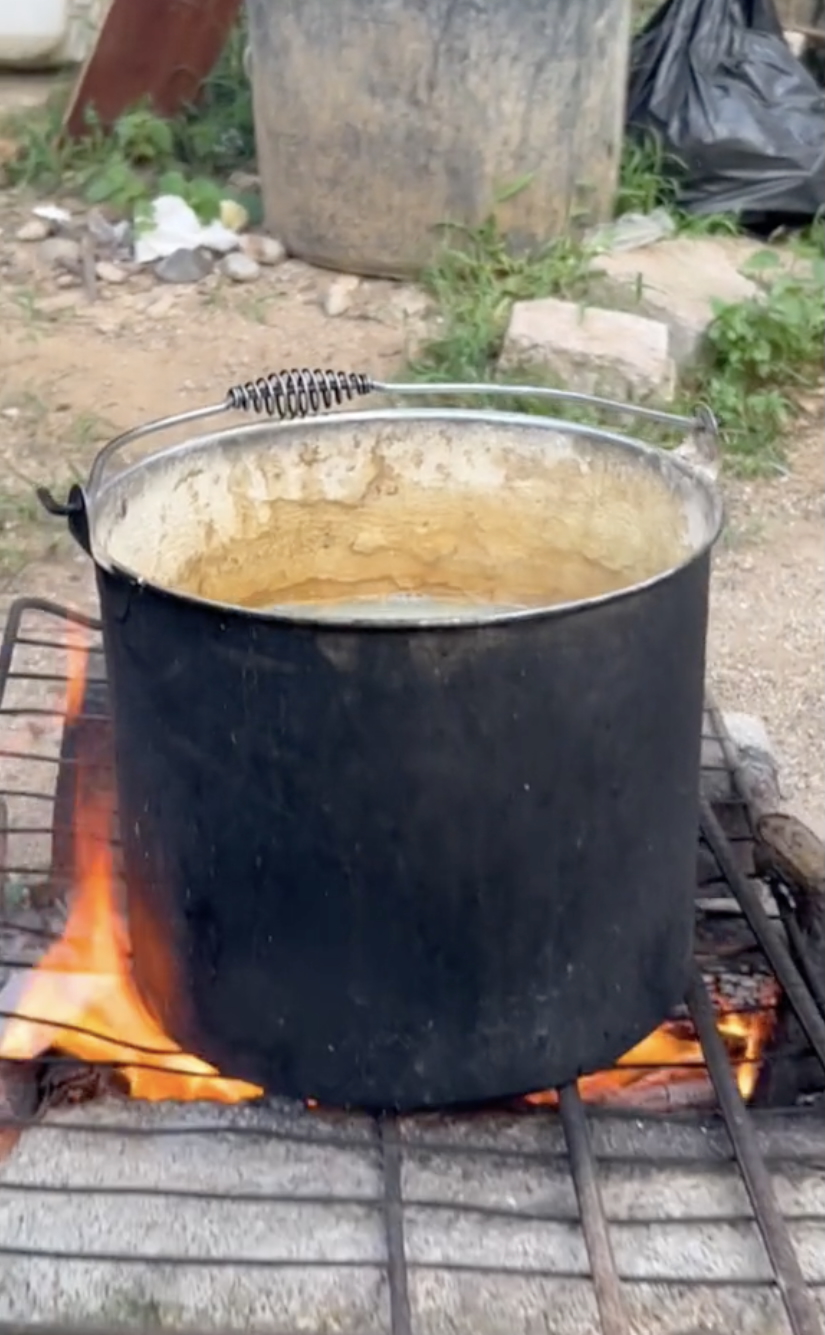
Click here to see the video. Press sound on the bottom right of the video and CC for captions in the language you prefer.
Explore more
Paso 1. What is your reaction after watching how tortillas are made in Mexico? Did you know that corn tortillas were made this way or take this much work to make? Does it make you appreciate homemade corn tortillas more? Share your thoughts.
Paso 2. Does your family make food from scratch as the señora does from México? Does it take as much work as making corn tortillas? What is special about homemade food to you? What does it represent? If you don’t cook homemade meals, will you try it?
You discussed food insecurity earlier in the chapter. Because funds are limited in Mexico as well, making tortillas from scratch is the more affordable way to cook and eat. Have you ever had to think about making food from scratch to save money? If not, does this practice open your mind to someone else’s perspective and struggles with lack of funds to pay for food more? Share your thoughts.
Paso 3. Write 3 questions for the señora in the video from the stem-changing verbs soler, preferir, pensar, almorzar, querer, servir, or probar to get to know more about her. To show respect, be sure to use the Ud. form for your questions.
Modelo: ¿Piensa que la tortilla de maíz es mejor que la tortilla de harina? ¿Por qué?
Paso 4. Would you ever try making your own corn tortillas if the dough (masa) was already available to you? If you are interested, you could find tortilla making kits online. Here is one by Masienda.
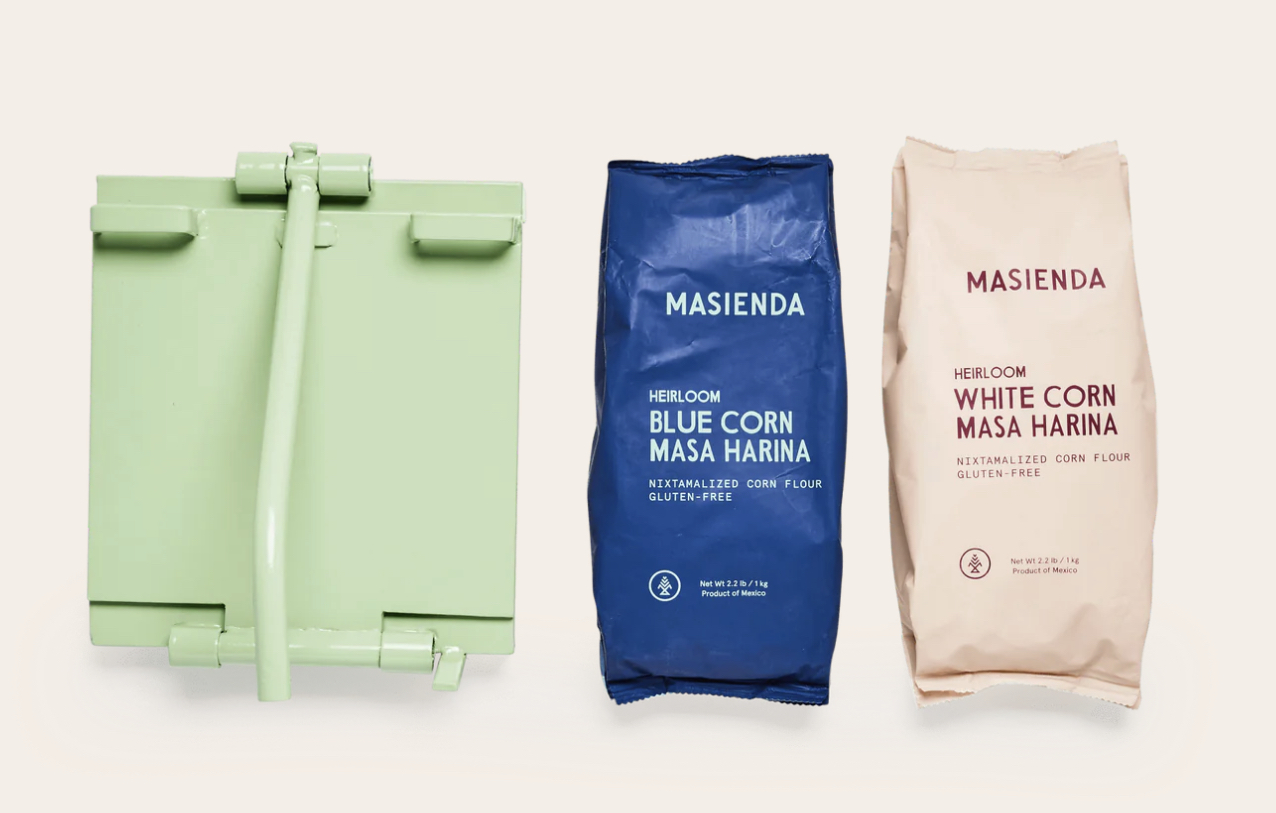
Masienda uses heirloom corn from Mexico. You could learn about Masienda’s tortilla kits and mission to bring the freshest corn from local farmers in their sourcing reports. Is supporting local farmers and communities important to you? Explain why.
https://masienda.com/pages/story
V. ¿Lo pides mucho?
Food is an exciting topic of conversation. To avoid repeating a food item being discussed, you could use a direct object pronoun instead. For example, I could say I eat bananas. I eat bananas every day. I buy bananas at the supermarket. You notice that the word bananas is repeated several times. To avoid this, I could use a direct object pronoun in its place. For example, I eat bananas, and I eat them every day. I buy them at the supermarket. The “them” is the direct object pronoun.
See the following slide for a list of the direct object pronouns in Spanish and how to use them in conversation about foods and eating habits.
Play the audio to hear how the direct object pronouns are pronounced.
Watch as Spanish Playground uses direct object pronouns when describing what Juan cleaned in the kitchen.
You could press CC for captions in the language you prefer.
Actividad S
¡Muy bien! You successfully identified direct object pronouns from Spanish Playground’s video.
Teacher Catalina discusses direct object pronouns in more detail, how to identify them in a sentence, and how to use them with one or two verbs.
See if you could recognize the direct object pronouns Teacher Catalina discussed in the following activity.
Actividad T
Listen as a food blogger asks a new and upcoming chef about their restaurant. Can you spot out the direct object pronouns used in Chef Mikaela’s answers?
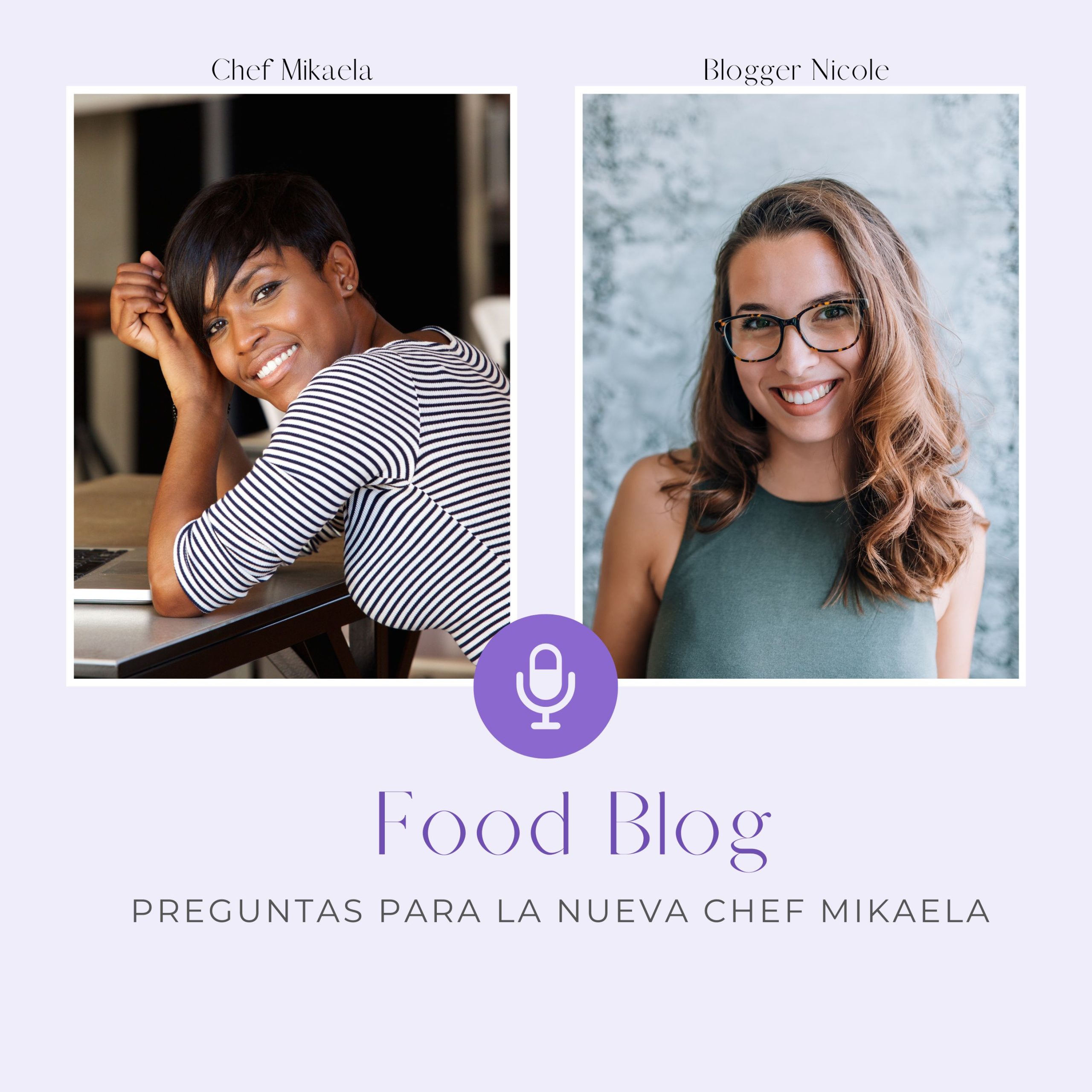
Mark whether the following responses by Chef Mikaela are true or false.
- La comida favorita de Chef Mikaela es el chocolate oscuro. Lo come cada noche. C/F
- Chef Mikaela bebe café dominicano y lo bebe con leche. C/F
- Prepara la comida en su restaurante con un sabor casero (homemade). También la prepara con mucho amor. C/F
- Chef Mikaela es de Cuba. C/F
For the answer key, click here.
Actividad U
Paso 1. Put a check by the frequency or the ways you eat each food item. If you don’t eat one of the following foods, select that option.
Paso 2. Read your answers to a classmate.
Modelo- El cereal. Lo desayuno con frecuencia y lo como con leche.
Do you have anything in common? 🙂
Actividad V
Find a partner. Discuss the following foods by choosing 2 foods and asking your partner the questions under each photo. Your conversation partner should answer in complete sentences.
Modelo- Vamos a hablar del sándwich. ¿Lo comes mucho? ¿Lo comes con o sin carne? ¿Lo comes en casa o en un restaurante?
Possible answers: Sí, lo como mucho. Lo como con carne y lo como en casa.
What did you learn about your conversation partner’s eating habits and preferences?
Actividad W
You are now able to use direct object pronouns in conversation to learn more about your conversation partner’s eating habits. 🙂
Photo by TalkAbroad
Paso 1. Put a check by 2-3 questions you would like to ask your TalkAbroad conversation partner to get to know their eating habits better.
- ¿Bebes café por la mañana? ¿Lo bebes frío o caliente?
- ¿Desayunas los huevos? ¿Los comes revueltos (scrambled), duros (hard-boiled) o fritos (fried)?
- ¿Comes la pizza en tu país? ¿La comes en casa o en un restaurante?
- ¿Qué refresco prefieres tomar? ¿Lo sueles tomar todos los días?
- ¿Cuál es tu merienda favorita? ¿Prefieres comerla por la tarde o por la noche?
Paso 2. Create 1-2 more questions you would like to ask your TalkAbroad conversation partner about their eating habits. Do you find you have more similarities or differences in your eating habits?
VI. ¿Qué estás comiendo?
Are you drinking anything at this moment? Are you eating something while you read this book? By chance, are you snacking as you take notes? All of these questions have something in common. Do you know what that is? If you guessed that the verbs involve food and an ing ending, you would be correct! 🙂
Ing verbs in Spanish are in the present progressive tense, which in Spanish is called verbos en el presente progresivo o presente continuo. Present progressive verbs require the verb estar.
Watch as Hola-Spanish shows you what she is doing right now using the present progressive or present continuous tense.
The following image depicts what people are doing at a restaurant with the presente progresivo/presente continuo.
Actividad X
To form the present progressive or present continuous tense, you need the verb estar conjugated in its proper form + the gerund, which is what forms the ing part of the verb.
Watch the following video by Spanish Gitana to learn more about the present progressive or present continuous tense in Spanish.
Mi Camino Spanish TM shows examples of actions in the present progressive in context for you.
Both videos show you examples of how to use the present progressive tense in context. It is important to note that there are gerunds, or ing endings, that are irregular.
See the following slide for a summary of what the present progressive or present continuous tense is and a list of the irregular gerunds in context.
Play the audio to hear how the gerunds are pronounced in a sentence.
StoryLearningSpanish uses el presente continuo o progresivo in context as he tells a story. How many verbs in the presente continuo can you identify?
Write at least 5 verbs you heard in the video that are in the present progressive or present continuous tense.
1.
2.
3.
4.
5.
¡Muy bien! 🙂
Actividad Y

Select whether the following activities are most likely happening in a restaurant with lógico (logical) or ilógico (illogical).
- El chef está durmiendo en la cocina. lógico/ilógico
- Los clientes están pidiendo comida del menú. lógico/ilógico
- La mesera está sirviendo la comida. lógico/ilógico
- El cliente está leyendo el menú. lógico/ilógico
- El mesero está dejando la propina (tip). lógico/ilógico
For the answer key, click here.
You’ve learned a lot about foods and drinks from Spain, the Latinx world and the U.S. ¡Muy bien! :). In both Spain and Latin America, vacationing by the beach and enjoying food there is very common.
Can you describe what is happening at the beach in the following photo using the present progressive tense?
Actividad Z
Paso 1. ¿Qué están haciendo en la playa? Select the correct answer to describe what each person is doing at the beach.
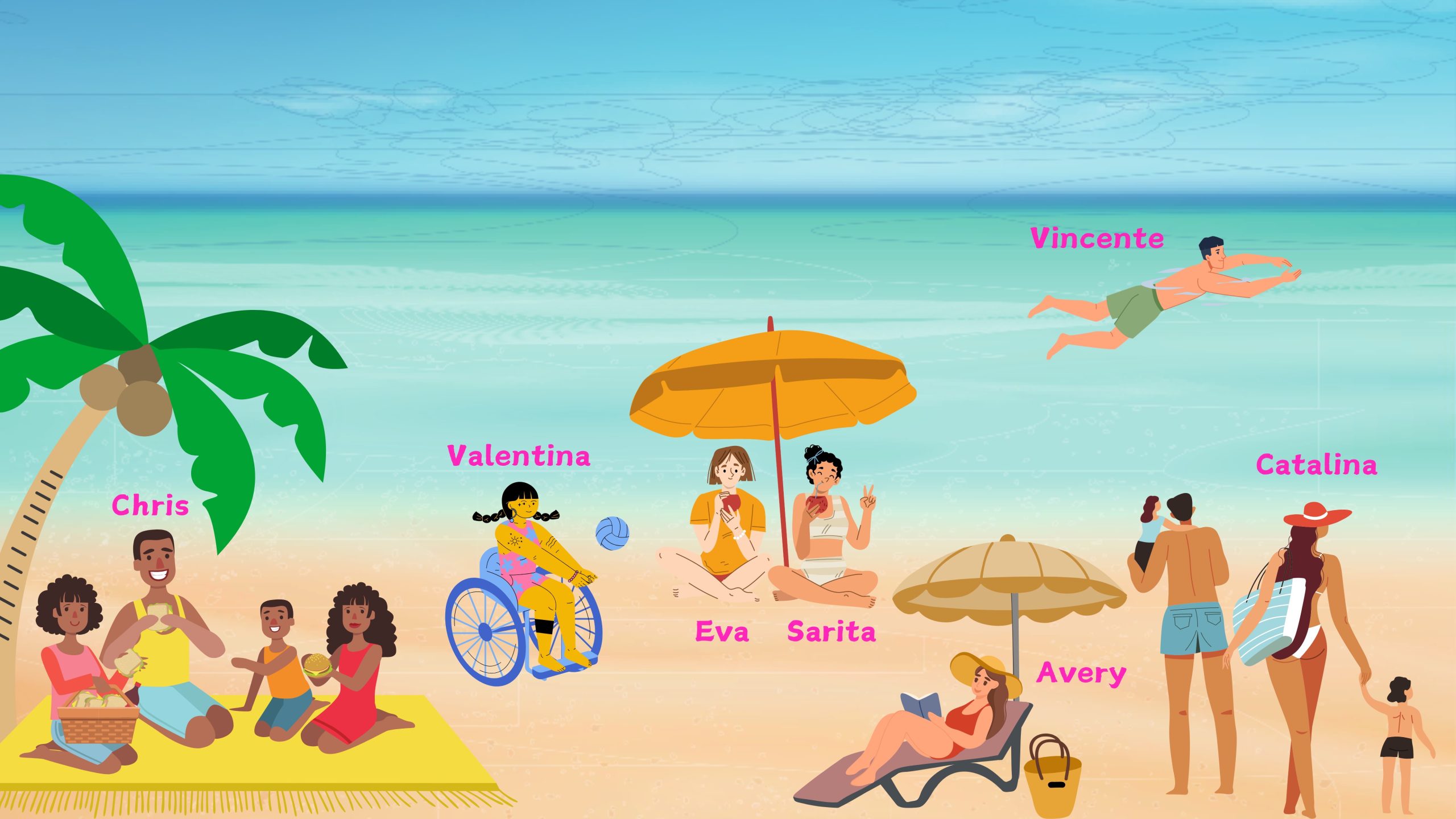
Paso 2. Finish the activity by stating what Avery and Vincente are doing at the beach. Don’t forget to include both the estar verb + the gerund.
Avery ___________.
Vincente __________.
In preparation for your upcoming TalkAbroad conversation, what questions would you like to ask your virtual conversation partner?
In groups of two, create 3 more three questions to ask your TalkAbroad conversation partner in the present progressive.
Intercultural Reflection 3
When tourists or students visit Costa Rica, they usually frequent the west coast beaches by Guanacaste and Quepos or the capital, San José, where there are beautiful plazas, museums and the famous National Theatre. Rarely do you hear of the Caribbean side of Costa Rica as a frequented vacation spot. A popular city in the caribe de Costa Rica is Limón.
The beaches of Limón are less populated and developed than the touristy areas of the west coast of Costa Rica. Why do you think this is?
Limón has a large creole and black population due to African and Caribbean influences, with indigenous communities as well that live in the area. Some say this is the reason most tourists and Costa Ricans themselves prefer to vacation in the upper northwest side of the country versus in Limón. Do you feel this is just?
Would you rather vacation in a heavily populated and touristy beach in Costa Rica or a more secluded and less popular beach with diverse cultural roots?
ArayaVlogs takes you on a culinary journey through Limón. You will get to explore the many cultural influences in Limon’s gastronomy and visit a soda or two, where you can actually see Araya trying the foods.
Press CC for captions in the language you prefer.
Explore more
Paso 1. Write 3-4 new foods you learned that are specifically made and eaten in Limón, Costa Rica. Describe what ingredientes are included in these foods in Spanish.
Modelo- Cuatro comidas nuevas en el video de AryaVlogs son: ______, ______, ______ y ______. Los ingredientes en estas comidas son _____, _____, ____ y ____.
Paso 2. Name a new food you would like to try and explain why. What influence/s are in this dish?
Modelo- Me gustaría probar ________ porque _______. Esta comida viene de __________ (name the area or country in Spanish).
Paso 3. Name 3 things AryaVlogs is doing in his vlog using the present progressive tense in Spanish.
Modelo- AryaVlogs está caminando por Limón.
1.
2.
3.
Paso 4. Are there areas in your country that are not frequented due to specific cultures or communities that live there? What are they? Do you feel this is fair? Do you feel people are missing out on the richness of that culture, such as the food, by not visiting these underrepresented communities? What could you do to bring more attention to underrepresented communities?
Paso 5. Would you like to learn how to make red beans and rice from Cahuita, which is in Limón, Costa Rica? Watch the following video and discuss why you would or would not want to make this traditional dish from Limón.
Press CC for captions in the language you prefer.
VII. Chapter 5 Final Assessment
In this chapter, you’ve discussed your eating habits and food preferences. You learned how to order food or coffee, express what you never eat with negation, state what foods you prefer with stem-changing verbs and direct object pronouns, and describe what you and others are eating or doing with the present progressive tense.
¡Excelente! You’ve learned so much!
Throughout this chapter, you’ve gotten to know Anita and learn about her daily eating habits in Cuba, food preferences and some challenges she and her family face due to food scarcity in her home country.
Now Anita would like to get to know about your eating habits and food preferences.
Answer Anita’s questions below, and be sure to address all of the prompts in your recording.