3 ¿Cómo es tu rutina diaria?
Your Chapter 3 task is to describe your daily routine and ask others about theirs.
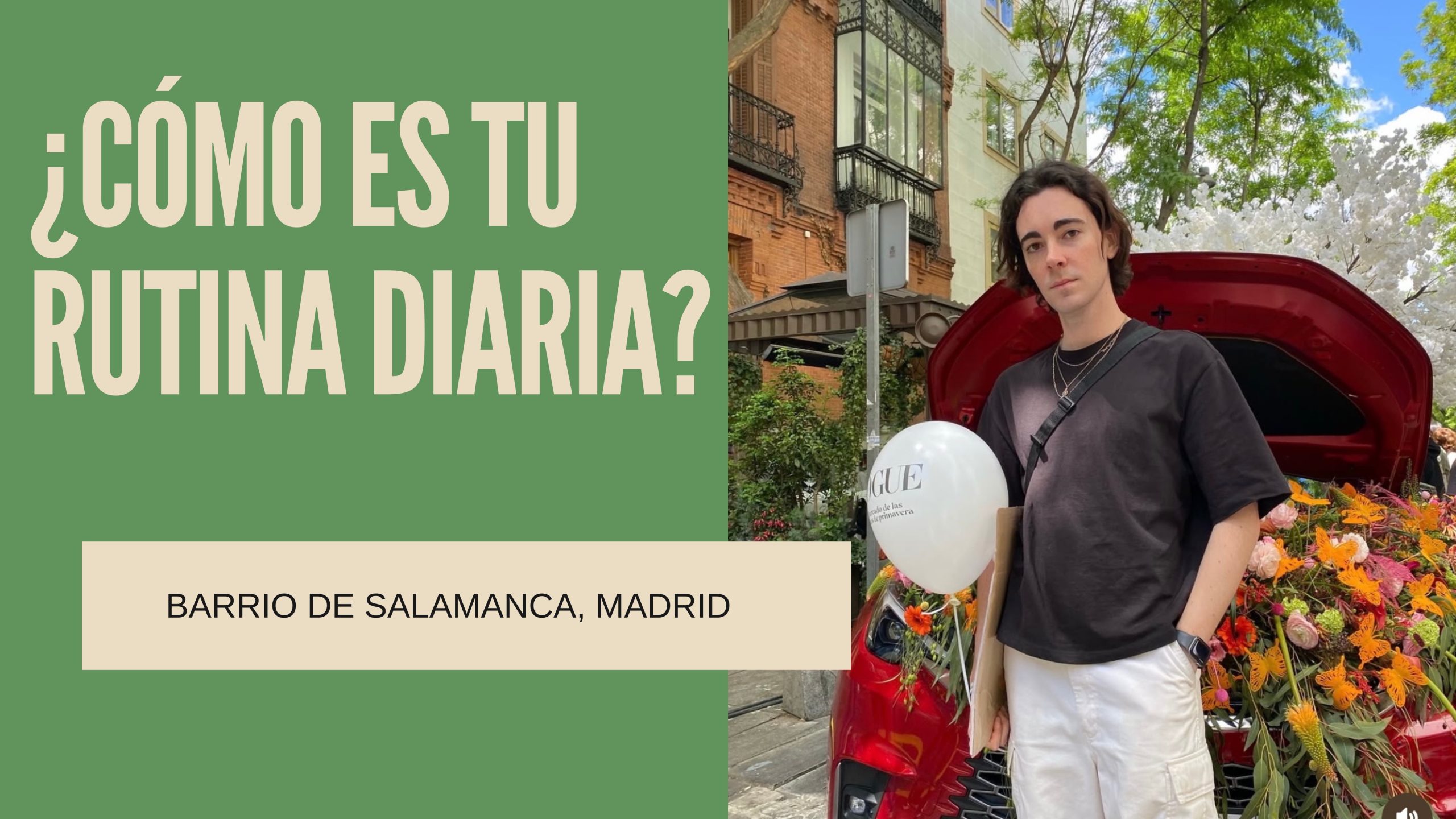
Meet Spanish digital creator and vlogger, Martín, as he describes his daily routine and asks you about yours.
Steps to take to achieve this task:
- ¿Qué tiempo hace?- ask for the weather and provide it for someone in a conversation
- ¿Cómo es tu rutina diaria?– describe your daily routine with regular, irregular and reflexive verbs in the yo form
- ¿Qué hace Ud.?– discuss someone else’s daily routine in the él/ella/elle form and ask formal questions in the Ud. form
- ¿Qué hacen en un día típico? – describe your friends’ daily routine in the ellos/ellas/elles form and ask a group about their daily routine in the Uds. form
- ¿Qué haces en tu tiempo libre?- ask someone else about their daily routine in the tú form
- ¿Qué hora es? – ask for and give the time, discuss at what time you do activities and include days of the week
- Task 3 Assessment– describe your daily habits and ask others about theirs
I. ¿Qué tiempo hace?
If you have a smart phone, pull it out, please. Look at your Home Screen. Raise your hand if you have a weather application there. How many people rose their hand?
Knowing the weather is important in cultures and communities all over the world. It could influence your mood, determine how you get to class or work, what you decide to wear, and what you plan for the day. Do you know how to express the weather or ask for it in Spanish?
Watch as StoryLearningSpanish introduces you to basic expressions regarding the weather in Spanish.
Do you remember the weather expressions StoryLearningSpanish shared with you?
Actividad A
There are more expressions and questions to ask pertaining to the weather.
Watch as Hola Spanish walks you through how to start and continue a conversation in Spanish about the weather.
If you would like to ask someone about the weather or provide it when asked, review the following slide for conversation starters and answers. You will see some of Hola Spanish’s expressions there.
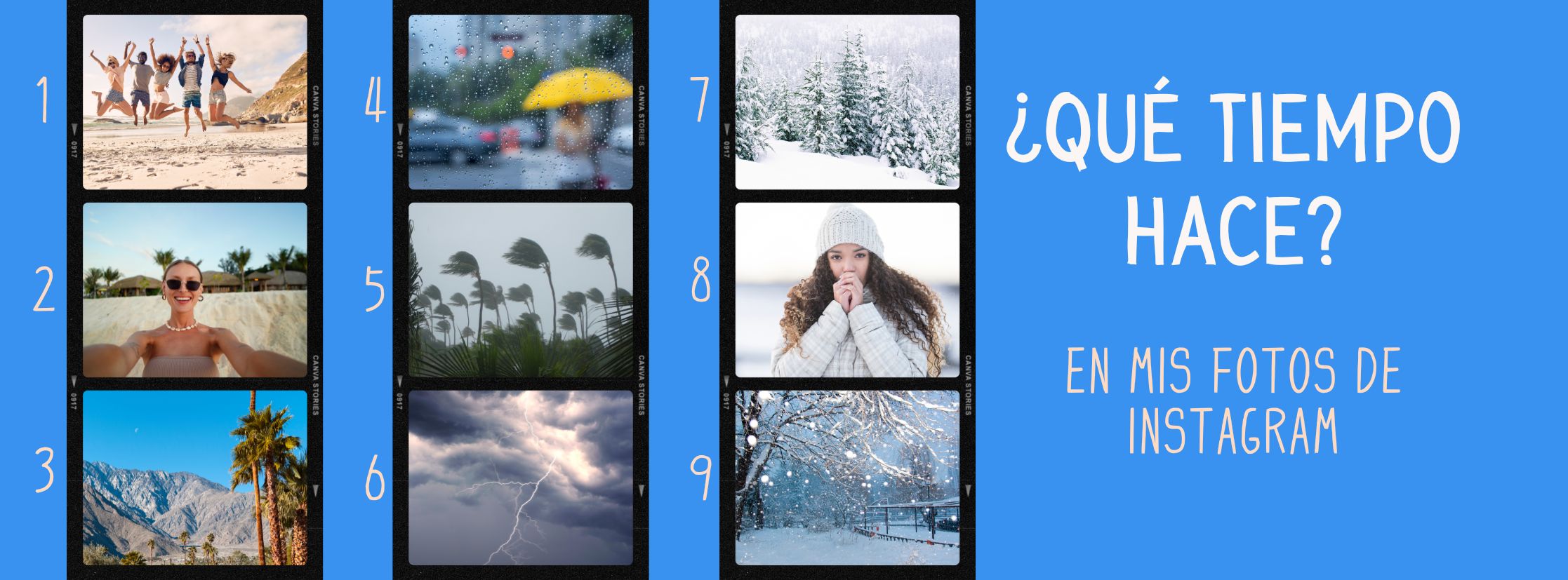
Martín, who you met at the beginning of this chapter, has a friend Lula from California. She wants to share her Instagram photos with you from summer (verano), fall (otoño) and winter (invierno).
Listen as Lula describes the weather in each photo and asks you about the weather where you are at the end of her conversation.
Actividad B
Paso 1. In groups of 3, take turns describing the weather in each of Lula’s photos with the following expressions.
Modelo- En la foto 1, hace sol.
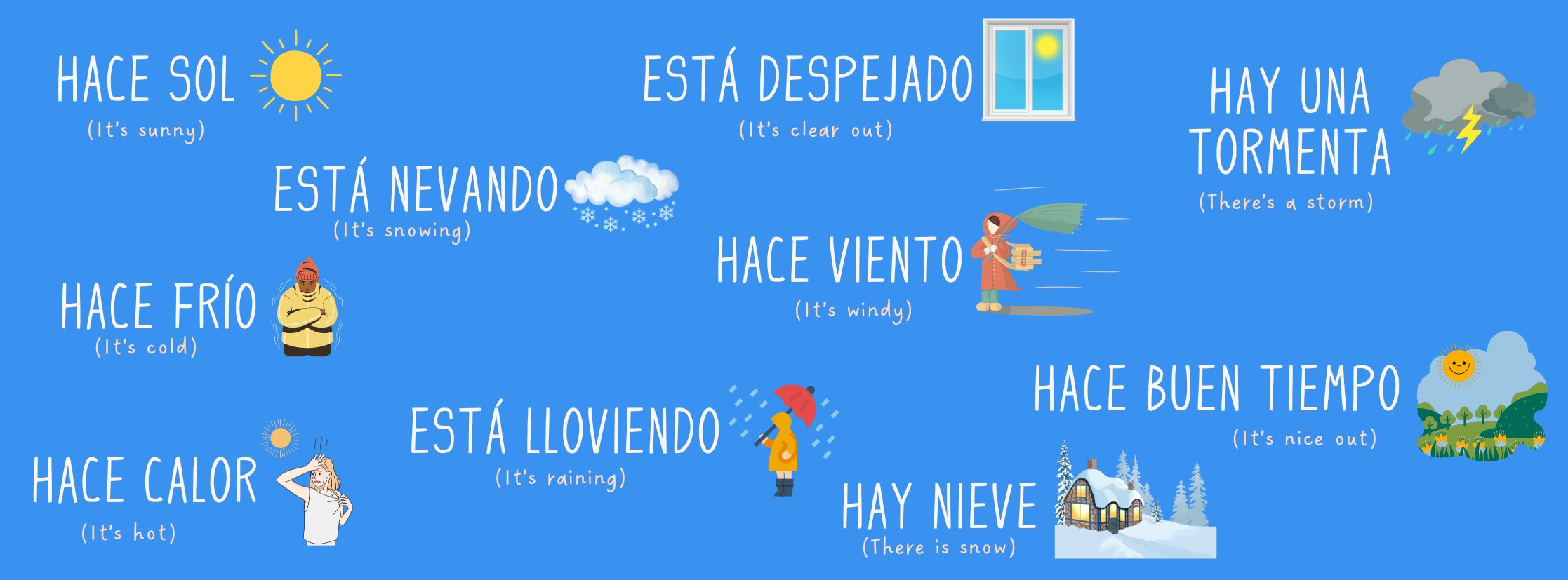
Paso 2. Ask your group, ¿Qué tiempo hace hoy? Someone from the group should answer with the weather today in your area.
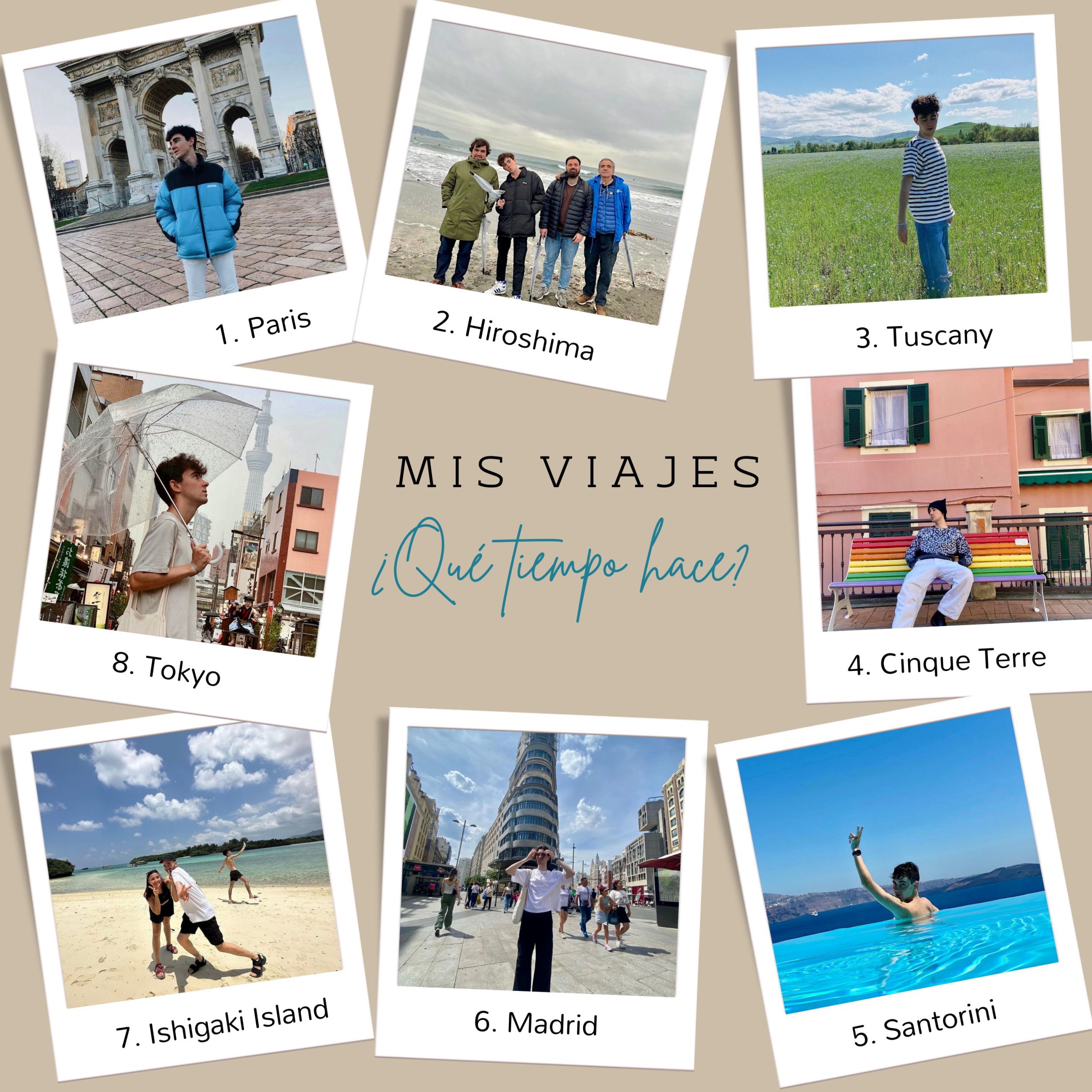
Martín has lived in Japan, Italy and Spain this year. Martín actually travels quite often during the four seasons (las cuatro estaciones).
Here is a video of Martín in Japan recently. Be sure to press sound on the bottom left of the video.
@martintena de mi última semana en Japón tras un año viviendo allí 💔 #Japan #Tokyo #Japón #Travel
♬ Everything is romantic featuring caroline polachek – Charli xcx & Caroline Polachek
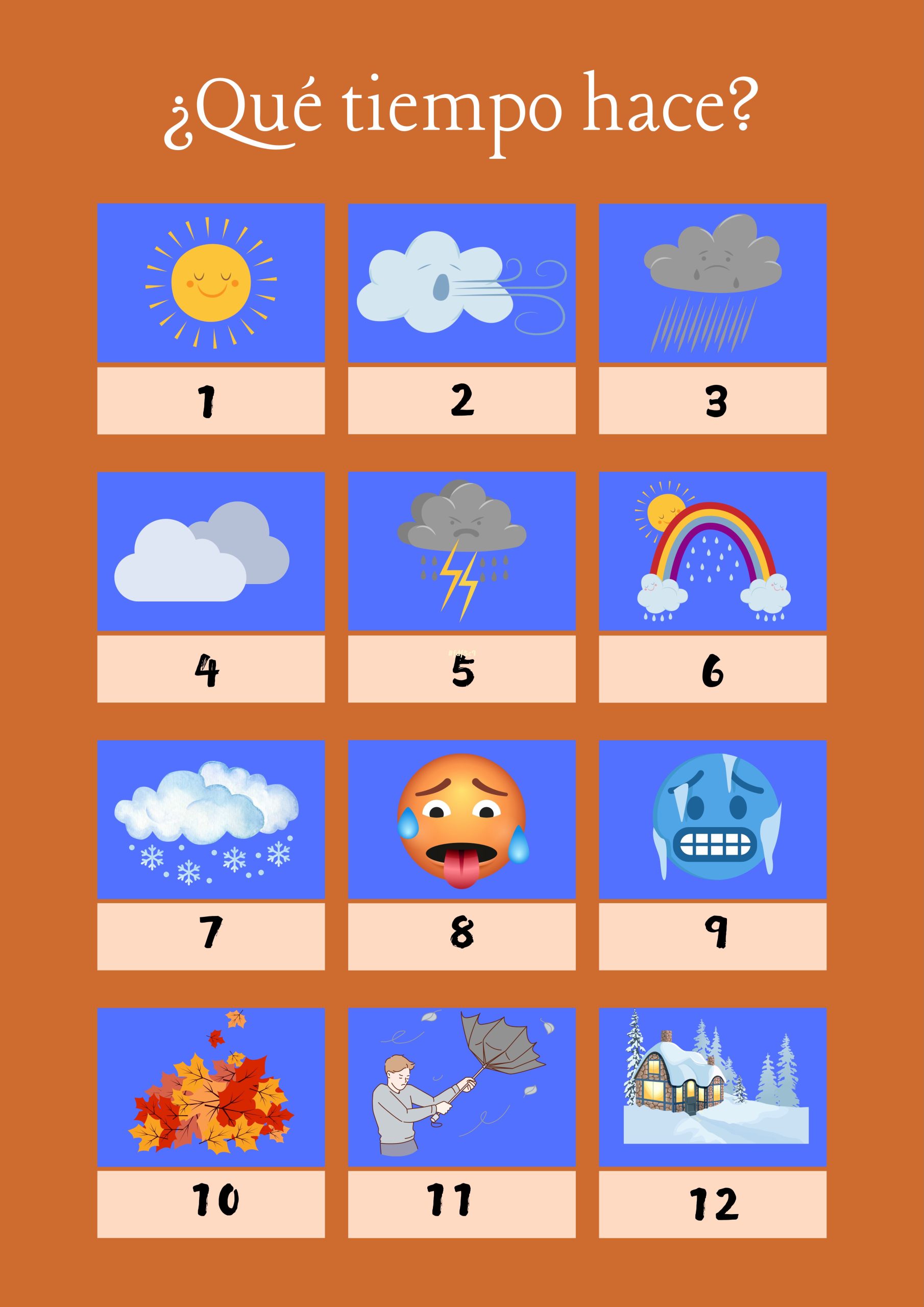
Similar to Japan, Martín’s home country of Spain has 4 seasons. Listen as Martín lists common weather patterns from each season.
Actividad C
Actividad D
Paso 1. Like his friend, Lula, Martín would also like to share some of his favorite photos from his travels.
With a partner, choose 4 of the places that interest you the most and describe the weather in the photos.
Modelo- En Santorini, hace buen tiempo y está despejado.
Paso 2. Take turns asking each other the following questions about the weather and seasons.
See the following answers as examples.
- ¿Cuál es tu estación (season) favorita? – Mi estación favorita es el invierno.
- ¿Qué clima no te gusta? – No me gusta cuando hace mucho calor.
- ¿Qué tiempo te gusta? – Me gusta cuando hace sol.
- ¿Qué temperatura es perfecta para ti? – Mi temperatura perfecta está a 60 o 70 grados.
If you need a review of the numbers so that you could provide the temperature, click here. Go to the 3rd slide.
Actividad E
¿Qué tiempo hace en diferentes partes del mundo?

You know that Martín travels quite a bit. Do you plan to travel this year? When preparing for a trip, it is always important to check the weather forecast so you know what clothes to pack and what activities to do while on vacation.
Click on this link for the current weather in the most popular cities around the world. Choose 3 cities you would like to visit from the list, and ask your partner what the weather and temperature are there. Then switch roles.
Modelo-
Estudiante 1- ¿Qué tiempo hace en Sydney? ¿Cuál es la temperatura?
Estudiante 2 – Hace fresco en Sydney. La temperature está a 63 grados.
What cities were the most popular or had the best weather or temperature, in your opinion?
Intercultural reflection 1
You just learned weather expressions in Spanish. There is a famous song among the Latinx community by Dominican singer, Juan Luis Guerra, that uses weather as a symbol for a more meaningful message. The song is called “OJalá que llueva café,” which means, I hope it rains coffee.
Before listening to the song or reading the lyrics in both Spanish and English, what does the title of the song evoke to you? Do you think this song is about loving coffee? Or, do you think there is a deeper message? Discuss these questions with a group, and share your answers with the class.
After your discussion, listen to “Ojalá que llueva café” and enjoy it. When you are ready, click and review the lyrics by musixmatch translated for you.
Explore more
- Was your assumption correct regarding the meaning of Ojalá que llueva café ? After reading the lyrics and listening to the song, what is the song expressing or trying to convey? Is it a positive or negative message? Do you like the song? Share your opinion.
- Why do you feel the song, “Ojalá que llueva café,” is so embraced by the Latinx community?
- Is there a song in your culture that conveys a message that is meaningful or important to your community or to you? What is the song and message? Why does it stand out for you?
- As a group, choose one of the following songs. Listen to it, and write at least 1-2 weather expressions in Spanish you hear in the song. Then discuss what you think the song is about.
Example- En Here Comes the Sun, hace sol.
A. Have You Ever Seen the Rain by CCR.
B. Here Comes the Sun by the Beatles
C. Rainbow by Kacey Musgraves
D. You Are My Sunshine– Christina Perri
E. Let It Snow– Boyz II Men
F. Beautiful Day– U2
G. The Thunder Rolls– Garth Brooks
RetroJazzRd interviewed Juan Luis Guerra about the creation of “Ojalá que llueva café.” Take a quick listen.
You heard “Ojalá que llueva café” as a guitar ballad, but did you know that there is a more popular merengue version of the song? Listen to the song with a merengue beat by Karen Records.
Which version of the song do you like better? Will you explore more music by Juan Luis Guerra? Is there a merengue song that you would like to share with your group? If so, take out your cell phone and play it for them.
Will you take more time listening to songs in Spanish or your native language to find deeper meanings? Will that help you empathize or be more compassionate to the songs’ messages?
If you would like to explore more merengue songs, enjoy the following Spotify List and share it with those that you think would enjoy this genre of music.
II. ¿Cómo es tu rutina diaria?
When meeting someone for the first time, discussing what you do on a typical day connects people because you may have similar daily routines, pastimes, and habits. You may learn that someone else’s daily routine may be completely different than your own, which may inspire you to try new activities.
Martín will be sharing his daily routine with you in Spain. He will also be asking you about your typical day in this chapter.
To answer Martín’s questions, it is important to first learn different verbs in Spanish in the yo form.
FORMA YO
The following slides contain present tense verbs you could use to describe your daily routine. These verbs are already conjugated for you in the yo form and ready to use in conversation because the goal in Nepantla is to communicate in Spanish. The conjugated verbs in the next three slides should be viewed as new vocabulary to help you converse.
You will notice that the verbs are separated by regular, irregular or reflexive conjugations of the forma yo. In the third slide, the verbs have the reflexive pronoun “me” in front of them. This is because these verbs are actions you do to yourself, which makes them reflexive.
*The verbs in slides 1 and 2 do not have a “me” in front of them because they are not actions you do to yourself. They are not reflexive.
Martín’s friend pronounces the regular, irregular and reflexive verbs for you slide by slide.
Slide 1- Regular present tense verbs in the yo form
Slide 2- Irregular present tense verbs in the yo form
Slide 3- Reflexive present tense verbs in the yo form
Actividad F
Paso 1. Did you ever wonder what life is like in Spain? Many students study abroad there to learn Spanish. Watch as Martín takes you through his typical day in Spain.
Press CC for captions in the language you prefer.
Paso 2. Place the activities Martín does in chronological order.
Paso 3. Are there any activities you have in common with Martín that you also do? Can you name one or two from the video? Feel free to review the slides with yo form verbs to help you.
Modelo- Como Martín, yo también asisto a clase por la noche. OR Como Martín, yo también desayuno con mi compañero de cuarto.
*Using “yo” here is fine because you are emphasizing that you too do this activity.
¡Bien hecho! 🙂
Actividad G
Review the daily routine verbs in the yo form once again. Then select the most logical answer based on each question about daily habits.
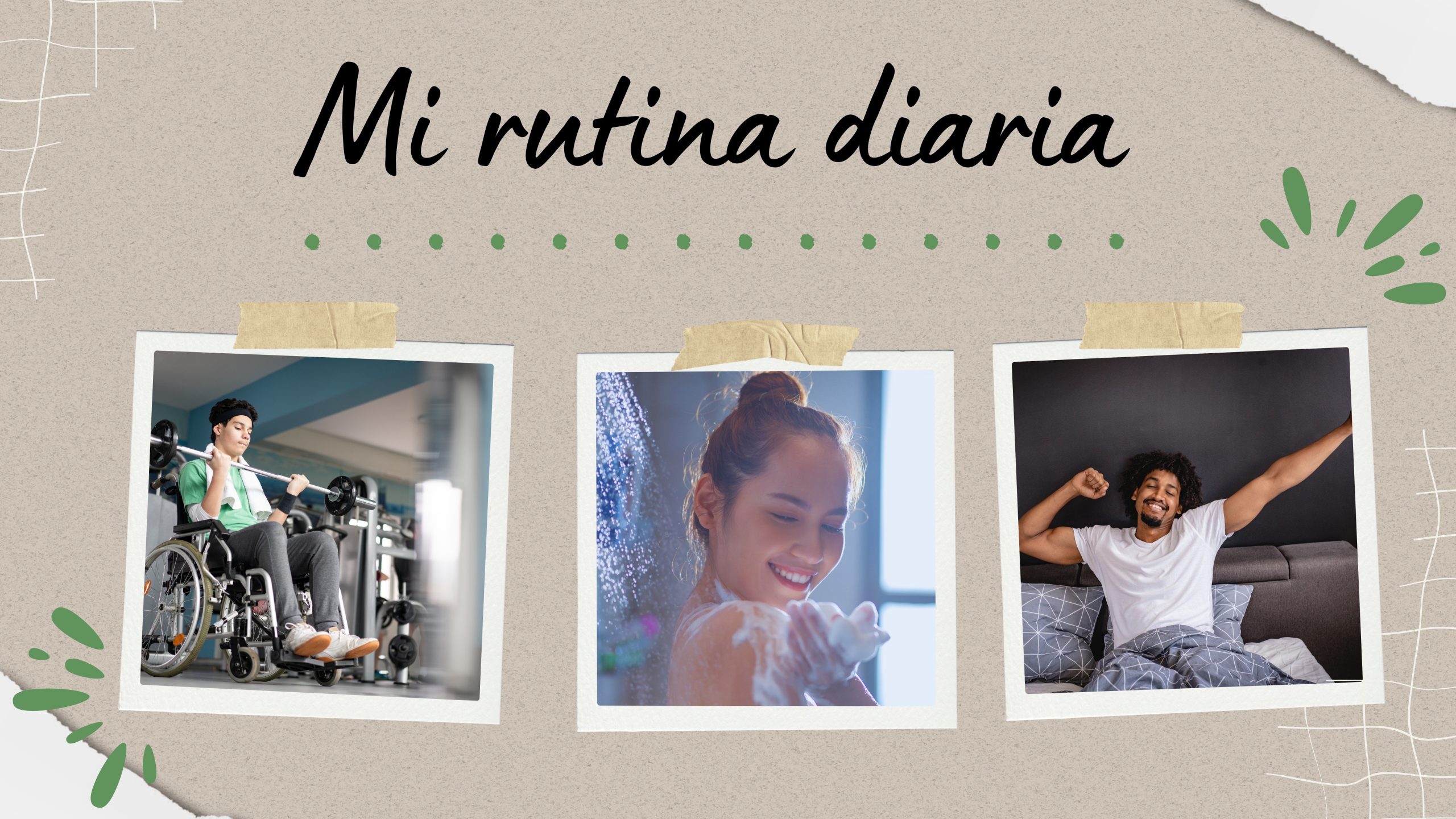
1. I do this activity in the morning.
A. Me acuesto a las once de la noche.
B. Me despierto
C. Ceno
2. I typically do this activity at night.
A. Desayuno
B. Almuerzo
C. Me duermo
3. I do this activity at the kitchen table.
A. Me ducho
B. Me cepillo los dientes
C. Ceno
4. I do this activity outdoors.
A. Camino a mi perro
B. Me pongo los pijamas
C. Me quito los pijamas
5. I do this activity to improve my physical health
A. Miro Netflix por 8 horas
B. Hago ejercicio
C. Veo películas en casa
6. I only do this activity with water
A. Me ducho
B. Me seco el pelo
C. Me desvisto
Answer key: B, C, C, A, B, A
Later in this chapter, you will specify at what exact time you do a certain activity. However, if you would like to express a general time of day you complete different activities, you could use the following phrases. They could be placed at the beginning or at the end of a sentence.
Por la mañana– in the morning
Por la tarde– in the afternoon
Por la noche– in the evening
For example- Me lavo los dientes y me ducho por la mañana. Asisto a clase y estudio por la tarde. Por la noche, ceno y juego videojuegos.
Actividad H
Yanna, from the University of Santo Domingo would like to know about your daily routine. Listen as she shares hers with you. Then answer her questions.
For a transcript of Yanna’s message, click here. Scroll to Yanna.
III. ¿Qué hace Ud.?
You previously expressed your daily routine in the yo form. In this section, you will learn how to describe someone else’s daily routine by using present tense verbs in the 3rd person singular, which is he, she, they (non-binary singular), you formal, or in Spanish, él, ella, elle or Ud.
Instead of the verbs ending in “o”, 3rd person singular verbs end in “a” or “e”.
AR verbs will end in a.
ER/IR verbs will end in e.
Reflexive 3rd person singular verbs will have a reflexive pronoun “se” in front of them to signify himself or herself for él/ella forms. “Se” could also mean yourself for the Ud. form. Finally, for those that classify as non-binary, “se” could mean themself.
See the following slides that include the 3rd person singular of regular, irregular and reflexive verbs already conjugated for you.
To hear how each verb is pronounced, be sure to play the audio.
Verbos regulares en la tercera persona
Verbos irregulares en la tercera persona
Verbos reflexivos en la tercera persona
Watch as Teacher Catalina describes the daily routine of Bas in her video with regular, irregular and reflexive verbs in the 3rd person singular.
Actividad I
Select the activities Bas completed during his daily routine.
___ Se despierta
___ Se estira
___ Se maquilla
___ Va al baño (bathroom)
___ Se lava los dientes
___ Se seca el pelo
___ Mira YouTube
___ Se afeita
___ Usa el perfume
___ Va al trabajo
___ Se peina
___ Desayuna
___ Maneja su coche
Click here for the answer key.
Actividad J
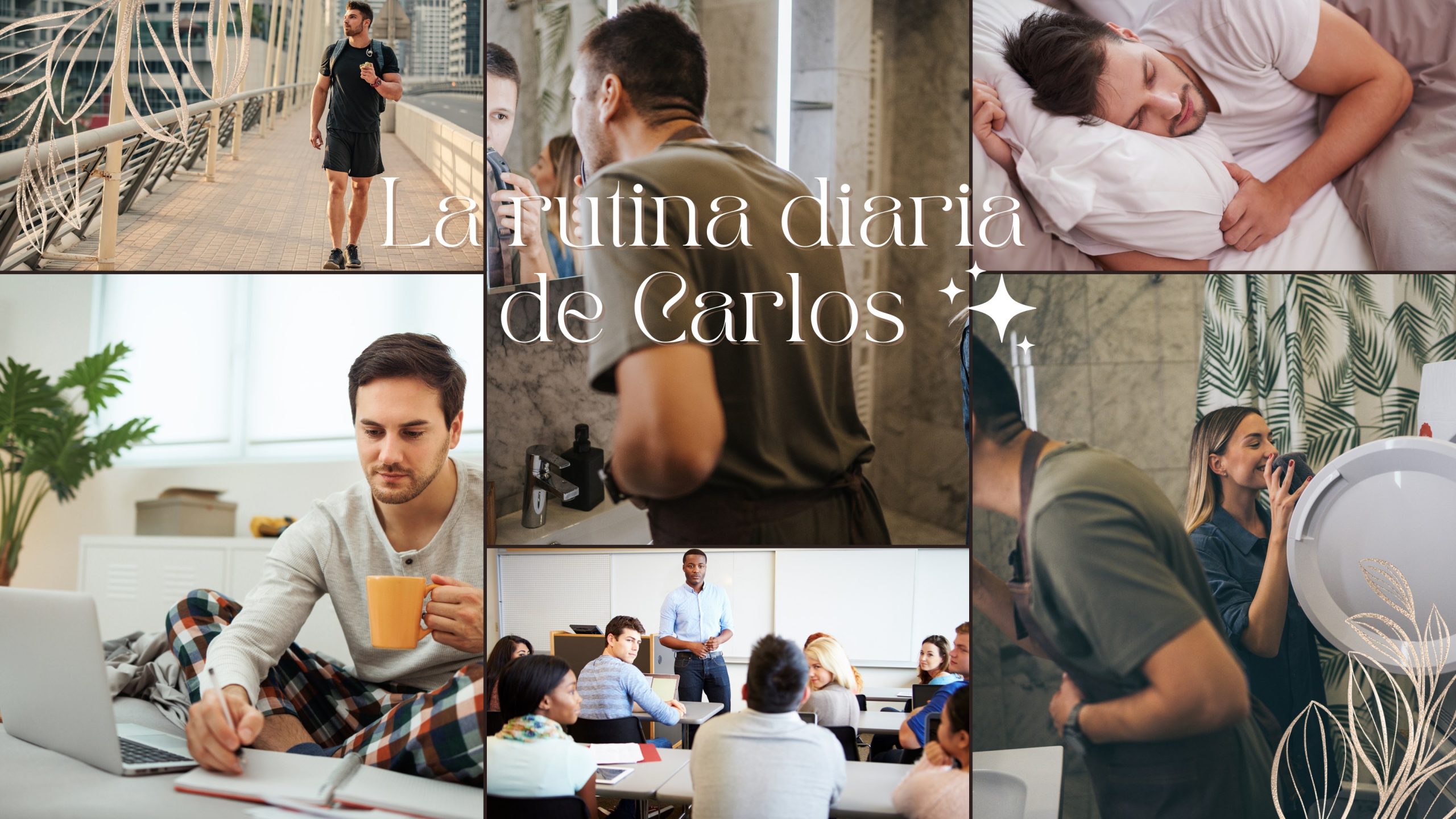
Select what activity Carlos or his girlfriend are doing, based on each context.
¡Muy bien! 🙂
Actividad K
Paso 1. Think of a close friend of yours. Do you know them well enough to describe their daily routine? Select the answer that best reflects your friend’s daily habits by choosing one of the two options to finish each sentence.
Paso 2. When you are through selecting your friend’s daily habits, read your answers to a partner and then switch roles. If you have a picture of your close friend, show it before reading your statements.
Modelo- Mi mejor amiga (my best friend) se levanta temprano. Escucha podcasts y cena tacos. Lee libros y se viste en ropa informal. Se duerme tarde y trabaja para Apple. Mira Netflix y bebe café mucho. Pide DoorDash y hace ejercicio poco. Se acuesta temprano.
Paso 3. Are your friends’ routines similar or different?
Modelo- La rutina de nuestros amigos es similar. OR La rutina de nuestros amigos es diferente.
The following Spanish-speaking employees are guests in your Zoom class. They would like to get to know you and help you practice your Spanish-speaking skills.
The song in the background is called “Alabanzas” by Silvio Rodríguez.
Actividad L
Ask at least 3 of the Spanish-speaking employees a question in the Ud. form about their daily routine from the following options:
¿Qué hace Ud. en su tiempo libre? (What do you do in your free time?)
¿Cómo es su rutina diaria?
¿Qué libros lee?
¿Cómo es su rutina por la mañana?
¿Qué programas mira en Netflix?
¿Qué música escucha?
¿Qué hace después de trabajar (after work)?
¿Se viste en ropa formal o informal en el trabajo (at work)?
¿Qué hace con amigos?
*Or you could create your own questions from the verbs you’ve learned in the third person singular.
IV. ¿Qué hacen en un día típico?
You now know how to describe your daily routine and someone else’s in Spanish. You also know how to ask formal questions to someone in the Ud. form. ¡Muy bien! 🙂
If someone who speaks Spanish would like to know about your family or friends’ daily routine, would you know how to describe what they do on a typical day? This would require knowing verbs in the 3rd person plural.
The good news is that the 3rd person plural verbs are very similar to the 3rd person singular verbs you just learned. All you have to do is ad an “n” to the end of each verb. Then the verbs would mean “They do” or “You plural do.” The reflexive pronoun “se” stays the same in the third person plural.
Example- Mis amigos hacen ejercicio mucho. Van al gimnasio todos los días. Se duchan en el gimnasio también. ¿Uds. hacen yoga o corren?
Review the 3rd person singular verbs and select the activities your friends do. Then make those verbs plural by putting an “n” at the end of each one.
Example- Mis amigos se despiertan tarde, van a Starbucks, salen a comer, van al cine y escuchan música.
Share which verbs you selected with the class and describe what your friends do in Spanish. 🙂
Gabriela, from Panama, would like to talk about her friends’ pastimes. Listen as she describes aspects of their daily routine.
For a transcript of Gabriela’s video, click here. Scroll to Gabriela.
Actividad M
Place the correct activities Gabriela’s friends do based on her description.
¡Excelente! 🙂
Actividad N

Paso 1. Get to know what your classmates’ friends do during their free time or as part of their daily routine.
Choose 5 questions from the following list and ask 5 different students one of the questions. To answer, the verb stays in the same conjugation.
Modelo- Hola. ¿Tus amigos juegan deportes o videojuegos? Answer: Juegan videojuegos.
¿Qué hacen tus amigos los fines de semana? (on weekends)
¿Qué programas miran tus amigos en Netflix?
¿Qué música escuchan tus amigos?
¿Qué hacen tus amigos por la noche?
¿Tus amigos van a Starbucks o beben café?
¿Tus amigos hacen videollamadas o escriben textos más?
¿Tus amigos se acuestan tarde o temprano?
¿Qué películas ven tus amigos?
¿Tus amigos se visten en ropa formal o informal?
*If there is a different question you would like to ask about your classmates’ friends, feel free to do so. 🙂
Paso 2. Report what you learned.
Modelo- Los amigos de Sally ven películas de ciencia ficción. Los amigos de Byron se acuestan tarde.
V. ¿Qué haces en tu tiempo libre?
Now that you know how to use verbs to describe your daily routine, someone else’s and more than one person’s, it’s time to learn how to use verbs in the informal tú to ask questions about someone else’s daily routine.
Actividad O
You’ve already learned how to ask questions to get to know someone informally from Chapters 1 and 2. Do you remember them?

The informal tú verbs end in “as” or “es”, depending if the verb is an ar or er/ir verb. Additionally, the informal tú verbs will have the reflexive pronoun “te” in front of them.
AR verbs will end in as.
ER/IR verbs will end in es.
Example- Miras mucha televisión. ¿Lees libros? ¿Te duermes a la medianoche? Vas al trabajo temprano.
Watch lsedechill’s TikTok video as two students try get to know each other by using sign language to ask questions in the tú form.
@lsedechill Os traemos una pequeña conversación informal en LSE 🙌 Incluye presentación y preguntas básicas 🗣 #inclusiveconlse #lenguadesingos #lse #lenguadesignosespañola #conversación #presentación #diálogo
In order for you to ask someone questions to get to know them better, it is important to know your verbs in the tú form. See the following slides and press the audio for pronunciation of these verbs.
Verbos regulares en la forma tú
Verbos irregulares en la forma tú
Verbos reflexivos en la forma tú
Actividad P
When getting to know someone informally, what questions would you ask them?
Using the tú form verbs from the slides, select the questions you would ask someone in the following contexts?

¡Muy bien!
Actividad Q
Let’s play Lotería to get to know your classmates! 🙂

Take turns asking the following questions in the tú form to different students until you get a Lotería row full of different names and answers. You could win with a diagonal, horizontal or vertical row. When you win, say ¡Lotería! 🙂
Here is how you play. You will walk up to someone, greet them and ask one of your questions from your Lotería sheet. The student will answer in a complete sentence in the yo form, and you will write their name in the box, once they do. If you don’t know the student’s name, be sure to ask for it. Say thank you, and move on to the next student. You will play until you get Lotería.
Modelo-
Estudiante 1- Hola. 🙂 ¿Juegas videojuegos?
Estudiante 2- Hola. No juego videojuegos.
Estudiante 1- Gracias.
Once you get Lotería, you will then read your answers from your Lotería row in the él/ella/elle form to describe what each classmate does to your instructor.
You will need to put those verbs in the 3rd person singular. Review those verbs here.
Modelo-
¡Tengo Lotería! Donald mira Breaking Bad en Netflix. Mariana escucha la música rap. Por la noche, Jay descansa y mira la tele. Sonya pide DoorDash los fines de semana.
The first Lotería slide is the actual game. The second Lotería slide provides examples of how to answer each question in Spanish to help you. 🙂
Intercultural reflection 2
In Chapter 1, you learned about the ceceo, the unique pronunciation of the letters c and z in Spain, with a concert performance by Rosalía. Did you know that there are distinct characteristics of Spanish language pronunciation in Cuba, Puerto Rico, the Dominican Republic and other Latinx coastal countries of Latin America?
Did you know that Grammy-winning artist, Bad Bunny, who is from Puerto Rico, has a very distinct acento caribeño. What is an acento caribeño? What are the characteristics of this accent/dialect?
Watch the following video by Story Learning Spanish to learn more about el acento caribeño.
*Watch the video until minute 5:08 for this intercultural activity.
Based on the video, some of the characteristics of the acento caribeño are:
- The omission of consonants on the last syllable of certain words that end in D, S, or R. For example- dos chicas would be do chica’
- Shorten certain prepositions. For example- para would be pa’
- Pronounce the R like an L. For example- porque would be polque
- Some may pronounce the L like an R as well. For example- alto would be arto
- The subject pronoun appears in questions and answers to emphasize the person being discussed. For example- instead of asking, “¿Cómo te llamas?”, it would be, “¿Cómo tú te llama’?”
- The subject pronoun is also placed before the verb for emphasis as shown above.
To get a clearer image of the acento caribeño, Bad Bunny spells the song titles of his latest album in the way he pronounces them with the acento caribeño.
See the following album cover by Genius. Write what you think each title is in Spanish, if it were not in the acento caribeño.
Modelo- NuevaYol es Nueva York.

Explore more
1. In your native language, are there different dialects or accents as well? Can you name some? How do you feel about them?
2. Is there a particular accent in your native language you enjoy more? Is there a dialect or accent in your native language you dislike? Why? Are there stigmas attached to different accents or dialects? Are the stigmas fair?
3. Have you noticed different dialects or accents when conversing with Spanish speakers? Is one accent harder to understand than another? Would you like to learn more about Spanish accents and dialects?
Watch as Learn Spanish Babbel walks you through different accents and dialects in Spanish.
4. After watching Learn Spanish Babbel’s video about Spanish around the world, how do you feel about accents and dialects in Spanish or your native language? Do you have more compassion or empathy for those that speak with an accent due to their connection with history and geography? Share your opinion.
Are you familiar with Bad Bunny’s music? Have you ever heard Bad Bunny speak with the acento caribeño?
Watch the following interview by Twitter (today known as X) to see if you notice any of the characteristics you just learned about from Story Learning Spanish and Babbel’s videos about the Caribbean dialect.
5. In groups of 3-4, list some characteristics of the acento caribeño that you heard in Bad Bunny’s video.
6. Bad Bunny discusses aspects of his life in the video. In your same groups, create 3-4 questions to ask Bad Bunny about his pastimes or daily routine. Using verbs in the informal tú.
Here is a list of some other artists that have the acento caribeño. Click on their links to hear their accents through music or interviews. Do you hear any of the dialectal characteristics you just learned about? What are they?
- Zoey Saldana con padres (parents) de Puerto Rico y la República Dominicana
- Celia Cruz de Cuba
- Ozuna de Puerto Rico
To learn more about Bad Bunny’s critically acclaimed album, Debí Tirar Más Fotos, watch the following interview by Apple Music and listen to the songs themselves on Apple, YouTube or Spotify.
VI. ¿Qué hora es?
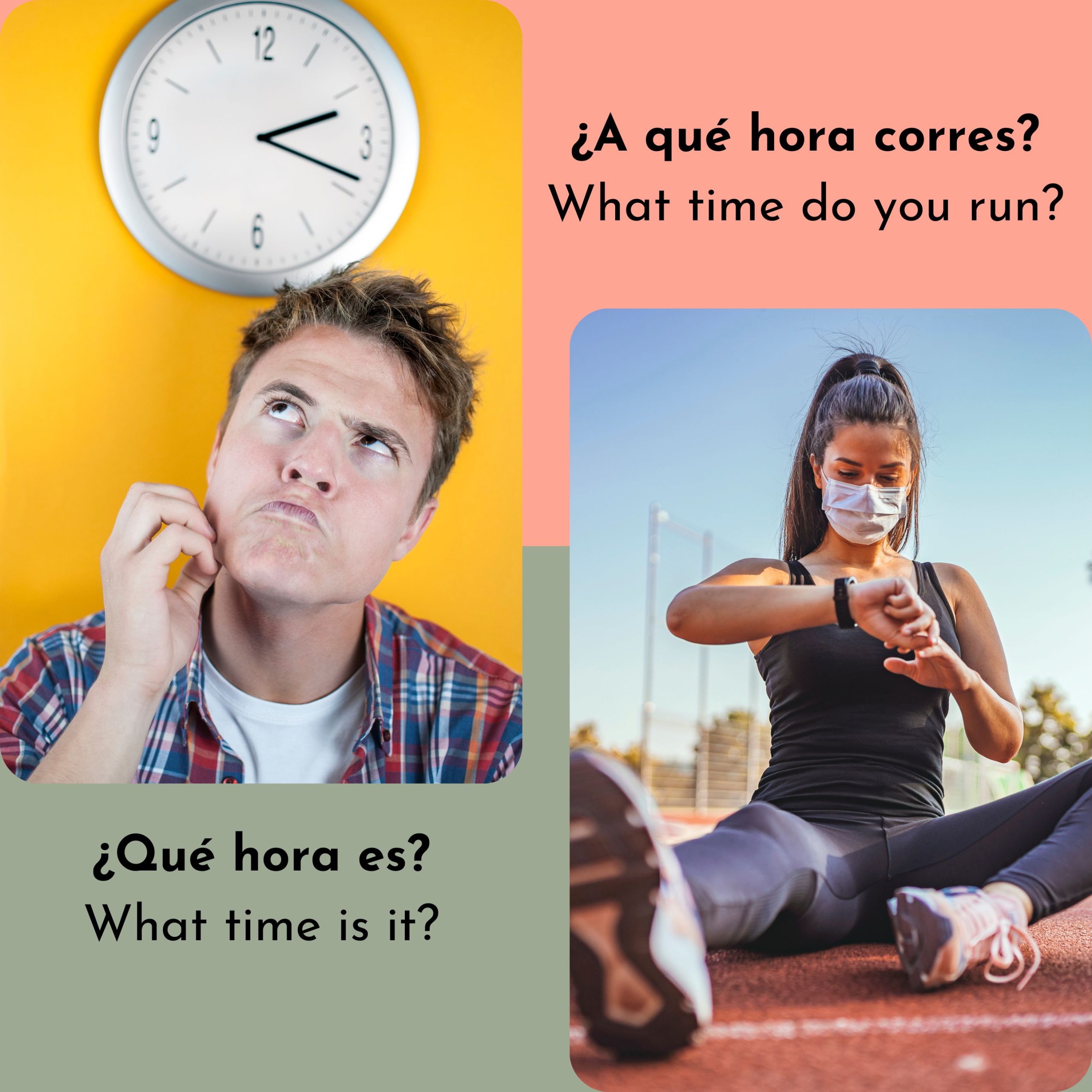
Have you ever needed to ask for the time in Spanish? Do you know how? Did you know that there are informal and formal ways to ask for the time, depending on the setting?
You could ask someone for the time informally if it’s a friend, family member, or someone your age or younger. When you ask a stranger, someone older than you or someone that holds a higher position than you in a professional setting for the time, you should ask for it in a formal way.
Watch as Raciel Spanish Teacher demonstrates how to ask for the time informally and formally in Mexico through his TikTok video. Press the sound on the bottom left of the video.
@racielspanishteacher Learn how to ask and tell time 🕰️ in Mexican Spanish with this video for foreign students #spanishconversationtutor #mexicanslang #spanishlanguagelover #spanishpractice #spanishgrammar
For a list of informal and formal ways to ask for the time in Spanish, review the following slide and listen to the pronunciation of each expression.
Actividad R
In groups of 2-3, select a different way to ask for the time for each video. Pay close attention to informal versus formal settings.
The song in the background is called “Bicicleta” by Raya Real.
Video 1 __________________________________
Video 2 __________________________________
Video 3 __________________________________
Video 4 __________________________________
Now that you know how to ask for the time in Spanish, it’s important to learn how to provide the time when asked.
Spanish Gitana does an excellent job of describing how to tell time in Spanish. Please watch her video.
Press CC for captions in the language you prefer.
See the following post for a summary of how to tell time in Spanish.
Listen to My Daily Spanish as she gives several examples of the time.
Your turn! 🙂 Take this quick quiz by Learnspanishathome to see if you could tell time in Spanish.
How did you do? 🙂
Actividad S

Actividad T
Paso 1. Do you remember Martín from earlier in this chapter? He has to consistently ask for the time and change the hour on his watch when he travels due to the different time zones.
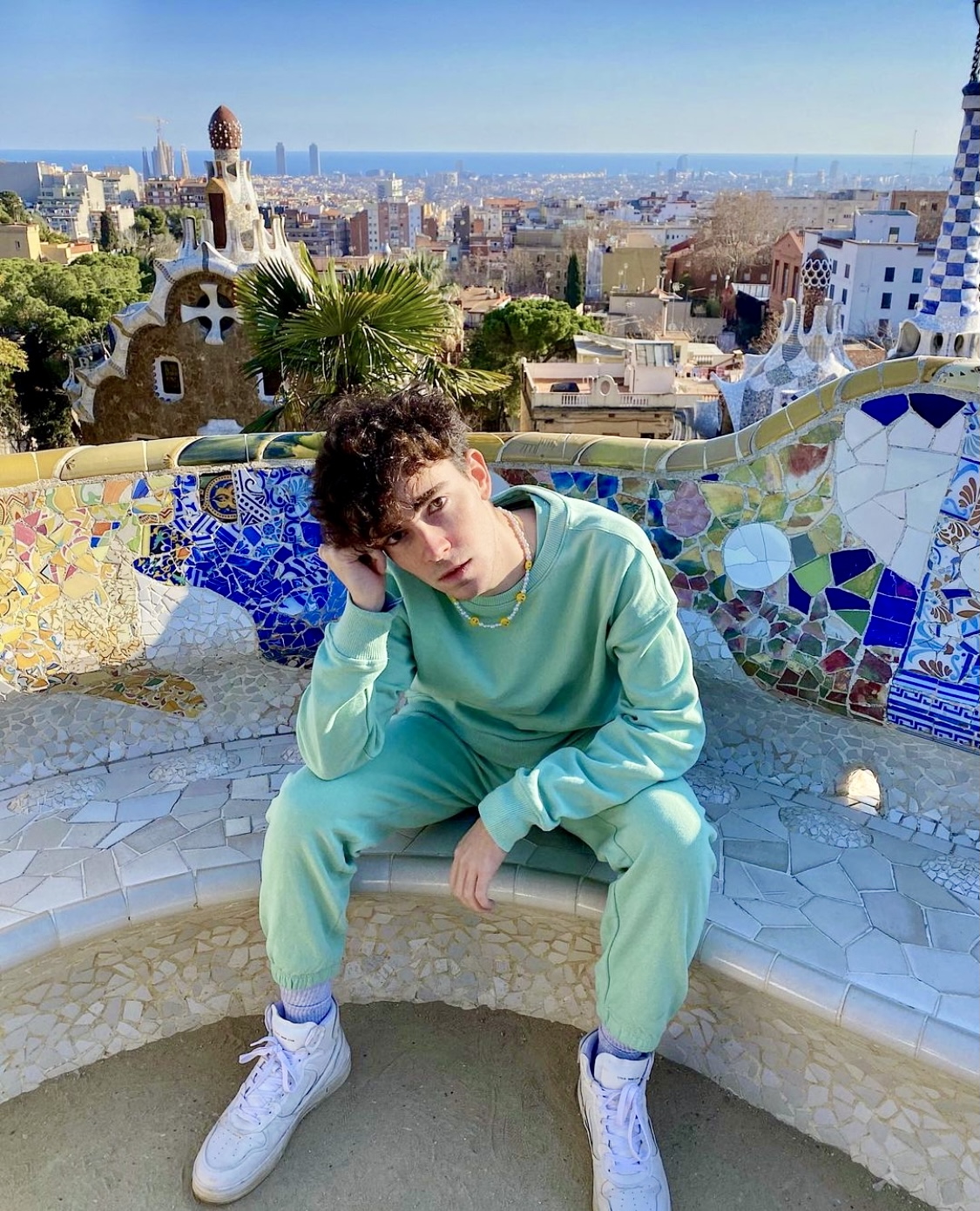
Barcelona, España
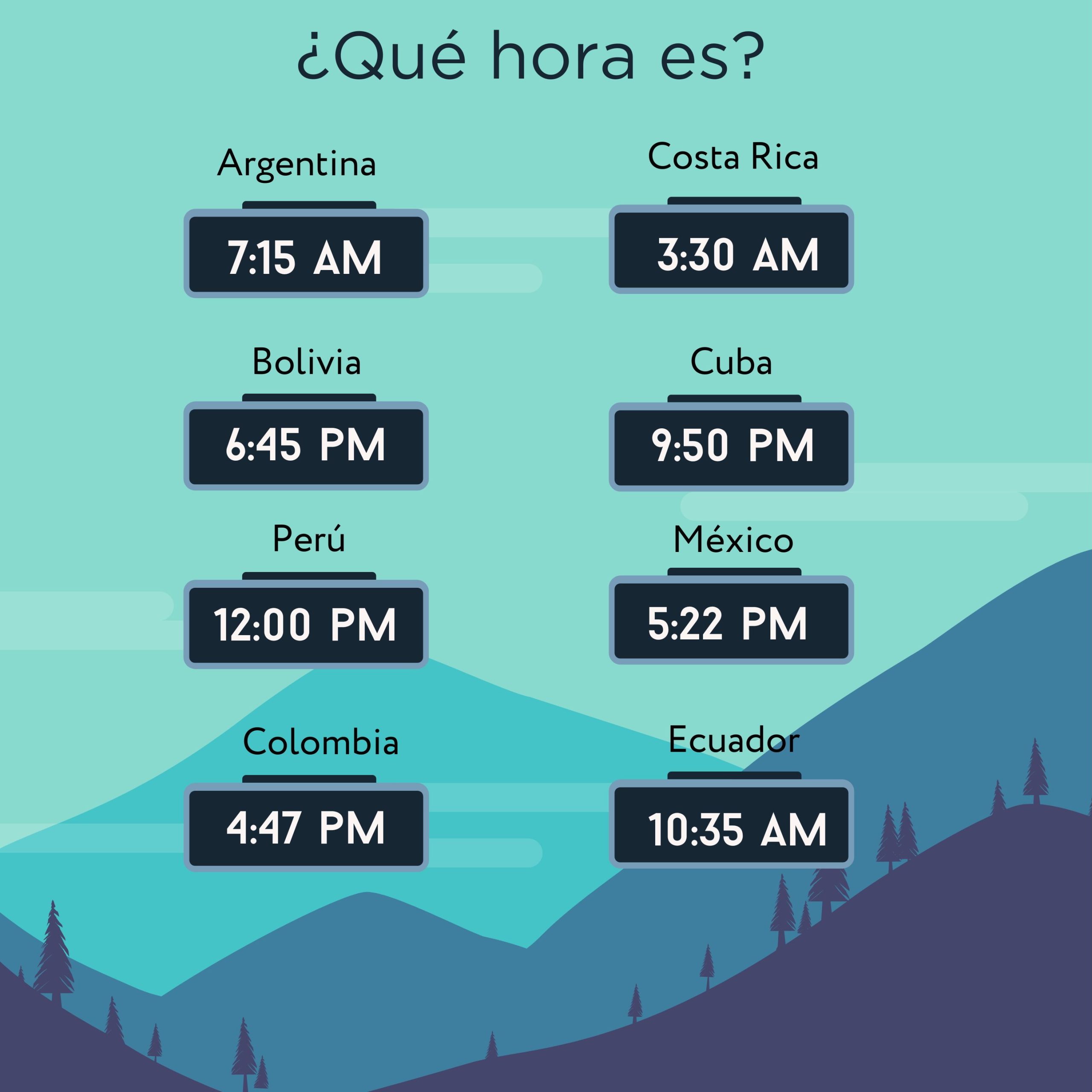
Martín will be traveling from Spain to Latin America soon. In groups of two, help Martín out by providing the time in each country. Be sure to include am or pm. Take turns reading the times.
Modelo: Hola, Martín. En Argentina, son las siete y cuarto de la mañana.
Paso 2. Ask your partner for the time right now in Spanish, and your partner will provide it with am/pm after.
Modelo-
Estudiante 1- ¿Qué hora es?
Estudiante 2- Es la una y diez de la tarde. <~~ example OR Son las nueve menos diez de la mañana. <~ example
You just learned how to tell the time and ask for it in formal and informal settings.
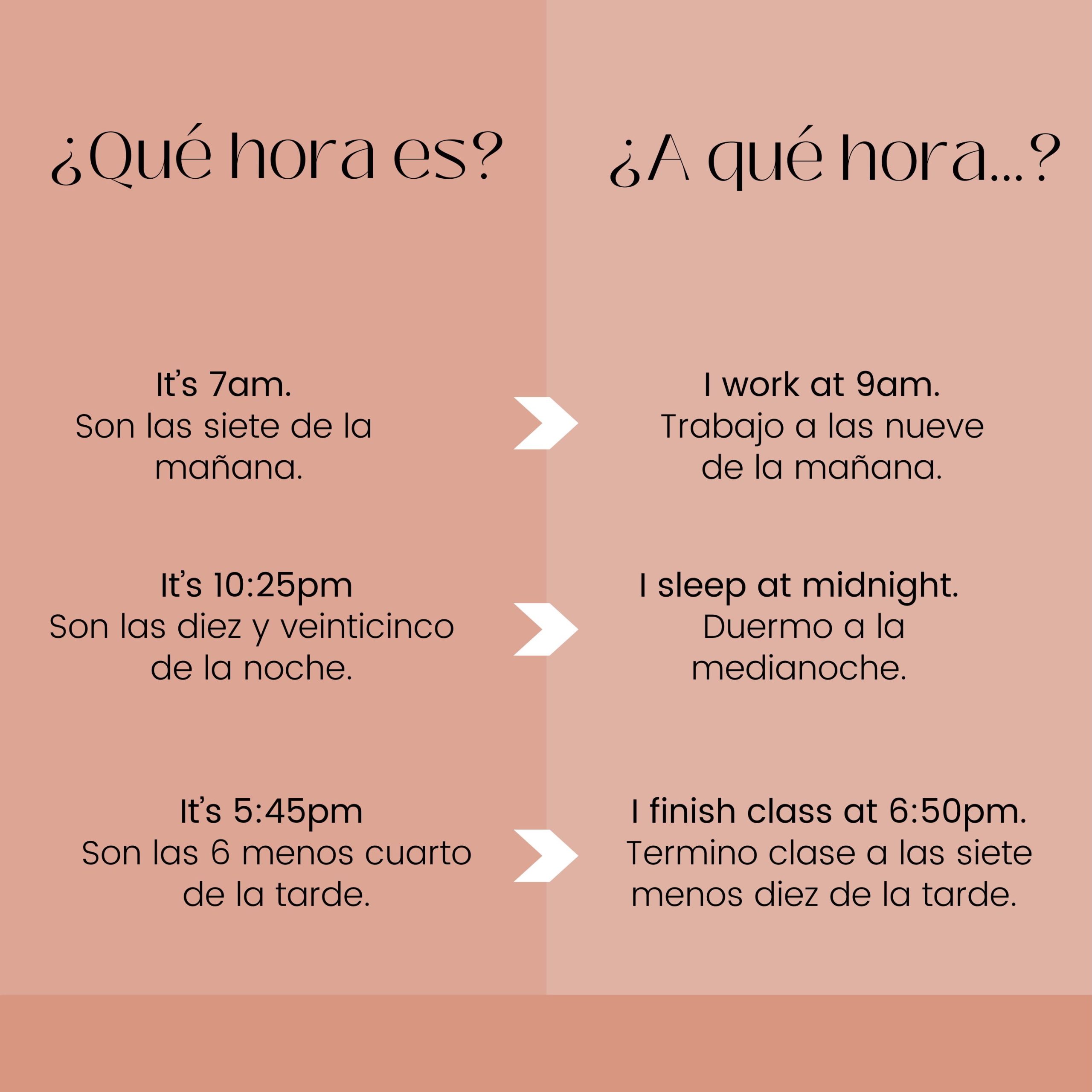
As a review, ¿Qué hora es? means What time is it? To give the time, you will say Es la + hour or Son las +hour, depending if it’s 1pm or after.
However, if you would like to say at what time an event or activity is, you would use a in front of the hour.
For example-
¿A qué hora trabajas? Answer- Trabajo a las ocho de la mañana.
¿A qué hora tienes clase? Answer- Tengo clase a la una de la tarde.
Watch as spanishstudio explains the difference between telling the time (son las + hour) and stating at what time something is (a + hour).
@spanishstudio Reply to @lyndonnty #spanish #spanishforbeginners #spanishlesson #spanishteacher #learnspanish
The following slide demonstrates the difference between stating the time and specifying at what time you do something.
Martín works with an advertising agency. His colleague, Scott, just pulled up his agenda. Take a careful look at all of the activities Scott has planned for the day.
Actividad U
Paso 1. Answer whether each statement about Scott’s agenda is true or false.
Paso 2. Create an agenda of 5 activities in your typical day, similar to Scott’s. List the time on the left and the activity you do on the right.
Modelo-
8:00am- Me despierto y me ducho
8:40am- Desayuno
9:00am- Manejo a la uni
12pm- Almuerzo
1pm- Asisto a mi clase de español
Paso 3. Write out your agenda in sentence format with the time you do each activity.
You could add:
Primero (First), Segundo (Second), Luego (Then), Después (After) and Por último (Lastly) to connect your sentences. Use a comma after these expressions.
Modelo- Primero, me despierto y me ducho a las ocho de la mañana. Segundo, desayuno a las nueve menos veinte. Luego, manejo a la uni a las nueve. Después, almuerzo al mediodía. Por último, asisto a mi clase de español a la una de la tarde.
Paso 4. Find a partner and share your daily agendas.
Start by asking your partner- ¿Cómo es un día típico para ti? Your partner will then read what they wrote in Paso 3. Then switch roles.
¡Muy bien! 🙂
Actividad V
Melanie is sharing her daily routine with you via an Instagram Reel. As a group of 4-5 students, describe what Melanie is doing during the different times of the day in her reel.
You could combine sentences with a conjunction and use the following transition words to help your sentences flow: Primero, Segundo, Luego, Después, Por último
Modelo- Primero, Melanie se maquilla a las diez de la mañana y desayuna a las once. Segundo, …
The song in the background is called “Limón y Sal” by Julieta Venegas.
In Chapter 1, you were briefly introduced to the days of the week. Watch the following video to hear Pamela from Spanish Playground break down the days of the week for you as a refresher.
Actividad W
After watching Spanish Playground’s video on days of the week in Spanish, complete this activity.
The following slide summarizes the days of the week and how to use them in conversation.
Actividad X
Paso 1. Read the following tweets about peoples’ daily routines on particular days of the week. Check the boxes of the tweets that resemble your daily routine during the week.
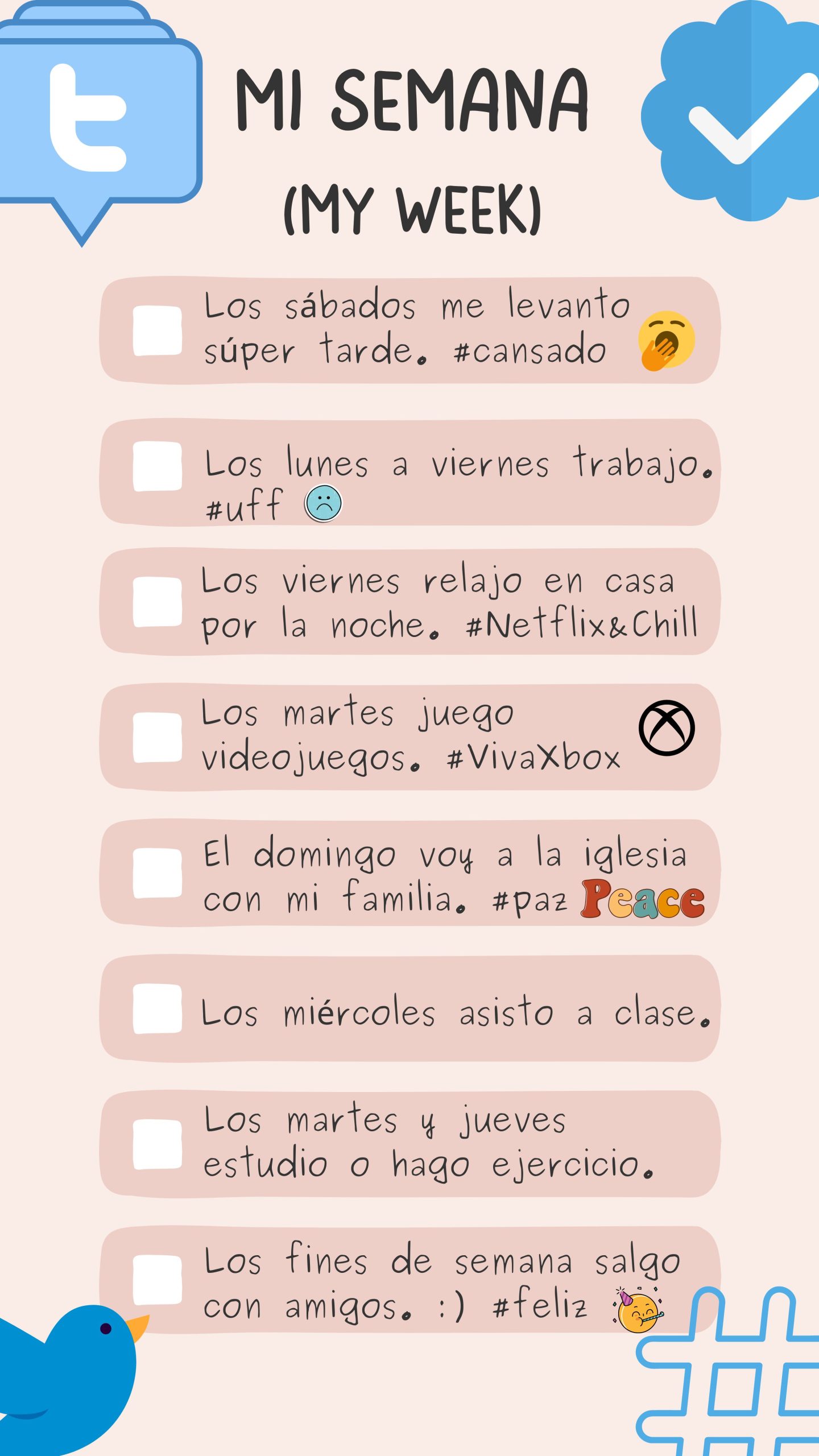
Paso 2. With someone else, make 2-3 new tweets about your week. Make sure to add a hashtag #. Read your tweets to the class.
Modelo: Los sábados voy al parque para caminar (to walk). #ejercicio
Actividad Y
Paso 1. Listen as different Spaniards describe what they do during the week. After, test your listening comprehension skills by marking whether the Spaniards do the following activities on the corresponding days.
Watch until Minute 2.
See how much you remember from the video.
Paso 2. Do you think the daily activities in Spain are similar or different than the daily activities we do in the U.S.? Explain with at least one example in groups of 2.
Modelo- La rutina diaria en España es diferente porque en los Estados Unidos las personas descansan más los sábados y domingos.
Paso 3. Ask 3-4 different students what they do during the week and on weekends.
- ¿Qué haces los lunes a jueves?
- ¿Qué haces los fines de semana?
- ¿Qué haces los viernes?
- ¿Qué haces todos los días?
What did you learn? 🙂 Do you have similar daily routines or different ones?
Intercultural reflection 3
In this chapter, you are learning how to express daily routine in Spanish with days of the week and time. In the following video by Daniel Illescas, you will get to meet him and learn about his daily routine in Africa.
Daniel volunteers his time in Kenya to help children that are displaced or left without parents. Although it is important to be able to express our own daily routine, there is value in seeing the daily routine of cultures different than your own to develop empathy and intercultural competence skills.
You could select CC for captions in the language you prefer.
Explore more
1. What is Daniel’s daily routine like in Kenya? What do the kids do during the day? Write a paragraph of 4-5 of the activities Daniel does in Spanish using expressions of time.
Example- Por la mañana, Daniel prepara el desayuno para los niños. Por la tarde, los niños escuchan música y bailan.
2. What do you have in common with Daniel’s daily routine? What is different?
Example- Daniel duerme en Kenya, pero yo duermo en mi casa en los Estados Unidos. *Use a subject pronoun for yourself when comparing your daily routine with someone else’s.
3. Would you consider volunteering? What are the pros and cons? Have you ever volunteered before? After volunteering, what changed for you? Did you develop more empathy and compassion during or after volunteering? Share your experience with someone else.
4. El voluntariado is volunteerism in Spanish. ¿Quieres ser voluntario/a/e? Below are 3 Latinx volunteer organizations. Research each one, and select the one that most interests you. What do they do? Can you dedicate your time to volunteering for them? What positive impact would volunteering for this organization bring to you or your community? Are there other volunteer organizations you could recommend to your group or the class?
Instagram: @latinooutdoors
Instagram: @votolatino
Instagram: @asociacionindigo
VII. Chapter 3 Final Assessment
In this chapter, you’ve learned how to discuss the weather, your daily routine, the time and days of the week in conversation. ¡Qué fantástico! 🙂
You’ve met Martín and got to know about his travels and daily routine throughout this chapter. Martín would like to get to know you better and discuss the weather where you live, the time, and your daily routine.
For your Chapter 3 Final Assessment, converse with Martín by completing the following prompts.